-
Stories
-
Blacksmith Edmon escaped from the Cherokee Nation in 1839.
-
Addison escaped from Texas in the direction of the Arkansas River.
-
The Amistad was a slaveship whose captives rebelled and took over the ship. The Supreme Court granted the kidnapped Africans their freedom.
-
Anthony escaped Arkansas in 1851 heading either toward his wife or Indian country.
-
Austin escaped slavery and was expected to return to the Cherokees in 1821.
-
Bartly boldly escaped from Mississippi in 1851, having been brought from the Indian Nation.
-
In 1821, E. Montgomery advertised that Stephen Stapleton stole his two bondsmen from Alabama.
-
In 1822, Charles Hubbs advertise from Baton Rouge for runaway Peter.
-
Betsey escaped from Tennessee in 1825.
-
In 1851 Bob's master feared him headed toward Indian territory.
-
Four bondsmen escaped from an Arkansas plantation and were seen passing through the Choctaw Nation in 1840.
-
In 1823 Hempstead County sheriff accuses William Boyce of stealing Fanny, her child, and a young boy.
-
The Callahan Expedition occurred in October 1855 when James Hughes Callahan led a force of 111 men into Mexico near Piedras Negras, Coahuila.
-
A man and woman with 2 children, enslaved, escaped with horses or were stolen in 1831.
-
On September 11, 1851 Maryland slaveholder Edward Gorsuch, his son and five others went to Christiana, Pennsylvania...
-
In 1830, Jerry escaped, thought by his owner to be heading either for Kentucky or posing as free.
-
Dick ran toward the Indian Nation in 1859 from Arkansas.
-
Formerly enslaved by a Choctaw chief, Eaf escaped from his latest master in 1833.
-
John Bird ran away from Frederick Lewis from a flat boat in 1821.
-
Spencer ran from the Choctaw agency in Arkansas in 1836.
-
Bill escaped his master in Lamar County, Texas, in 1864.
-
Henry escaped from John Davis, Mitchell, Hempstead County, Arkansas in 1865.
-
Jack escaped in 1820 from his owner's plantation in Tennessee.
-
Arkansas Gazette 1830 advertised for a Negro PLEASANT who escaped when passing through the Choctaw nation of Indians.
-
In 1832, Willis and Stephen, bondsmen, escaped, and were making their way toward the Cherokee or Creek Nations.
-
Mitch escaped and headed for either Crittenden County or the Chickasaw Nation in 1835.
-
Anthony, Charley, Jim, and John escaped their master, R. Jones's plantation in the Choctaw Nation in 1864.
-
California’s 1851 "Frank Case," became one of the most hotly disputed trials in early state history, and served to energize and unify...
-
Ned, an enslaved fugitive from justice in Arkansas, was expected in 1857 to head toward the Cherokees.
-
George ran away from slavery in Arkansas, probably heading for Fort Smith in 1851.
-
George uses mare to escape to freedom in 1863.
-
Two twelve year old girls escaped in 1823 from the Bluffs.
-
Granderson escaped slavery at the Old Agency, Creek Nation, in 1852.
-
Clement Scher apprehended Harris in 1864 while he was heading toward Texas.
-
Abraham escaped from Baton Rouge heading for Natchez in 1822.
-
Net and BaileY escaped from Texas to go to the Federals in 1863.
-
Jack escaped from Baton Rouge but was apprehended in Arkansas Territory in 1822.
-
Jack, identifiable by his sore leg, ran away from Texas place in 1864.
-
Isaac was committed to jail in 1822 in Arkansas Co. as a runaway.
-
Jam Overstreet and his wife Louisa broke jail in Lafayette County, Arkansas, in order to seek their freedom in 1863.
-
Joe escaped from James Wand, Cherokee Nation, in 1832.
-
-
-
Jonas and Sam escaped from Texas toward Indian Territory in 1850.
-
Jonathan Walker was a white Massachusetts sea captain and a staunch abolitionist.
-
Juneteenth is the oldest known celebration of the end of slavery in slaveholding lands.
-
Jack, who could tell a plausible tale, as well as cook and wash, escaped from Center Point, Arkansas in 1865.
-
Runaway Luke may have headed for the Missouri lead mines in 1826.
-
A man Isaac, branded on each cheek, escaped with 2 dogs in 1823.
-
Mary and two children escaped from enslavement in southwest Arkansas in 1864.
-
-
Jacob escaped from near Little Rock in 1826.
-
Jerry escaped slavery in 1830, sought by his owner at the Choctaw Agency.
-
In 1848 76 bondsmen tried to escape on the schooner the Pearl. Many were sold South, and the captains were convicted of theft and sent to jail.
-
An Arkansas jailor offered a reward for Peter, Ben, and Irwin who escaped jail in 1833.
-
Joes escaped from Tom Brandon in Spring Hill, Arkansas, in 1864.
-
Robert Fletcher sought Johnson and Caleb who had run away from the Post Quartermaster at Lewisville, Arkansas, in 1864.
-
A high point of anti abolitionist sentiment, which demonstrates the depth of racism throughout northern free states, are the events surrounding...
-
Runaway Bob was jailed until his owner claimed him in 1824.
-
In 1833, a runaway was committed to jail who was caught in company of emigrating Choctaw.
-
Henry, a runaway, risked being sold for expenses in Arkansas Territory in 1826 unless his owner claimed him.
-
Sam might have gone with a gang of Indians to the Cherokee nation west.
-
Scott escaped possibly toward Arkansas in 1823.
-
A scout took up a runaway from Jefferson County in 1864.
-
Master of Shadrack and Isham in Alabama advertised in 1833 to recover them, believing them to be among the Indians.
-
During 1711-1727, the governors of MD and VA acted to stop the Shawnees in MD from aiding freedom seekers.
-
Cammel was caught running from the old Creek nation when he was about to move in 1834.
-
In 1864, Charles escaped from Elijah Ferguson in Washington, Arkansas.
-
In 1834, Harry escaped from a Creek Chief, despite being deaf.
-
Likely to head for the Cherokee Nation, in 1823, Celia broke from jail.
-
Posing as an Indian, Carter escaped in 1840 from Arkansas.
-
Willis and Stephen were making for the Cherokee Nation when they escaped with a dog in 1832.
-
In 1824 a suspicious looking black was picked up by a justice of the peace in Mississippi.
-
Taking two mules and a horse, four bondsmen escaped from Rondo, Arkansas in 1863.
-
One of the most celebrated rescues took place in Syracuse, New York, where African American and white members of the local...
-
-
Tom escaped an Arkansas plantation in 1839 with an Indian, heading toward the Cherokee nation.
-
Barnet and Ely were arrested by Thomas Viott in 1864 in Texas.
-
Charley and Jim, a good Cherokee speaker, escaped in 1835.
-
Celia broke jail accompanied by two other bondsmen, heading toward the Cherokee nation in 1823.
-
Places
-
Alaska may have been the destination of African Americans, who, after traveling to Canada or New England coastal cities, became sailors on...
-
Alexandria Freedmen's Cemetery was the site of burial of enslaved people who had fled seeking freedom and refuge.
-
-
Blanche K. Bruce escaped from enslavement in Missouri, eventually becoming a US senator. He is buried in DC.
-
Research center and repository of Underground Railroad documents
-
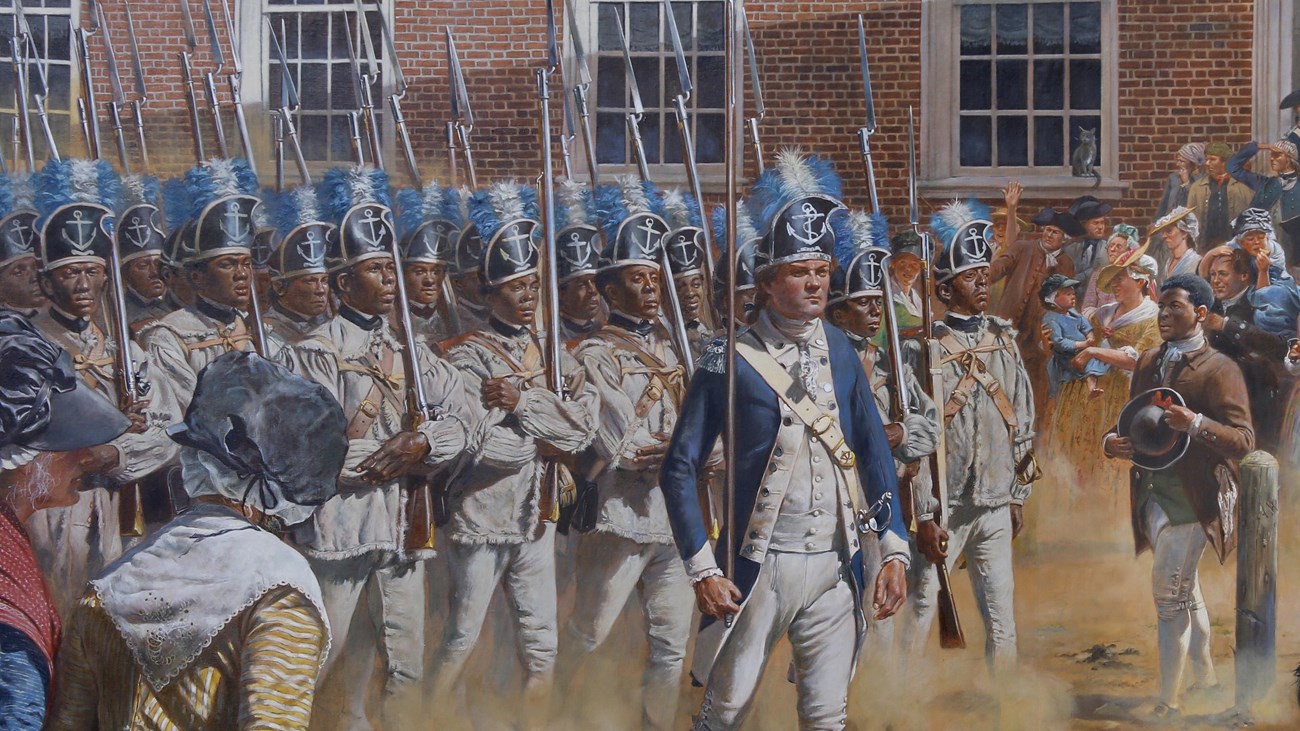
Camp Stanton served a pivotal role in helping African American's achieve their freedom by joining the Union forces.
-
The most noted escape to take place at Colonial Park occurred in 1842 when Harriet Ann Jacobs (1813-1897) stowed away aboard a ship.
-
Abolitionists in the United States argued that the freedom seeker’s decision to make the dangerous trek on the Underground Railroad undercut...
-
-
Located in the village of Lancaster, Indiana, Eleutherian College was founded by Reverend Thomas Craven.
-
Forks of the Roads Slave Market during its existence served as the second largest enslavement market in the Deep South.
-
-
Fort Mose, one of the "Negro Forts," is a precursor site of the Underground Railroad.
-
The final home of Frederick Douglass, freedom seeker and abolitionist speaker and writer, commemorates his entire life.
-
-
-
Jacob Burkle was among those in the anti-slavery movement who risked their lives to help escaping Africans.
-
It was from this farm that John Brown set forth to Harpers Ferry with his plan to end slavery through armed confrontation...
-
This was the home of Presbyterian minister John Rankin who is reputed to have been one of Ohio’s first and most active conductors on the...
-
The Loudoun County Courthouse is associated with two trials of free blacks who sought to free bondsmen.
-
The Milton House illustrates the spread of abolition and its transformation from a moral to a political issue.
-
-
Local newspapers document at least 5 examples of runaway slaves incarcerated in the Old Jail in St. Mary's between 1858 and the Civil War.
-
-
The Pasquotank River runs between Pasquotank and Camden Counties in northeast North Carolina...
-
Phill escapes from his master while he is in St. Francesville.
-
Quindaro was a Wyandot Indian town named after Nancy Quindaro Brown, Wyandot Chief Adam Brown’s daughter.
-
-
-
As a site of enslavement, Sottereley Plantation was the starting point for freedom seekers Towerhill, Clem, and George Briscoe.
-
-
While Richard Bland Lee lived at Sully, Fairfax County, VA, 4 known incidents of bondsmen running away occurred.
-
In 1862, the Union army defeated a Confederate force on Roanoke Island, thus allowing ex-slaves and freedmen to establish an independent community.
-
Women
-
While a teenager, Ann Maria Weems escaped enslavement in MD by disguise as a driver for an abolitionist going to Philadelphia.
-
Bridget (Biddy Mason) was the enslaved African American of Mormon Robert Smith, who brought Biddy and other African Americans to California in 1851.
-
Elizabeth Keckley was seamstress and friend to Mary Todd Lincoln and founder of the Contraband Relief Society.
-
The experience of freedom seekers William and Ellen Craft suggest a dramatic mix of individual initiative and organized assistance.
-
When President Abraham Lincoln met Harriet Beecher Stowe, he reportedly remarked, "So, this is the little lady who wrote that book that made this...
-
The Underground Railroad’s most famous conductor, Harriet Tubman brought dozens of individuals out of bondage to northern states and Canada
-
African Americans Jane Elizabeth Whiting and children sailed from Virginia on June 1, 1856, as the property of a Mr. Thompson.
-
Nelson Gant was tried for stealing his enslaved wife. Despite a trial, they were absolved and moved to OH.
-
Mary and Emily Edmonson tried to escape slavery on the Pearl. They escaped sale South through the efforts of their father and abolitionists.
-
Mary Ann Shadd Cary (1823-1893) is best known for "The Provinicial Freedom", a newspaper she helped to found and edit for freedom seekers.
-
Mary Ellen Pleasant was a New England Underground Railroad agent who fled to California to avoid prosecution under the Fugitive Slave Law of 1850.
-
In 1851, Reverend John Gregg Fee purchased the enslaved Juliet Miles from his father to keep her from being sold.
-
Slaveholder Nathaniel Ford came to Oregon in 1845, bringing Robin Holmes, an enslaved man, and an enslaved woman named Polly.
-
Sojourner Truth, born into slavery, became one of the most outspoken proponents of freedom and women's rights, both before and after the Civil War.
-
People
-
In 1854 Anthony Burns, a twenty-year old freedom seeker, stowed away on a vessel bound from Virginia to northern ports.
-
-
Benjamin Lundy was perhaps the greatest of the early abolitionists.
-
African American abolitionist David Ruggles became involved in the Underground Railroad because of his association with William Still...
-
Guided by his own experiences in bondage, Frederick Douglass became America’s leading African American abolitionist.
-
Oral history chronicles the amazing story of Augustus "Gus" West.
-
Harriet Jacobs and her daughter Louisa were in Alexandria, VA, from 1863-65 in order to help newly freed refugees.
-
-
Jim Pembroke wrote The Fugitive Blacksmith.He described his early life on the Rockland estate and his escape from slavery.
-
For forty years, John and Jean Rankin led their Ripley, Ohio neighbors in feeding, clothing, and sheltering hundreds of freedom seekers.
-
Fiery abolitionist John Brown dedicated his life to slavery’s destruction.
-
Born into slavery in Spanish Florida in 1812, John Horse eventually became one of the greatest chiefs of the Black Seminole.
-
Freedom seeker Josiah Henson and his family came to Cincinnati in the 1820s.
-
Leonard Grimes was arrested for helping an enslaved family escape. Convicted, he spent 2 years in a VA penitentiary. Afterwards, he moved to MA.
-
A staunch Quaker, Levi Coffin was widely recognized as the "President of the Underground Railroad," with his home known as "Grand Central Station."
-
-
The establishment of separate regional churches and the organization of African American churches in the North helped consolidate northern...
-
Owen Lovejoy, an influential abolitionist politician, lived here from 1838 until his death in 1864.
-
Reverend John Todd was amongst a group of abolitionists who moved to Western Iowa from Oberlin College and set up an important depot on the UGRR.
-
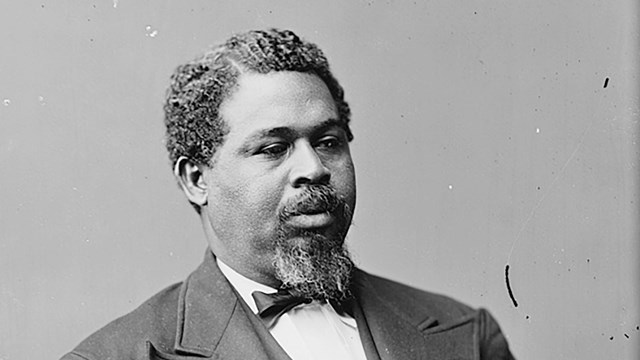
Robert Smalls was born enslaved in Beaufort, South Carolina in 1839.
-
In 1837, runaway Simon was last seen heading south from the Creek Nation.
-
William Chaplin was tried in DC and Maryland in 1850 for being an Underground Railroad conductor.
-
William Lloyd Garrison is one of the best-known abolitionists, and published the widely read antislavery journal, The Liberator.
-
William Still, a freeborn African American, was one of the legendary leaders of Philadelphia’s extensive Underground Railroad network.
-
Constructed in 1854-56, this house was the residence of Wilson Bruce Evans, a leading African American abolitionist and successful member of...