National Park Service LogoU.S. Department of the InteriorNational Park ServiceNational Park Service
National Park Service:  U.S. Department of the InteriorNational Park Service Arrowhead
Springfield Armory National Historic Site1850's view of Springfield Armory hillshops & arsenal
view map
text size:largestlargernormal
printer friendly
Springfield Armory National Historic Site
Casting at Springfield Armory
 
Cast steel objects replaced some machined pieces.
Springfield Armory NHS, US NPS
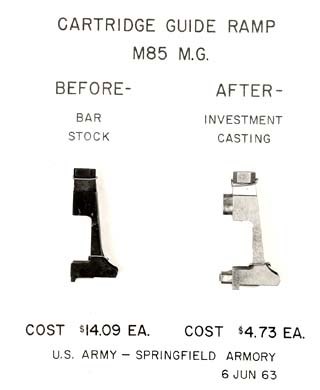
By the mid-20th Century, the "lost wax" casting process for making steel weapons parts was applied to Springfield Armory's production of small complicated shapes. In many cases, it was found to be less expensive than previously-used machining methods of production.
 
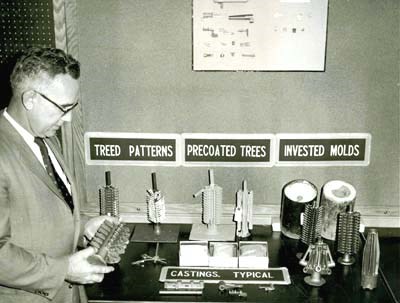
Display of steps in the lost wax process
Springfield Armory NHS, US NPS
Here may be seen a display showing the steps in creating finished steel castings: the wax patterns connected by wax arms to form a sort of tree; wax trees coated with fine wet casting plaster; cans with the inverted wax trees immersed in hardened casting plaster with a wax stem exposed on top; and (after the plaster is heated to melt out and evaporate the wax) the finished steel parts that are formed when molten steel is poured into stem cavity in the hot plaster after the wax has been burned out.
 
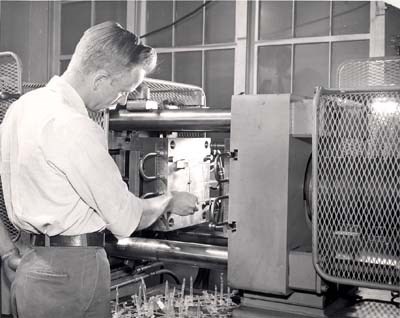
Creating wax forms
Springfield Armory NHS, US NPS
Wax forms, in the identical shape of the finished steel part, were made in molds into which hot wax was injected and allowed to cool. Finished wax forms may be seen on the table below the wax injection machine.
 
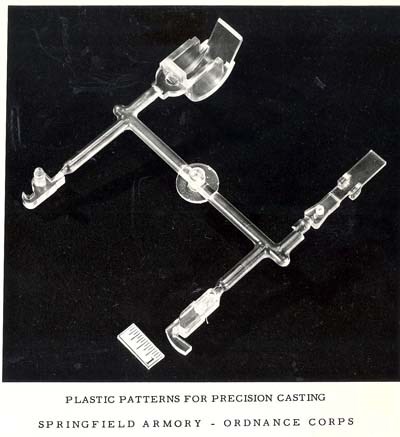
master plastic patterns for the wax form
Springfield Armory NHS, US NPS
Above is a platic pattern that served as a master for the wax forms.
 
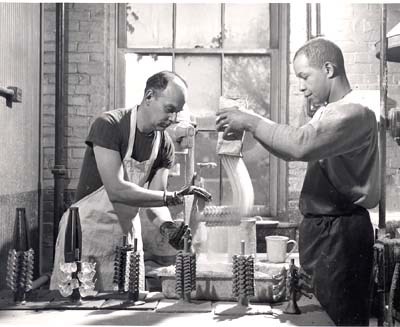
Preparing the wax forms for the plaster cast
Springfield Armory NHS, US NPS
Here may be seen Armory workers sifting fine wet plaster dust on the molds to create a fine surface before the plaster of the cast was poured onto it in a container of steel.
 
Placing the base plate in the casting oven
Springfield Armory NHS, US NPS
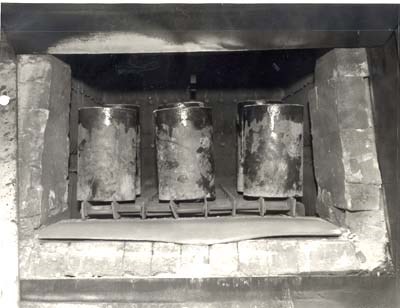
The casting molds sat on base plates in electric ovens.
 
The cans holding the casting plaster molds were heated.
Springfield Armory NHS, US NPS
Cans holding the hardened plaster in which the wax molds sat were heated to over 1,500 degree F. This not only burned out the wax, but created cavities in the plaster where the wax form had been. While the plaster was hot, molten steel was poured into the cavities. When the plaster and steel cooled, the hardened steel had taken the form of the wax form.
 
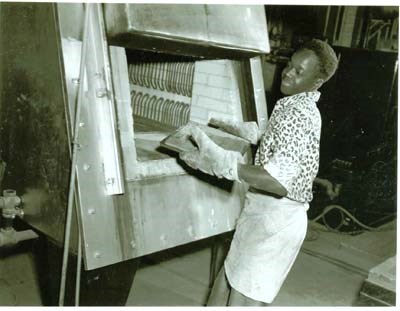
Removing molds
Springfield Armory NHS, US NPS
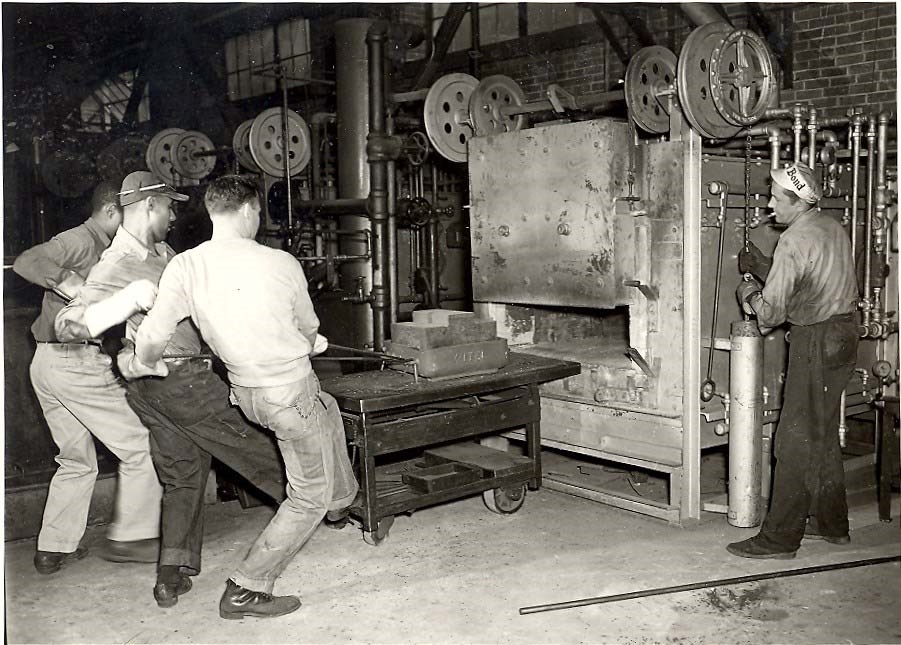
Removing the hot molds from the oven (kilns) could be heavy work if the cast pieces were large.
 
Pouring hot molten steel into molds
Springfield Armory NHS, US NPS
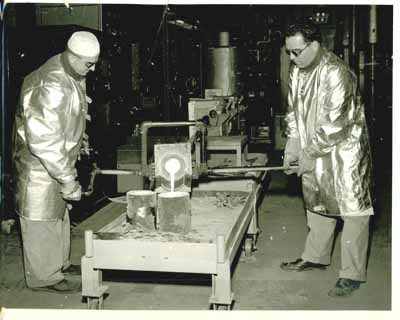
Wearing protective clothing and safety glasses, these Armory workers pour white-hot molten steel from a crucible into the hot cavity of the mold to form, when it cools, a formed steel part.
 
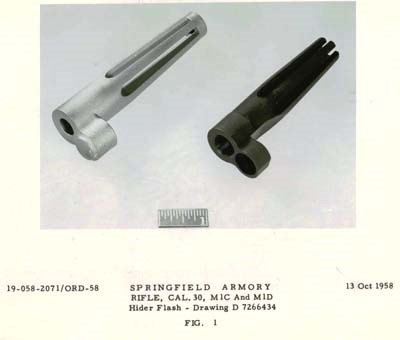
Cast M1 flash hider after casting and after further machining
Springfield Armory NHS, US NPS
An example of the Armory's casting production is shown above with the M1 Rifle flash hider shown, on the left, as it came from the mold and, on the right, after machining operations and finishing made it ready for issuing.
Roger Williams  

Did You Know?
Roger Williams was over seventy years of age when he rowed the twenty-five miles from Providence to the Newport Colony in order to debate with the Quakers. After 3 days of debates, he rowed back to Providence from Newport and, upon his return, wrote an essay on why the Quakers were wrong?
more...

Last Updated: May 30, 2008 at 10:08 EST