



|
Attempts at producing semi-automatic rifles that could fire the full-power military rifle cartridge continued with increasing intensity following the First World War. Many private designers and manufacturers submitted their weapons to the testing trials at Springfield Armory where any weakness or strength became immediately apparent. 
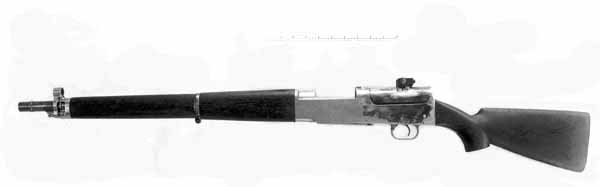
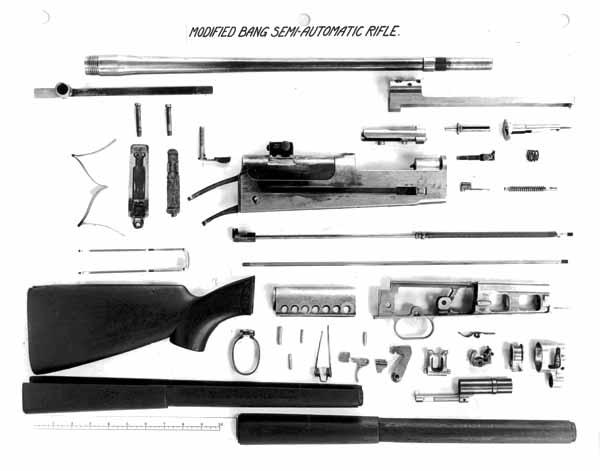
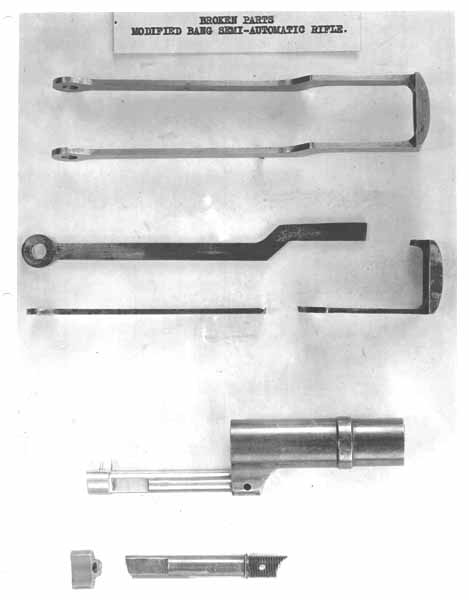
Springfield Armory NHS archives, US NPS The Model 1922 Bang rifle was a modification of the earlier Models of 1909 and U.S. .30" caliber Model 1911 Bang rifles. Produced in .256" caliber (6.5mm Krag), the rifle was handled by the inventor Soren Bang at the U.S. Ordnance Department trials in 1927 and 1919. "CLICK" here for Close-up view. "CLICK" here for Disassembled view. ___________________

Springfield Armory NHS archives, US NPS U.S. RIFLE HATCHER-BANG .30 SPAR5960 __________________

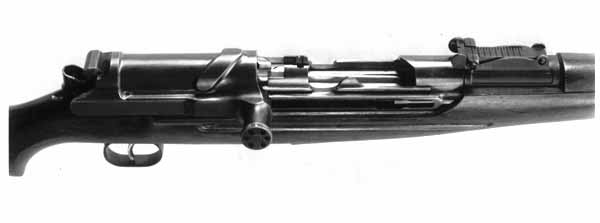
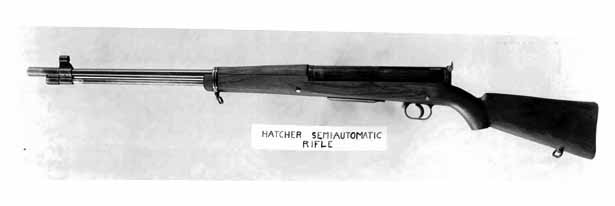
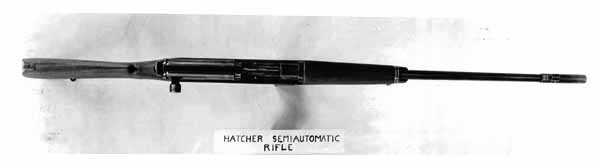
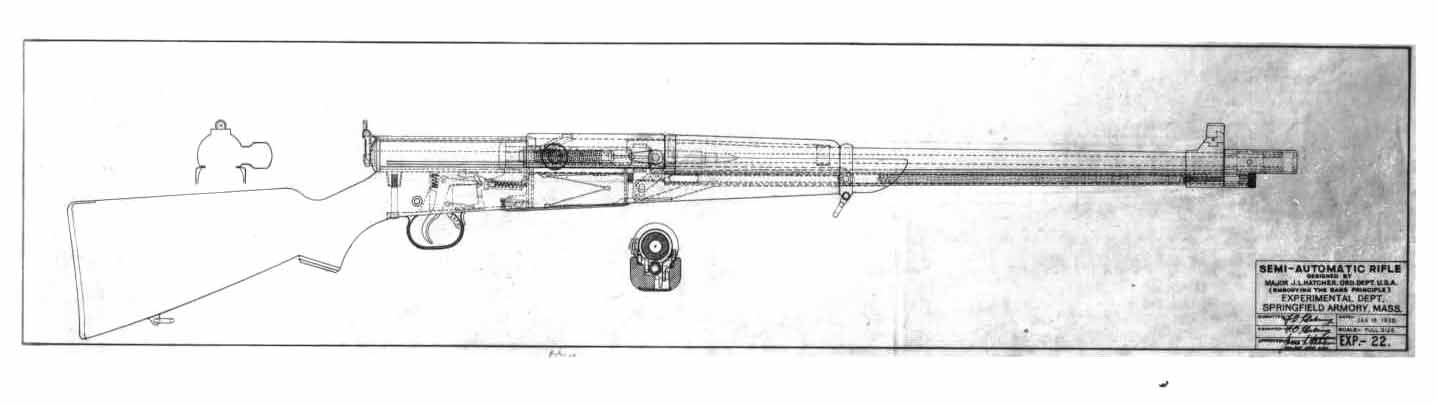
Springfield Armory NHS, US NPS U.S. RIFLE MODEL 1921 HATCHER-BANG .30 SPAR6250 About September, 1920, Captain James L. Hatcher, then on duty in the Experimental Department at Springfield Armory, was directed to supervise the design of a semi-automatic rifle. This rifle was to have the principle and main mechanical features of the Bang Gun, which gave considerable promise in tests of a few years earlier, but to be better balanced, easier to handle, and have its parts so designed as to offer no special difficulty in manufacture. Development of the Bang system, as displayed in this rifle, was discontinued after the 1922 tests of this weapon ". . . by reason that while the design was not considered to be impractical, the tappet actuator system of Mr. Garand appeared to offer greater promise."(from History of Army Ordnance and Experimental Projects) "CLICK" here for left side view. "CLICK" here for view of the rifle's major components. "CLICK" here for disassembled view. "CLICK" here for close-up of the working parts. _________________

Springfield Armory NHS archives, US NPS Thompson Autorifle Model 1921 [top], submitted by Colt's Patent Fire Arms Manufacturing, Inc., for the 1921 trials used the Blish principle of metal adhesion, used in the famous Thompson submachine gun ("Tommy Gun"), as developed by Gen. John T. Thompson. This weapon was preceded by a similar model the year before. In trials in 1921 against the Garand Model 1921 [bottom], the Thompson rifle performed poorly. Later efforts by Colt with rifles using the Blish system were similarly disappointing. __________________

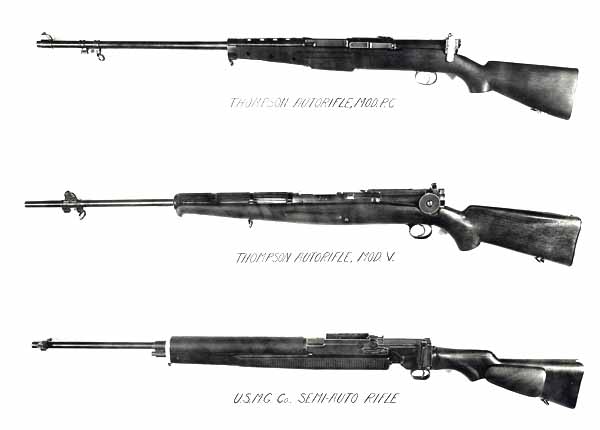
TOP: Thompson Autorifle Model P.C., by Colt's MIDDLE: Thompson Autorifle Model V, submitted by Colt's BOTTOM: Bertier system semiauto rifle submitted by U.S. Machine Gun Co. Springfield Armory NHS archives, US NPS U.S. RIFLE MODEL 1923 THOMPSON .30 SN# 9 SPAR3655 (not pictured) U.S. RIFLE MODEL 1923 THOMPSON .30 SN# 13 SPAR3656 (not pictured) Berthier system semi-auto rifle submitted by the U.S. Machine Gun Co. "CLICK" here to see left side view of these weapons. ___________________
|



Last updated: February 26, 2015