SAVE THE PAST FOR THE FUTURE: A PARTNERSHIP TO PROTECT OUR PASTKathleen M. Reinburg
Introduction
These are just some of the comments made over the last several years pertaining to the increase of theft and vandalism at archaeological sites. While this problem has been a concern to archaeologists and land managers for decades, the epidemic spread of these criminal actions was first graphically brought to the public's attention in 1986 in "Raiders of the Sacred Sites," a New York Times Magazine article by Derek V. Goodwin. The interest generated by this article led to several far reaching official reports. The first of these was the 1987 General Accounting Office report Cultural Resources: Problems Protecting and Preserving Federal Archaeological Resources. This was followed by the 1988 U.S. House of Representatives Interior Committee, Subcommittee on General Oversight and Investigations report, The Destruction of America's Archaeological Heritage: Looting and Vandalism of Indian Archaeological Sites in the Four Corners States of the Southwest. The statistics in these reports were mind boggling. To cite just a few:
The Save the Past for the Future Project
In 1988, the Society for American Archaeology (SAA) during its annual meeting raised the question--what was the nation's largest association of professional and avocational archaeologists devoted to the discovery, interpretation and protection of the archaeology of the Americas going to do to save the nation's archaeological heritage? It was clear that the time was right to take positive action. The public was becoming aware of the problem. Articles were beginning to appear in local and national papers. Congress was aware of the problem too as indicated by the release of Congressional reports, appropriation of specific funding for archaeological resource protection and enforcement of protection laws, and introduction of two major amendments to the 1979 Archaeological Resources Protection Act (P.L. 96-95). People were beginning to recognize that archaeological sites and the resources they contain are time capsules of the past and like endangered species - once destroyed they were gone forever. The "Save the Past for the Future" project was developed to (1) understand why archaeological looting and vandalism occur, (2) determine ways to reduce looting and vandalism, (3) provide opportunities for public education, and (4) devise strategies to improve protection of America's archaeological heritage. By working towards these goals, archaeologists would also be presenting to the public the fact that America's historic and prehistoric archaeological resources constitute an important and fascinating national scientific and recreational resource. In addition, "Save the Past" would explain why preventing further destruction of important archaeological resources is vital to our ability to understand the past, present, and future. The Executive Committee of the Society for American Archaeology approved the project.
Forming a Partnership Realizing that the professional community could not solve this problem alone, the SAA sought the support of federal agencies, national and state organizations and private foundations. A planning committee was formed, composed of individuals with a wide range of experience and expertise, to guide the project. It consisted of experts in the areas of archaeological resources, law enforcement, land management, legal and legislative issues, public relations, and education. Management of the project for the first year was provided by Loretta Neumann, Project Administrator; and Kathleen Reinburg, Project Director; Annetta Cheek, Planning Committee Chair and James Judge, Conference Director. Financial support for the project was provided by federal agencies, professional societies, organizations and foundations including the Bureau of Land Management, Bureau of Reclamation, Forest Service (National and Regions 4 & 8), National Park Service, Army Corps of Engineers, Minerals Management Service, Dimick Foundation, Fish & Wildlife Service, National Conference of State Historic Preservation Officers, National Oceanic & Atmospheric Administration, National Trust for Historic Preservation, Soil Conservation Service, National Parks and Conservation Association, and the Society for Historical Archaeology.
Special Session in Atlanta
After nearly a year of behind the scenes planning, the project was kicked off by a special session during the SAA meetings in Atlanta, Georgia in April 1989. "Our Vanishing Past: The Willful Destruction of a Nation's Heritage" included presentations by experts in the areas of archaeological site protection, prosecution, and legislation. Presentations included The Magnitude and Dimensions of the Looting Problem by Thomas King which looked at looting of sites in an international scope stimulated by an insatiable market and ineffective laws (see King this volume). Protecting the Resources: The Broad Perspective by Sherry Hutt dealt with learning lessons from the last ten years of resource protection legislation and making site protection an agency priority. Visual and Verbal Images of Looting by Elizabeth Bruen and W. James Judge presented dramatic documentation of the loss of sites across the country due to looting and vandalism. Archaeology, Looting and the Public by Brian Fagan raised the issues of public perceptions which revolve around romantic images of the past and strategies for improving communication between the profession and the public. Where to From Here? The Role of the Profession in the Looting Problem by Jeremy Sabloff challenged the profession to understand the extent and effect of looting in order to develop protection strategies. A panel of experts in legislation, land management and archaeological research synthesized the papers.
The Taos Working Conference To fully understand the extent of looting and vandalism, recognize the realities of why people do these things and develop concrete actions and solutions, the SAA sponsored a working conference in May 1989 (see Judge this volume for additional discussion of the Taos conference). Held at the Fort Burgwin Research Center in Taos, New Mexico, the conference brought together over 70 national experts in a variety of related fields: archaeologists from academia, federal and state government and the private sector, along with law enforcement experts, social scientists, politicians, Native Americans, and other citizens concerned with the problem of archaeological looting and vandalism. Three concurrent workshops, each chaired by an expert in the field were held. Each workshop was charged with examining the specific topic, developing achievable recommendations and researching funding sources. The first workshop, "Understanding the Problem" was chaired by Chris Christensen, a research social scientist for the U.S. Forest Service in Alaska. Their charge was to delve into sociological questions of deviant behavior, research and hard data needs to better understand how to address archaeological site damage and evaluation of tangible and intangible resource loss. Before solutions can be implemented, the problem must be fully understood. The second workshop, "Preventing the Problem" was chaired by Shereen Lerner, Arizona's State Historic Preservation Officer. The participants of this workshop dealt with public involvement and participation as a means of site protection. The group discussed various types of programs that exist, their successes and failures. It is recognized that involving the public in positive and rewarding programs will serve as a deterrent to site destruction. The final workshop, "Combating the Problem" was chaired by Martin McAllister, who developed the Archaeological Resources Protection Act training courses for federal agencies. This group looked at the criminal aspects of archaeological site destruction. They evaluated current federal, state and local laws, enforcement and prosecution history and possible legislative changes to correct inaccuracies. This workshop dealt with what is called the "commercial looter." While at Taos, the conference attendees unanimously endorsed and adopted the following as the mission statement of the "Save the Past for the Future" project:
At the close of the week, over 250 recommendations were developed, and many of these are already being implemented by the SAA, various federal agencies and other organizations.
Actions for the '90s
The Actions for the '90s report is the compilation of the recommendations and actions from the Taos conference and includes excerpts from selected papers from both the Atlanta and Taos sessions. The report, and the subsequent actions that have taken place since the conference reveal that those who are aware of the value of our diminishing cultural record can make a major contribution to preserving that record. The following are the major findings and recommendations included in the report.
Summary of Major Findings
Information must Reach the Public
Americans need--indeed, deserve--to know about their heritage and the history and prehistory of the nation. Professional archaeologists in government, private practice, and academia must explain in articulate and compelling terms why archaeology is important, the public benefit derived from archaeology, and how looting and vandalism damage that public benefit.
Education and Training Must be Improved
Educational outreach programs must be developed to inform and sensitize the public, targeted to members of special groups such as Native Americans, attorneys and law enforcement personnel, students, and the media. Training for government personnel dealing with cultural resources must emphasize archaeological values and ethics, proper methods, legal requirements, and enforcement procedures. Laws Must be Strengthened
Existing laws, regulations and government programs must be revised both to increase penalties against professional looters and to provide effective deterrents to hobbyists. Appropriate federal, state, tribal and local laws must be enacted to improve protection for burials, submerged sites and sites on private lands. Tax incentives and conservation easement programs must be provided for site protection on private lands.
Protection
Efforts Must be Increased
Archaeological resources on federal, state and local government lands are not being adequately protected and new mechanisms are needed to protect sites on private lands as well. Substantially more money and staff are needed to improve protection efforts by federal land managing agencies. Agencies at all government levels must enlist the general public and Native Americans in archaeological resource protection.
Agencies
Must Improve Coordination Cooperative agreements must be negotiated among federal land managing agencies and between agencies and states, for protection of archaeological resources. Agencies must develop ways to share both personnel and information. Coordination efforts must include Native Americans, professional societies, and other preservation organizations.
More Research is Needed
Not enough hard data is known about archaeological looting and vandalism. Field research must document where and when looting occurs, the primary types of sites targeted, and how different types of sites are looted. Research is needed on how the trafficking network operates and what the tangible (monetary) and intangible (research) losses result from looting and vandalism. Behavioral research must help determine the causes of looting and vandalism, motives of different types of perpetrators and the most effective deterrent strategies.
Alternatives Must be Provided The interested public must be provided with alternative ways (ethical and legal) to participate in archaeology. This includes opportunities to participate in local avocational societies, volunteer projects or "Earthwatch"-type study activities, site steward programs and opportunities to make financial contributions that aid archaeological research and protection.
Accomplishments Since Taos
It has been an exciting time since the closing of the Taos, Fort Burgwin conference. The conference participants did not just return to their jobs. These dedicated people began working to implement the Taos recommendations. The following are some of the many accomplishments that have occurred since May 1989.
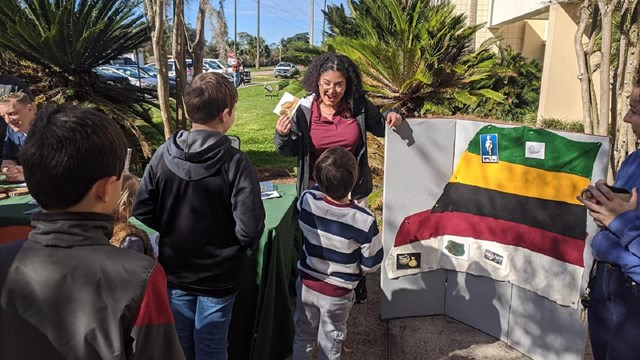
How To Help There are many ways to get involved. Archaeologists can help by documenting looting and vandalism including taking photographs of such activity and sending copies of slides and photographs to the SAA for use in public education efforts; writing articles for professional journals and newsletters; writting letters to the editor for newspapers, magazines, and other publications; participating on radio or television talk shows; giving talks at local schools, civic organizations, and other local groups; and inviting groups to see an excavation first hand (see Milanich this volume for a discussion of archaeology and the media). There are many ways the public can get involved too such as visiting archaeological sites and volunteering to help (information may be available from local historical societies, museums, universities, and local federal land managing agencies). The state archaeologist's office and the State Historic Preservation Office may also have information and ideas. Archaeologists from the local archaeological societies or universities might be invited to speak to civic groups, scout troops, youth clubs or schools.
Conclusion
The success of the "Save the Past for the Future" project and the future of the nation's heritage depends on the continuation of the successful partnership that has been forged between the public and private sectors, among professionals and others concerned about this issue both inside and outside the government. Each sector has added a necessary element that none could accomplished as effectively alone. The Actions for the '90s report contains many recommendations. Some will need substantial fundings and institutions to implement. But many others are appropriate for an individual to do. We have taken an important first step but it is only the first step. The future of our heritage depends on everyone becoming involved.
References Cited
Goodwin, D. V. (1986) Raiders of the Sacred Sites. The New York Times Magazine. December 7:65.
Society for American Archaeology, (1990) Save the Past for the Future: Actions for the '90s. Society for American Archeology, Office of Government Relations, Washington, D.C.
U.S. General Accounting Office. (1987) Cultural Resources: Problems Protecting and Preserving Federal Archaeological Resource, U.S. General Accounting Office, Washington, DC. U.S. House of Representatives Interior Committee, Subcommittee on General Oversight and Investigations Report (1988) The Destruction of America's Archaeological Heritage: Looting and Vandalism of Indian Archaeological Sites in the Four Corners States of the Southwest. Washington, DC.
Return to the Table of Contents Open the Microsoft Word Version of this Article
|