AVOCATIONAL ARCHAEOLOGY GROUPS: A SECRET WEAPON FOR SITE PROTECTION

Hester A. Davis


Introduction

The size, nature, purpose, and structure of avocational archaeological groups in the United States varies tremendously. This variation, particularly in organizational purpose and goals, reflects the divergent interests of the members relative to archaeology, artifacts, research, site protection, Native Americans, and local history.

Before we discuss this variation, however, it is important to set down some definitions so that readers will understand what is meant in this article by "avocational archaeologists." The term has often been used synonymously with the term "amateur archaeologists", and presumably is to differentiate these people from "professional archaeologists," on the one hand, and "artifact dealers", and "grave robbers" on the other. And then there are "collectors" and "relic hunters," those who do not profess to be "archaeologists", as the term is usually used, but who are quick to point out that they do not destroy sites, as do grave robbers and vandals.

There is, perhaps, another way of looking at the semantics of this universe of people: there are archaeologists and there are nonarchaeologists, and the basic distinction is that of attitude toward the resources. Archaeologists consider sites and artifacts as sources of information; nonarchaeologists consider sites as sources of artifacts. Since this is not a discussion on the ethics of archaeology, let me say that I will be using the term avocational and amateur synonymously, and that I consider these individuals to be archaeologists, as opposed to nonarchaeologists, as defined above. Since there are archaeological organizations in which avocational archaeologists do not participate, I will also be talking of those organizations in which avocational archaeologists are the leaders, organizers, and perpetuators. I will NOT be considering the organizations of dealers, traders, and collectors of artifacts, of which there are also a great many.

In order to understand the potential for avocational organizations to aid in site and resource protection, perhaps a review of their variety is in order. The greatest difference is probably in size of membership. There is, for example, the Archaeological Institute of America (AIA), with membership in the thousands and two major publications, one a quarterly scientific journal and the other directed to the general public with a circulation of over 100,000. At the other end of the membership scale, there are probably hundreds of small organizations, often with 50 or less members, such as local chapters of state or regional societies. There are state-oriented societies; regional groups, county and city organized societies, there is an organization of avocational societies called the Eastern States Archeological Federation (ESAF), and there is, as of this writing, a proposed organization of avocational archaeological societies which would affiliate with the Society for American Archaeology (SAA).

Almost all of the groups with which this article is concerned have generally similar goals and purposes: to hold meetings for discussion and exchange of information, to promote archaeological research, to help professional archaeologists, to provide information to the public, and many have "a determination to help preserve archaeological sites, materials, and traditions" (Lubensky 1988:6). Each of these organizations achieves or strives for these goals differently, some, of course, with greater success than others.

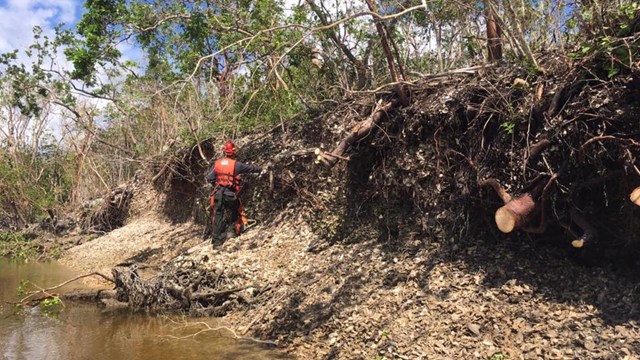
To follow through with our particular interest in the goal of site protection, there are three areas which need addressing: 1) what does "site protection" involve relative to actions by organized groups of interested people; 2) what have avocational societies done in the past to protect sites; and 3) what could such groups do in the future. Let me add here that I am using the term site protection to mean the physical protection of an archaeological site from disturbance (by plowing, erosion, vandalism, looting, and other nonarchaeological land disturbing activities).


How Can Organized Groups Protect Sites?

Again, by "site protection" I mean both the physical protection of sites and the protection of the information which sites contain. This protection can, in addition, be both direct and indirect. There are, it seems to me, several ways in which groups can actively become involved in protecting sites. One of the most direct actions a group could take would be to purchase sites or arrange for conservation or preservation easements on sites. This could be done tangentially, through active support of The Archaeological Conservancy, the one entity in this country designed specifically to purchase threatened archaeological sites (see Michel this volume for a discussion of the Archaeological Conservancy).

A second kind of direct action is for an organization or its individual members to become site Stewards, taking personal or group responsibility for the protection of a site or sites which is actually owned by someone else (see Hoffman this volume for a discussion of site stewardship programs).

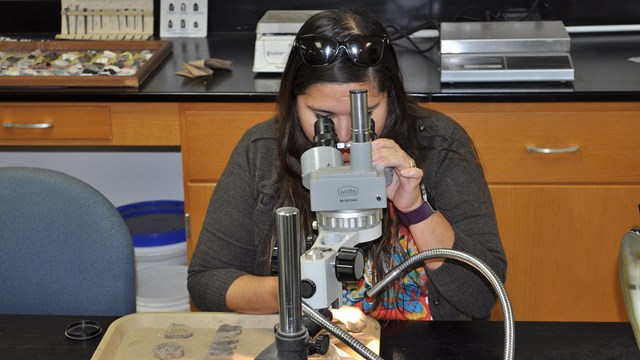
And finally, there is protection of site information through data recovery. This kind of direct protective action requires that archaeological organizations arrange for their members to be trained in scientific excavation techniques, appropriate laboratory work, analysis, and report writing. If they take on the responsibility for data recovery, these organizations must also arrange for permanent curation of the artifacts and associated information.

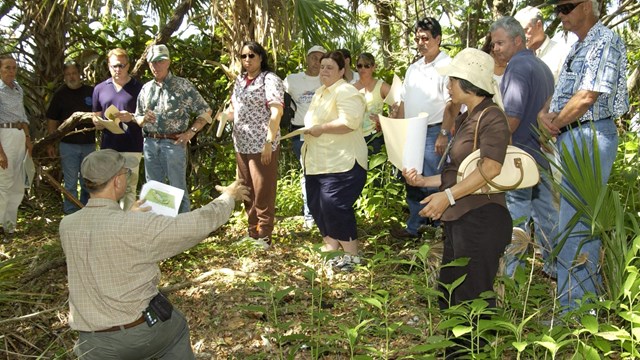
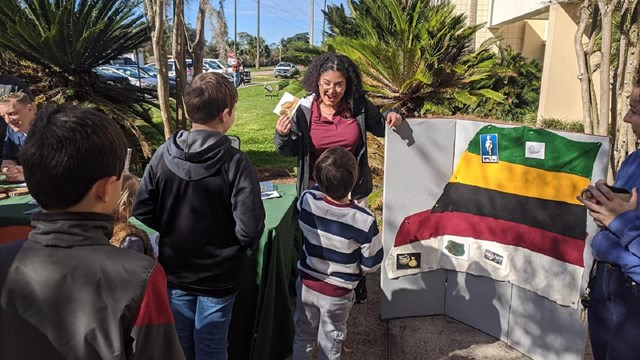
Less direct but in the long run equally important activities for site protection come to mind as well. First, organizations should continually educate their individual members about the nature of sites, and the dangers to them; these members can then, in turn, influence those who own sites (which in a few cases may be one and the same). Organizations can sponsor local and state-wide educational programs for the public, such as an Archaeology Week (see Lerner this volume for a discussion of Arizona Archaeology Week). They can be a source for civic club programs; for school assemblies; for county and state fair booths -- all designed to provide the widest possible education to citizens about "saving the past for the future."

Finally, there is the possibility of active support for protective legislation, whether local, state, or national. Since legislation can be oriented toward general protective measures for state property or for unmarked graves, and could include protection or purchase of individual sites by state and federal governments (see Neumann this volume for a discussion of legislative involvement in archaeological site protection).


What Have Archaeological Organizations Been Doing?

What is the record of avocational organizations in pursuing these kinds of protective activities? The best record is in educating the membership in a preservation ethic. Since there are organizations for those who want to buy, sell, and trade, if an individual remains a member of an avocational society which by our definition has restrictions about members buying, selling, or trading artifacts, it means that person is interested in the research/scientific goals of the organization. By personal experience, I am aware of many people who have joined the Arkansas Archeological Society because they have collected "arrowheads" all their lives, and who subsequently soak up the preservation ethic and make it their own. This does not necessarily mean they will cease to collect artifacts from the surface of disturbed sites, but it does mean they catalogue their collection, they report sites being dug by pothunters, they participate in training programs so that they can do research on their own, and they actively support if not lobby for protective legislation. They often see that their society does, too.

Most state archaeological organizations have both avocational and professional archaeologists, and many of their organizational activities are oriented toward "science;" toward helping professionals when there are emergencies; volunteering for laboratory work; reporting sites and cataloguing collections. Some societies have also developed standard programs which members can borrow to provide talks to the public and to school children. Colorado and Arizona have led the way in combining efforts of several organizations in sponsoring state-wide archaeological awareness programs.

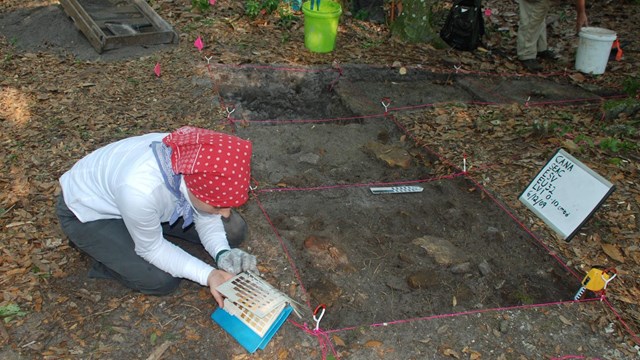
Training and certification programs have developed in the past 20 years which again combine the time and talents of the avocationals and professionals. In Texas, the Texas Archeological Society contracts with a professional archeologist to direct the 9-day training program for Society members. In Arkansas, the Arkansas Archeological Survey provides the professional leadership for both a training program and a formal Certification program for members of the Arkansas Archeological Society. These, and over a dozen other similar or adapted programs mean that many states have a cadre of people with some knowledge of scientific techniques which can be used in conjunction with professional projects and/or student crews, or that small local groups can conduct scientific salvage excavations on their own. In many instances, these programs have become vital in efforts to save both sites and information which otherwise would have been lost for lack of knowledgeable people.

This brings us to the other area in which avocational societies have been active -- support of protective legislation. This is largely a recent phenomena (as it is with professional organizations for that matter), but some of the older societies have an admirable record, most particularly on the state level. Chapman's description (1985:244) of actions by the leadership of the Missouri Archaeological Society in the 1950's and 1960's in this regard is an excellent example. He also recognizes (1985:245) that it took both avocational and professional organizations to get the Archeological and Historic Preservation Act (PL 93-291) of 1974 passed through Congress. It should also be pointed out, of course, that some state historical societies have long been prime movers in protection and even purchase of archaeological sites; the Ohio Historical Society comes immediately to mind.

Most recently, many state archaeological societies have become involved with Native Americans and professional archaeologists in trying to work out mutually agreeable ways in which burial sites can be protected from grave robbers through state legislation.

To the best of my knowledge, however, avocational archaeological societies have not gone into the business of protecting sites through purchase. The reasons for this are multifarious, not the least of which is that it would mean a money-raising campaign. But the principal one is undoubtedly because purchase means ownership and management, and most avocational archaeological organizations are neither set up to do this nor are their members really oriented to this kind of responsibility.

I have observed a phenomena concerning local or even state archaeological organizations, as opposed to historical societies and more recently historic preservation groups, which might account for this lack of orientation toward raising money, and taking group responsibility for management. It is my impression that archaeological society membership is largely made up of "ordinary citizens." I would wager that there are more rural route postmen interested in archaeology than there are Chief Executive Officers with similar archaeological interests.

Local and state archaeological organizations are all volunteer; none that I know of have any paid staff, even part time. Often their organization's address changes as its officers change, so there is no permanent mailing address. Their energies as a group are taken up in publications, in annual or chapter meetings, and if possible in providing some way for members to have field experience. Archaeological societies (avocational AND professional it seems) do not run major fund raising campaigns; nor do they have funds for an advertizing blitz to put across their message about site protection. A case in point from my own experience: my own local Washington County (Arkansas) Historical Society OWNS two historic houses in Fayetteville, purchased through major donations and a fund raising campaign to save them; the state-wide Arkansas Archeological Society, in five years, has yet to raise $20,000 for a research fund, much less purchase a threatened site.

Archaeological societies have worked most successfully at the grass roots level (e.g., the individualistic nature of the Stewardship programs). Many can mobilize volunteers for an emergency salvage of a site being destroyed (after all, that means doing real archaeology) more easily than they can mobilize a volunteer force to lobby their state legislators.

In general, then, the history of really active efforts directed at site protection per se by avocational archaeological groups across the country is not much to write home about (or to summarize in a publication on the subject). But the POTENTIAL is tremendous. All it will take is a lot of hard work, time, money, and strong and committed leadership from a few professional and avocational archaeologists working together.


The Secret Weapon

The greatest potential for greater site protection is through the state-wide avocational archaeological groups. The Secret Weapon held by these organizations is their ability to influence -- their own members, politicians, landowners, teachers, school children, even pothunters. By their very numbers and the fact of their organization,

avocational archaeological societies should be real advocates for site protection, in the most contemporary use of that term.

Advocacy has become a powerful tool in the fight for a better environment. However, convincing avocational organizations to actually take on politically active programs may take some innovative approaches. As implied earlier, archaeologists often seem to be oriented toward activities which lead to direct personal satisfaction: excavation, handling artifacts, having their name appear on reports, etc. Contributing to and/or becoming personally active in programs with less direct personal reward (lobbying for legislation, for example) may require some study of how the Sierra Club and the Audubon Society have been so successful in getting so much of the nation's population willing to march on Earth Day to help save the environment.

Ideas for programs, activities, and legislation could, and probably should, be communicated to state and local groups from the national archaeological organizations, particularly the SAA through its Save the Past initiative (see Reinburg, Judge this volume) and also from the American Society for Conservation Archeology (ASCA), whose whole orientation is supposed to be toward site and resource protection. The state organizations can then pass this information on to chapters or other local groups (including historical societies and historic preservation organizations).

This country is attuned to advocacy groups. One would think that members of archaeological organizations would more often be seen on the evening news lying down in front of the bulldozers. How many archaeological groups do you know who organize press conferences on the State Capitol steps to speak out, complete with banners and posters, for stopping destruction of the past? Not many, I would wager, although there have certainly been some success stories of organized efforts to stop or at least delay destruction of individuals sites, and maybe even of projects. Generally, however (perhaps excluding many groups in California), avocational organizations are not rabble rousers. They have gone about their advocacy, if at all, on a case by case basis as an individual local crisis arises. Since this seems to be the habit, if not the nature of archaeological organizations (to say nothing of archaeologists), then this approach needs to be taken advantage of in organizing avocationals to work toward the common goal of site protection (see Bense this volume for a discussion of public involvement in archaeological site protection).

There is, of course, already an activity which gives individual satisfaction, which can be promoted on the state level, on the local level, with members, with landowners, and even with the general public. The Stewardship concept for protection of individual archaeological sites is tailor-made for this kind of program. National organizations, it seems to me, need to become advocates themselves, not just for saving sites on public land, but for saving sites anywhere. They need to get out a heavy blitz of information to state societies about the concept, provide flexible ideas for how to set up such a program so individual groups can adjust a program to their own circumstances, provide guidelines on dos and don'ts, and in every way possible indicate that the Crisis is Upon Us and each individual archeologist has a personal, moral, and ethical responsibility to be a steward for at least one site. Given that there are probably between 25,000 and 50,000 individuals who are members of avocational organizations (an estimate made about 10 years ago from membership of those organizations in ESAF), there could be a major impact on site protection.


Conclusion

Avocational archaeological groups have the greatest potential for making a real difference in which sites and how many sites are protected in the future. All archaeologists, in my use of the term, must coordinate, communicate, organize nationally, and become pro-protection. Legislation protecting unmarked graves must hit hard on the looters and vandals; ordinances at the local level must become commonplace. The names and faces of archaeological organizations speaking out for less wanton destruction must be on educational television, and the evening news.

There are probably four of five times as many avocational archaeologists as there are professional. There are probably dozens more avocational archaeological organizations than there are professional ones. Since their interests are supposed to be the same, they must all become strong active advocates for site protection, from the individual site where the shopping center is going in, to the National Historic Landmarks still in private ownership.

None of these thoughts are new. Almost 10 years, George Frison said: "...their [archaeological resources] value must be established through education of the public... Here the avocational groups can make their greatest contribution. ...when enough people become concerned about our cultural resources, legislative indifference to their protection and proper management will not be tolerated" (Frison 1984:190).

In point of fact, many people, both professional and avocational, have been saying that we who are interested in preservation must act in unison. However, the leadership for springing this secret weapon upon the nation must come from the national archaeological organizations.


References Cited

Chapman, C. H. (1985) The Amateur Archaeological Society: A Missouri Example. American Antiquity 50(2):241-248.

Frison, G. C. (1984) Avocational Archaeology: Its Past, Present, and Future. In Ethics and Values in Archaeology, edited by Ernestene L. Green, Chapter 21. Free Press, New York.

Lubensky, E. H. (1988) Objectives and Programs of Archaeological Societies. Paper presented at the Annual Meeting of the Society for American Archaeology, Phoenix, Arizona.


Return to the Table of Contents

Open the Microsoft Word Version of this Article