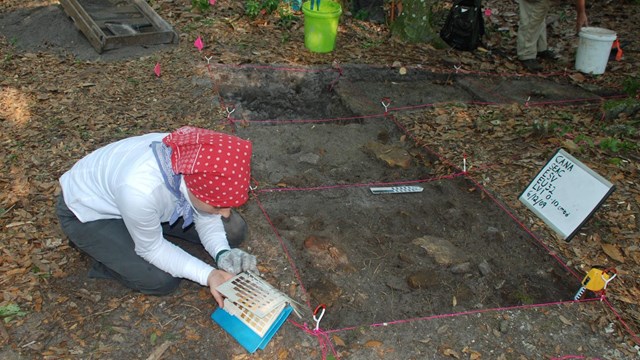
ARCHAEOLOGY AT HOME: A PARTNERSHIP IN PENSACOLA FLORIDA
Judith A. Bense
Introduction
There is something very special about an archaeological site. Perhaps it is the silence surrounding the artifacts which once were a part of life. Perhaps it is the recognition of our own mortality and the inevitable loss of context of things that are important to us and that identify us as individuals and a society. Most people generally understand that an archaeologist is trained to decipher the material from sites to reconstruct past ways of life. Despite this general perception, several misunderstandings are also prevalent: 1) the most important archaeological sites are somewhere else (Egypt, Mexico, Europe, China) and not in the United States, 2) there is no important archaeology in their hometown, and 3) archaeologists think the spectacular artifacts are the most important. These misconceptions have been aggravated by the general avoidance of the public by many American archaeologists and has fostered an ever-increasing destruction rate of archaeological sites in the United States. Things are finally beginning to change as more and more archaeologists realize that just like some natural resources, archaeological sites can be virtually eliminated during our generation. So, on the coat tails of the successful environmental movement, some alarmed archaeologists have become active as our non-renewable resources are pushed up by bulldozer's blades without any protection. This article presents a case study about how a small group of alarmed people, using the organized tactics of the friends of the environment have changed the perception and attitudes toward archaeological sites in a community. The key to this shift in attitude was organization, persistence and working within the system to develop and implement local legislation and pressures which protect and conserve archaeological sites in the Pensacola, Florida area. As a result a mutual partnership has developed within the community. This partnership consists of professional archaeologists, a strong citizen advocacy group, the City of Pensacola, the media and the historic preservation organization. This article explains how this partnership developed, how it works and the kind of interrelationships which sustain it. It is hoped that the realistic approach to archaeology in Pensacola can be repeated in other communities in the United States.
Partnership in Pensacola
The answer to why there is a community archeology program in Pensacola is simple: the existing well-intended but archaeologically uninformed leadership in Pensacola was essentially destroying the heart of one of the most significant archaeological areas in the state and was going to continue doing it because they perceived that they were doing nothing wrong. No one had raised a voice in protest and unless something was done it would continue at an ever-increasing pace. Therefore, Pensacola picked us rather than the reverse. This is our home and what happens here to the archaeological resources on "our watch" is our responsibility. However trite this sounds, it is the driving force of the Pensacola archaeology program: either we find a way to protect archaeological sites at the local level or they will be destroyed and we will be at fault. By looking the other way professional and avocatioinal archaeologists as well as the general public were allowing it to happen. That was a poor legacy to leave for the next generation. It was unacceptable. Pensacola is an old town. It was a colonial military settlement permanently established by the Spanish in 1698 and it has been occupied ever since. The present urban core is in the same location as it has been for over 250 years, while the remainder of the city has sprawled into the interior and along the bays. Pensacola has a metropolitan population of approximately 250,000 and is the regional center for West Florida. It is located on the northern Gulf Coast of Florida out of the high growth more tropical areas to the south. Approximately 50% of the payroll in Pensacola is military and government related (especially Navy) with the remainder made up of heavy industry, tourism and retirement. The higher education institutions include Pensacola Junior College and the University of West Florida (UWF). In the late 1970's, large scale urban renewal began in Pensacola and demolition of block after block of deteriorated buildings as well as excavations were common place in the older areas of the city. Associated with these activities, unfortunately, was an increasing unintended yet devastating destruction of significant archaeological deposits from the Indian, Colonial, and Early American occupations of Pensacola. One of the largest building programs was "Direction 85" which included a 12 million dollar civic center, an 8 million dollar city hall, and a new police station all in the downtown area. By this time, an archaeology program was being established at the University of West Florida and University archaeologists and students saw first hand the unintended destruction. Despite being untrained in historic archaeology materials and literature and no sources of funds, a core group of alarmed professional archaeologists, historians and concerned friends of archaeology felt forced to do something to bring this destruction under control.
The First Partnership
The first partnership in the Pensacola archaeology movement was between concerned professional and avocational archaeologists. This small group had the simple but immediate goal of finding a way to prevent this almost constant destruction of archaeological sites in downtown Pensacola. These first partners developed a key ingredient of the ensuing larger and successful archaeology movement in Pensacola. They recognized that a confrontational approach would not be productive and that a positive, pragmatic yet assertive approach would be the most effective means of reaching a solution. No longer would we sit on the sidelines and wring our hands complaining about lack of funding, training, and the like. These partners were advocates who used pubic pressure, negotiation, whistle blowing, and persistence to protect and conserve archaeological resources in Pensacola. This first partnership successfully developed and pushed through city legislation in 1985 to protect archaeological sites on city-owned property, in rights-of-way, and on city sponsored projects. While not comprehensive, this accomplished the goal of protecting sites that were being destroyed indiscriminately in the urban renewal process which was sponsored primarily by the city. It should be noted that the archaeological review resolution is not tailored to Pensacola, it is a carbon copy of federal level Section 106 compliance procedures found in the National Historic Preservation Act of 1966. For further information and background about the Pensacola archaeological review resolution (Bense 1987). In addition, the group approached private companies and developers planning construction projects for which no compliance was required with unsolicited proposals to at least survey the parcel to determine if significant archaeological deposits were going to be damaged. If this was the case, negotiations were held with the developer until sponsored archaeological investigations were agreed to. The approach remained the same: positive, pragmatic and persistent. One of these unsolicited, non-compliance projects sponsored by the local electric utility, Gulf Power Company, won the first Department of Interior's National Public Service Award for archaeology awarded to a public utility.
The Second Partnership
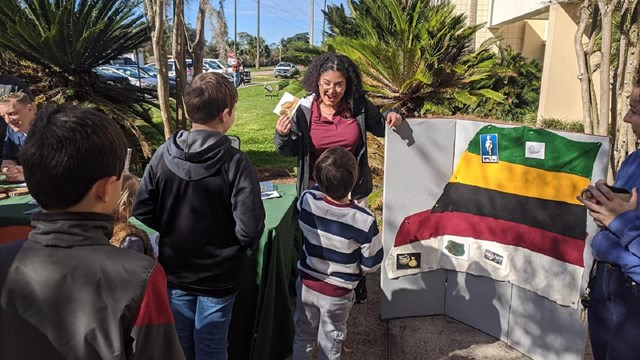
With the passage of the archaeological review resolution the City became the third partner in Pensacola archaeology. Compliance archaeology projects generated by the archaeology resolution began to be regularly performed. These projects included street improvements, affordable housing developments, and utility improvements. In addition, the three partners designed and implemented an archaeological survey of the City of Pensacola using their own resources as well as grants from private foundations. Each of the partners contributed their share and this project exemplifies the partnership approach to Pensacola archaeology. The University contributed the professional archaeologist's salary for teaching archaeology students, facilities and equipment. The archaeological society provided volunteer labor and obtained a large grant from a private foundation to pay for two trained supervisors (experienced students), supplies and report production costs. The City paid for the costs of supervisors and supplies for a survey of city owned property. This survey resulted in a professional quality technical product (Bense 1989) that can be used by City staff as well as professional archaeologists in planning and making management decisions which could effect significant archaeological deposits. A fourth partner was also brought into the Pensacola archaeology movement during the city survey: the media (see Milanich this volume for information on using the media to educate the public about archaeology). It was realized early on that one of the major obstacles to archaeological site conservation was an uninformed public. While a small group of people (less than 50 at the time) knew that Pensacola had large areas of archaeological deposits that were generally in excellent condition, no one else did. Therefore, a high profile public education campaign was initiated to teach the who, what, when, where and why of Pensacola archaeology. However, the vast majority of people do not read books or journals and do not regularly attend classes or meetings on archaeology. That meant that they were not going to come to us. Therefore, we had to go to them by placing archaeology information in the things they did read, watch and listen to, i.e. the newspaper, television, and radio. Subsequently, much attention and time was devoted to the media. Events such as ground breakings, kickoffs, and press conferences became a regular part of most archaeology projects. The press corps was cultivated by quick leads on new discoveries and "finds". Articles began to appear with increasing frequency. Editorials summarized the articles and added credibility to archaeology, to the power structure, as well as the general public. A weekly radio program on archaeology in Pensacola, boradcast on the local segment of the National Public Radio Station at the University, provided archaeological information to the public many of whom were temporarily captive in their cars on their way home. This public education mechanism has become a mainstay of increasing archaeology awareness in Pensacola.
The Final Partnership
The last, but far from least, partner brought into active participation in Pensacola archaeology was the local historic preservation board. This had been a typical historic house restoration and museum-oriented organization supported by state historic preservation funds. Its primary missions were to prevent demolition of historic structures and establish historic architectural districts. This had been successful and the historic district in downtown Pensacola continues to draw over 100,000 people annually, including public school children on field trips to the "Old City" of Pensacola to experience Pensacola history by viewing the restored buildings and visiting the museums. Only one thing was missing in this historic experience: the archaeology. Because of the combination of an existing audience and an excellent archaeological record containing the authentic though buried pieces of Pensacola's ancient and historic past, it was decided to expose and develop the archaeological deposits which lie just beneath the surface in the "Old City". The first step was to simply move the base of operations from the University (located on the fringe of town) to the heart of the historic district to establish a presence for archaeology there. The Historic Pensacola Preservation Board (HPPB) was requested and has since provided several field headquarters in the historic district for all archaeology projects in the downtown area. This includes city compliance, university field schools and youth archaeology programs. The second step was to design a high profile public archaeology project which focused on the Colonial Period forts which were in downtown Pensacola. This concept resulted in a "Colonial Archaeological Trail" project which was the first archaeology project to receive a special big-ticket legislative grant from the State of Florida. The trail is now open with three outdoor exhibits, a brochure and an Archaeology Center in the heart of the Historic District where visitors can see artifacts and maps from Colonial Pensacola on exhibit. Archaeology is becoming a part of historic preservation in Pensacola. It has provided a new and continuing source of public interest in the Historic District and now presents the full spectrum of historical resources to the public.
How the Partnership Method Works: The Fort of Pensacola Example
In the seemingly constant stream of city construction projects in the historic "Old City" area, a large utility and street scape improvement project was designed for several blocks which completely crossed through the colonial fort area of Pensacola. Plans called for massive new utilities, street surfaces, street lights, sidewalks and scores of large trees were to be planted. In addition, much of the existing buried utilities were to be removed and new lines were to be placed in deep trenches. When the plans went out for bid the City Consulting Archaeologist developed a compliance plan that began with a modest testing of several sidewalk areas and the identification of several areas of significant deposits which would be impacted. On the second day of construction, as the asphalt was being removed in an area thought to be previously disturbed, a British cannon was discovered. The press was notified and while it was being hoisted from the street with the cameras rolling, foundations from a colonial building inside the 200 year old fort were exposed in the street. With the press already there, a second story developed: the British Fort of Pensacola. This became the largest archaeological event in Pensacola and as more and more of the fort was exposed in the street public fascination grew. Finally the stockade remnants and interior buildings in the main gate area were exposed. This gate happens to be the one that Andrew Jackson walked through to accept Florida from Spain in 1821 resulting in the first official American flag over the state. This construction project was in the heart of Pensacola, in the street, right next to a park, and at the foot of the largest museum in the historic district. Public accessibility was excellent. Hundreds of people came to watch the 200 year old archaeological site being brought into the late 20th century. People wanted maps to see how the remnants of the old fort fit into today's environment. They were excited and were eager to sign petitions to save the site for the public. The partners then went to work. More funding had to be secured from the city as this was an unexpected discovery and an expensive one. The University lead the way with the President attending a crucial budget meeting of City staff which resulted in additional funding for the project. Scores of volunteers from the archaeological society provided the labor and staffed an information table for the public. This meant that the only paid staff were three supervisors and a public tour guide. The media took to this story and the uncovering of this piece of colonial Pensacola grew into a national story appearing on ABC's Good Morning America and twice on CNN as well as receiving extensive local coverage. A "fort watch" was held by the local newspaper and several editorials appeared throughout the duration of the project. The public and press immediately were concerned that the City would destroy the fort and its buildings by putting a large storm water main through it. A petition circulated to close the street, excavate the fort, and turn it into a upscale outdoor archaeology exhibit to be incorporate into the Colonial Archaeological Trail. The Historic Pensacola Preservation Board immediately put the cannon on display and pressed hard for the street closing. Regular tours of the area incorporated the excavations and the media used the historic preservation staff for stories and background. The result was a typical negotiation between the partners. Each had a range of priorities within which a plan could be acceptable; however, the most powerful partner was now the public. The City knew that if the site was destroyed, the public would rise up and literally storm city hall. The public's interests in this case was represented by the City Consulting Archaeologist and in the negotiations held the highest position. The City felt pressure to keep the street in, but could avoid impacting the site by eliminating parking and moving the street to the far side of the right-of-way. The Preservation Board and staff requested additional budget funds from the state for the excavation and interpretation of the site. The press kept the pressure on. The compromise plan was a city funded documentation and limited sampling of the colonial features. The street design was changed to a serpentine pattern around the intact deposits and the utility trench was placed on the other side of the street from the fort. The City provided sturdy filter cloth to cover the site and two feet of fill to buffer it from impacts. The legislative delegation is now being lobbied to keep the funds in the preservation board budget so that the excavation and exhibit can continue. Even if it takes longer to secure the funding, everyone knows that this site was saved because the City had professional archaeologists on the job on their payroll and because of the archaeological review resolution. The question of the worth of the resolution is now answered. Everyone came out a winner (as well as a paying partner) in this project. The University archaeologists recovered priceless information and protected nationally significant deposits. The City wears the white hat because it had the leadership to have archaeologists on the job when the construction took place and paid its way. The historic preservation board took the lead in initiating the large funding request, providing historical information, and exhibiting the main artifact: the cannon. The archaeological society provided the labor, telephones, and an information table. As a result they gained scores of new members. The media had a field day and the reliable reporters had bylines and feature stories for several weeks. This is how it works in Pensacola and we handle it one project at a time giving each partner their respect yet demanding that each shoulders their responsibility.
Conclusion
Pensacola archaeology is now alive and well because concerned residents realized that it was up to them to find a way to stop the irreversible destruction of our archaeological deposits. This is not an especially rich, poor, big or small city. The residents here consist of the full spectrum of American citizens. This partnership approach can be developed between the key players in any town. The essential ingredient is the acceptance of responsibility by the archaeological community, both professional and avocational, that something can be done to stop the destruction and neglect of non-renewable archaeological resources. It is possible to mainstream archaeology. The long suit in all this is that the public already has a natural interest in archaeology and once educated and involved in it, they have the power to make changes (see Pokotylo this volume for additional discussion concerning public attitudes about archaeology). This is the key to the growing strength of Pensacola archaeology. Now almost all of the 250,000 people living here know that there is archaeology in Pensacola and it is a valuable community resource. It can be managed just like other public concerns such as water, runoff, air quality and the like. It is time to start the involvement now before more archaeological sites are gone and we leave a biased legacy for future generations.
References Cited
Bense, J. A. (1987) Development of a Management System for Archaeological Resources in Pensacola, Florida. In Living in Cities: Current Research in Urban Archaeology. Special Publication Series, Number 5.
---- (1989) The Pensacola Archaeological Survey, Technical Report, Volumes I and II. Publication Number 1. Pensacola Archaeological Society. Pensacola, Florida.
The National Historic Preservation Act of 1966 (Public Law 89-665; 80 STAT. 915; 16 U.S.C. 470) as amended by P.L. 91-243, P.L. 93-54, P.L. 94-422, P.L. 94-458, P.L. 96-199, P.L. 96-244 and 96-515.
Return to the Table of Contents Open the Microsoft Word Version of this Article
|