A ROLE FOR THE AMATEUR ARCHEOLOGIST ALLIED IN DECREASING SITE LOOTING

Julia O. Elmendorf


Abstract

Amateurs in the Southeast have long played an important role in archeological research. The current relationship between amateurs and professional archeologists is not very good in many cases. This is unfortunate because amateurs should be seen as allies in our efforts to control site looting. Various groups have had success in using amateurs to prevent site destruction. A clear role for amateurs should be developed by the profession that assures them the recognition and respect they want.


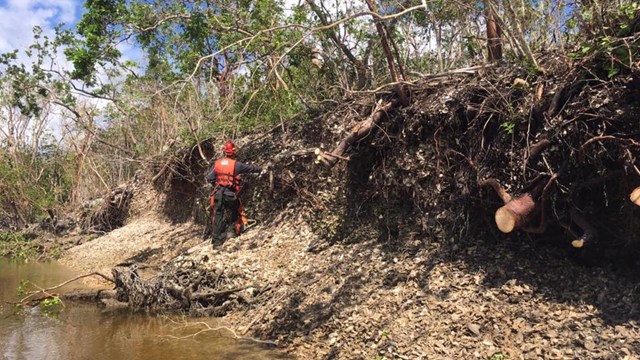
One of the purposes of the Archaeological Resources Protection Act of 1979 (ARPA) was to encourage cooperation between professional archeologists and those outside the profession with strong interest in archeology and ancient material culture to further the protection of archeological sites. One of the effects of the passage of ARPA has been to increase the animosities between these two groups. Many avocational archeologists accustomed to collecting sites on federal land, particularly those exposed in the drawdown zones of federal artificial lakes, are angry at being told that this activity is no longer permitted. Although ARPA specifically states that there is to be no penalty for the collection of arrowheads from the surface of the ground, generalized collecting of sites can be prohibited. A segment of the archeological profession advocates enforcing ARPA so as to prevent any collecting. Clearly, polarization of this sort does not increase the protection of sites. It leaves archeologists, most of whom are dependent-directly or indirectly-on public money, without a constituency to help further the cause of archeology before Congress and state legislatures. How can we use amateurs to help us protect archeological sites as was intended by ARPA? Let us look at the use of amateurs to protect sites from two aspects. First, amateurs with an expressed interest in archeology can be used to monitor sites in the field; second, non-archeological professionals, particularly in the media, can help develop programs to increase public awareness of the problem of site looting and the legal prohibitions against it.

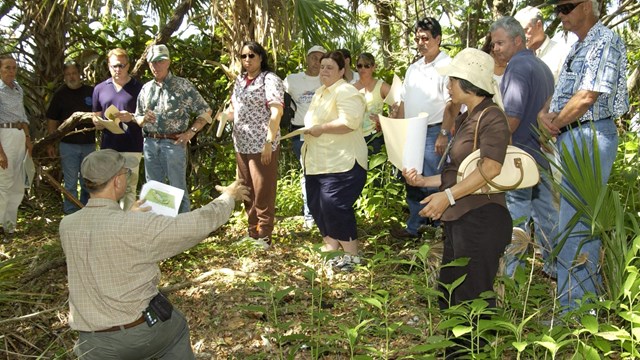
Most archeologists recognize in themselves or their colleagues, strong emotions of possessiveness and territoriality regarding the archeological sites and materials they study. These emotions are no less strong among amateurs. In many cases, amateurs visit "their" sites on a regular basis. Thus, they are ideally suited to be monitors of site damage. Of course, these are often the same people who are angry that they are being told they can no longer collect "their" sites. The Tennessee Valley Authority (TVA) has developed a program to try to soothe some of this anger and rebuild the partnership between professional and amateur archeologists. With the University of Alabama, Office of Archaeological Research (OAR), we have developed an Archaeological Associates Program. Through this program, interested amateurs, by invitation only, are provided training in proper field techniques and site recording; they then participate in survey work on TVA land under an ARPA permit issued for this purpose to OAR.

The first stage of this project has been very successful as reported by both OAR and the amateurs involved. We are now proposing to use these associates for monitoring the physical condition of known sites, as well as to continue to use them for surveys. However, where site looting is a problem, difficulties can arise with the use of amateurs in this way.

In the Tennessee Valley at least, the people who actually dig sites, as opposed to surface collectors and "scratchers", have the reputation of carrying guns and threatening people who try to stop them from looting. Clearly TVA cannot sanction volunteers confronting such people. We also have a responsibility to protect from threats volunteers who may observe violations and be called upon to testify in court. In the absence of any efficient way of protecting people, we have to ask them to be totally non-confrontational. Possessiveness towards sites can easily engender outrage at their being looted, so the issue of safety is one that must be repeatedly stressed. We request that descriptions of individuals, location of observed violations, date and time of day, license plate numbers, and photos of activities or of recent excavations be gathered only when these activities do not endanger the volunteer.

The issue of respect for the volunteers deserves discussion. Most amateur archeologists are proud of their knowledge. No good is done to the relationship between amateurs and professionals in injuring the pride of the amateurs by suggesting that they have no right to collect at sites they have been collecting for years. Professional archeologists must keep in mind the valuable help that amateurs have rendered in the past. One of the ways TVA is trying to show respect for responsible amateurs is to allow the selected volunteers in the OAR program to "borrow back" some of the artifacts they collect on TVA land so that they may study them and also use them in talks with school children and other educational endeavors. This is controversial but the following is our rationale for it.

The amateurs are on the sites more frequently than the agency professionals could ever be and so find more things. If we insist upon confiscating their finds, we will simply never see these finds. If we request that significant finds be reported to us and recorded, but allow the amateur who found a given item to retain it for a period of time, we are showing respect for his integrity and making it more likely that amateurs will report finds. The arrangement needs to be clearly structured with good record keeping and accountability, and government ownership must be emphasized. If a find is very significant or very fragile, we feel the proper approach is to explain the importance of the item and try to retain it for curation in a museum setting. We also feel that it is proper to offer nonprovenienced material from curated collections for short term loan to individuals participating in this program.

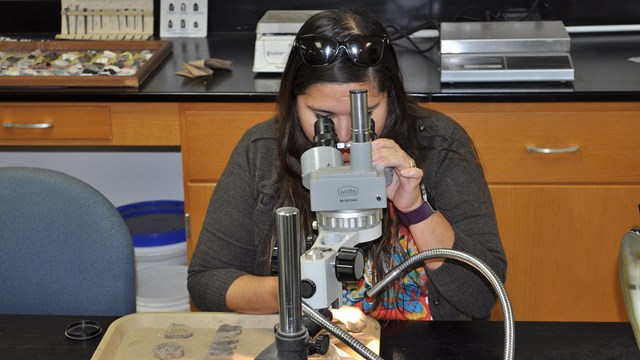
One of the most common ways that amateurs have worked with professionals in the past has been in excavating sites. We feel that because of the relatively few sites left and the enormous backlog of unstudied (often even unaccessioned) materials in our repositories, excavation is not appropriate except where sites would be unavoidably impacted. Thus, we seek to interest amateurs in helping with analysis and curation. This is difficult because the lure of collecting is, in large part, a love of being outdoors and active. Archeological analysis does not involve either of these. Nevertheless, if we can offer to selected amateurs the benefit of being allowed to participate in legal archeological survey, then we can make participation in the subsequent analysis a concomitant responsibility.

Our second proposal for the use of amateurs concerns the use of nonarcheologically involved professionals, particularly in the media, to aid archeology. Many people who are interested in archeology have skills of use to archeologists in protecting sites. Photography, film making, drawing, the ability to fly a plane, publicity and promotion are just a few useful talents.

People who are not actively interested in archeology may be amenable to volunteering their skills to archeologists either to have an opportunity to display their talents or because they need topics for their newspaper columns, TV or radio shows. Sometimes students in media will be willing to do a public education piece on archeology for a school project, especially if the archeologists can get them public exposure for their work. For example, a local TV station in Knoxville proposed an excellent video* designed to discourage looting. The station has regular four-minute segments on Appalachian culture, The Heartland Series, that runs three times a day in connection with their news program. Each week, two new segments are shown so the producers are always looking for new material. The TVA's anti-pothunting piece, which was aired on this series, used local Native Americans who volunteered their time and expertise because they felt the topic was important. We strongly recommend that American Indians be considered for help.

Briefly, the piece, at no cost to TVA, was shot on an undeveloped island in the Tennessee River. An Archaic period burial with a small family group interring a female relation was staged. In the voiceover, aspects of the woman's life, what she died from, and the artifacts with which she was buried-a conch-dipper and a shell necklace-were explained. She was wrapped in a dog-fur blanket from her own making and sprinkled with red ocher. This sad but gentle scene suddenly shifts to a scene of large potholes. The voiceover explains how pothunters probe for burial pits, dig them out strewing the bones, and then sell the items found, such as shell necklaces. Next, the Heartland Series narrator and a TVA archeologist are shown walking through a landscape filled with potholes (none of these had to be staged) discussing how many people participate in this destruction without fully realizing that they are robbing graves. The conclusion of the film is text referring to laws against pothunting and grave looting. It is much better to watch than hear about. Our approach underplayed the legal aspects and emphasized the moral aspects of pothunting. This seemed the best way to make our message appropriate for television without hopelessly twisting it. Our intentions were good and all feedback from the local viewing public indicated that our point was made-Don't dig archeological sites.


* The video is not available commercially, however, TVA can make a limited number available. If you are interested, contact Ms. Julia O. Elmendorf at Tennessee Valley Authority, Natural Resources Building, Norris, Tennessee 37828.


Read
"Co-Management of Vandalized Sites: Opportunities and Problems"

Return to the Table of Contents