
 |
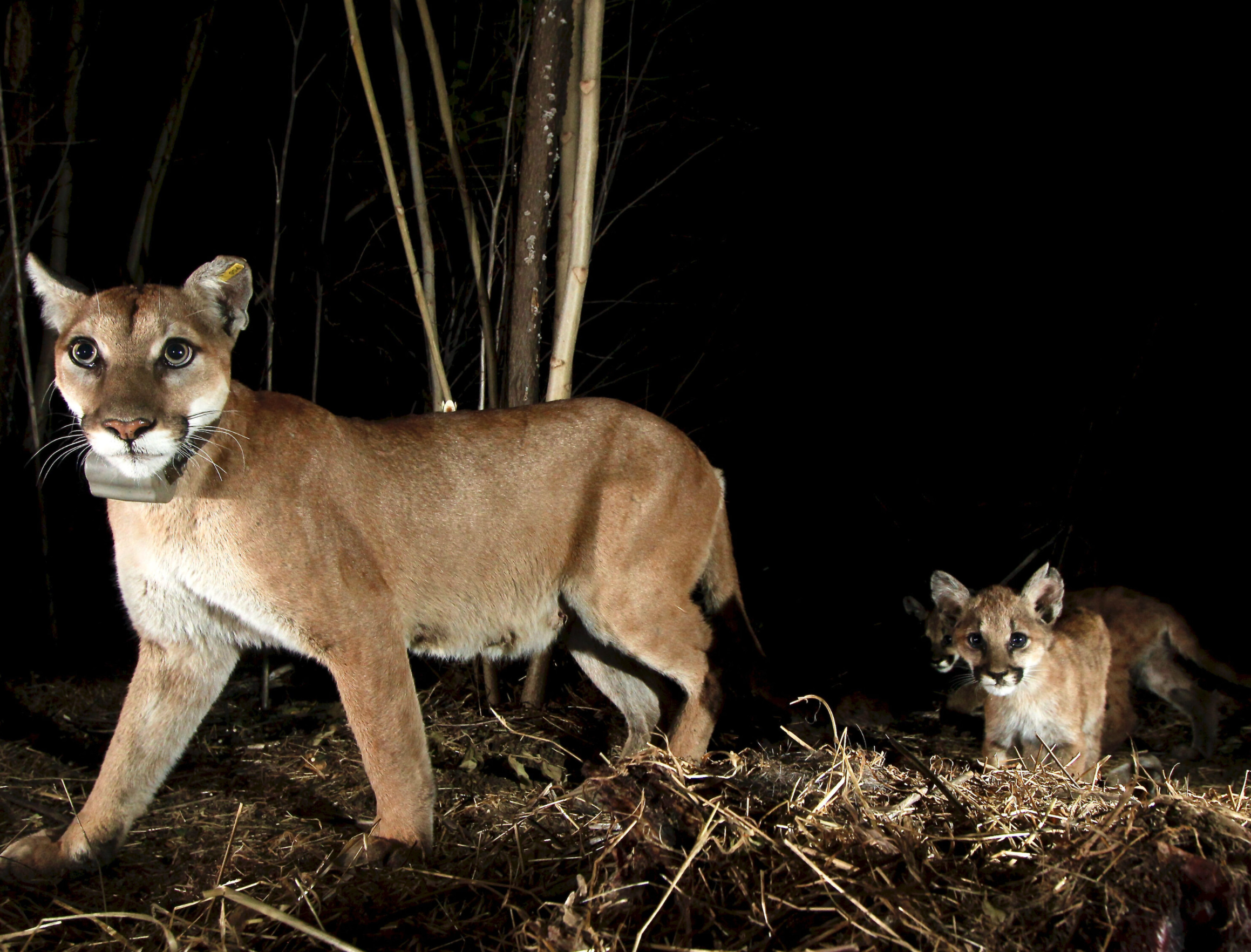
National Park Service Over 45 mammal species can be found in the Santa Monica Mountains, and they range in size from shrews, which weigh less than one ounce, to mountain lions weighing up to 150lbs. However most of these are smaller mammals such as squirrels, gophers, mice, rats, rabbits, and insectivores such as bats, shrews, and moles. Although some of these small mammal species are considered pests by some people, they are actually an important part of the natural ecosystem. They eat insects, till soil, and disperse seeds. They are also a food source for many other inhabitants of the Santa Monica Mountains including mammalian carnivores, reptiles, and raptors (birds of prey). Mammals, like other animals, generally occupy a defined area of habitat, termed a home range, where they will acquire food, find shelter, and locate mates. Territorial animals such as some carnivores will defend their home range, or at least part of it, and attempt to exclude other members of the same species and sex. As urban development continues within and around the Santa Monica Mountains, fragmentation of the natural habitat poses one of the greatest threats to mammals. It makes it harder for them to find suitable home ranges, and it creates barriers between populations and individuals. Biologists at Santa Monica Mountains NRA have been working to understand how some animals interact with and are affected by urbanization and fragmentation. We have studied small mammal abundance and diversity in habitat fragments of varying sizes, as well as their exposure to toxicants in urban areas. We have also worked in conjunction with Caltrans to study the effects of local freeways on some animals, particularly larger mammals. Freeways such as 101, 405, and 23 can be a barrier to movement and a source of mortality for many species. Since 1996 the National Park Service has been studying mammalian carnivores in and around the Santa Monica Mountains and Simi Hills. We have studied mountain lions, bobcats, gray foxes, mule deer and coyotes using radio and GPS telemetry collars, remote cameras, and scat (animal feces) surveys. During this time we have captured and ear tagged or collared over 290 bobcats, 130 coyotes, 29 gray foxes, and 22 mountain lions. The goals of these studies are to look at the affects of urbanization and habitat fragmentation on the distribution, abundance, behavior, and survival of these species. Urbanization can impose many new obstacles and challenges on wildlife, especially for animals with large food and space requirements such as mammalian carnivores. Specifically we have looked at issues such as habitat loss, movement barriers such as roadways and high density urban development, and sources of mortality. |
|
Last updated: February 13, 2024