National Park Service LogoU.S. Department of the InteriorNational Park ServiceNational Park Service
National Park Service:  U.S. Department of the InteriorNational Park Service Arrowhead
San Juan Island National Historical ParkThe officers' quarters and parade ground fence at American Camp.
view map
text size:largestlargernormal
printer friendly
San Juan Island National Historical Park
Things To Do
 
A group of middle school students enjoy a hike on American Camp's sweeping prairie.
NPS Photo
A group of middle school students enjoy a hike across American Camp's sweeping prairie with the Strait of Juan de Fuca in the background.
 

Hike the trails at English and American camps. Some of the best hiking is in the park, from mountain vistas to deep forest to beach walking.

Pick blackberries. Himalayan blackberries are an exotic species of which the park would like to see less. Nevertheless, they are good eating when August comes round.

Observe flowers and trees. Spring is a great time to view wildflowers on American Camp's prairies, especially the culturally significant camas.

Pick up shells. But remember, only the unoccupied ones. 

Study artifacts in the American Camp visitor center. Four cases offer a view of the park's historic and prehistoric periods with artifacts from both camps.

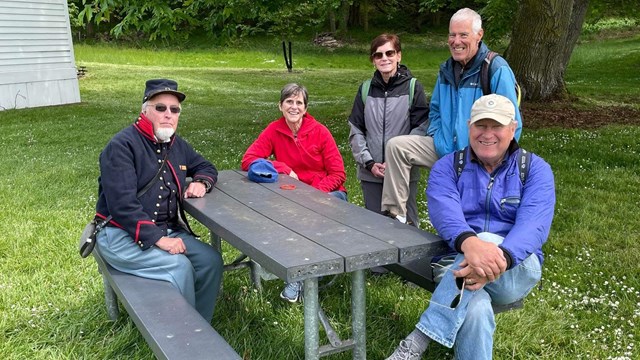
Time travel. Come to a re-enactment at English Camp on any Saturday during the summer, squint and you might believe it's 1861.  

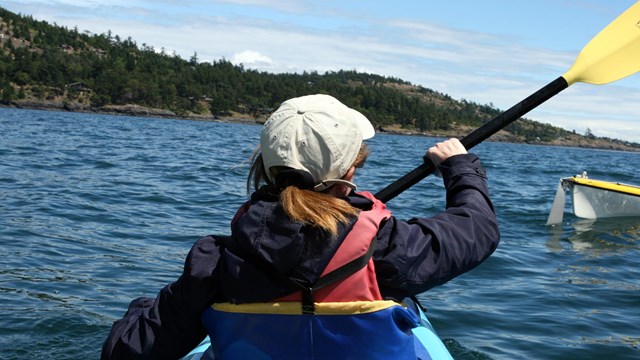
Boating and kayaking. Some of the best kayaking in the Pacific Northwest exists in the San Juan Islands, with launching and beaching sites at both camps. Check with a ranger or volunteer.

Bird Watching. Eighteen varieties of raptor live in the park, as well as nesting and shore birds. Many birders consider American Camp one of the best watching areas in the entire world.

Observe deer, fox, snakes. The Pacific black-tailed deer is the largest land mammal in the San Juan's and native to the islands. They can be spotted almost anywhere in the park and on roadsides. The red fox was introduced to the island at several points during the 20th century. Though not necessarily "red" (they range from orange to black to mottled), it is readily identifiable by its white tipped tail. Garter snakes may startle you on the trails. No vipers exist in Washington State west of the North Cascades mountains.

Observe whales, seals, porpoises, otters. The bluff trails at American Camp are the best places for viewing marine life, especially between April and September.

Tidepooling. American Camp's network of pocket coves along the Strait of Juan de Fuca reveal a wide variety of mollusks, arthopods (barnacles, crabs, shrimps, etc.) and plant life.

Watch a sunset. The setting sun spins gold anywhere in the park. Dragonflies glitter on the English Camp parade ground. 

Look at the stars. The dark prairie at American Camp and English Camp's Young Hill provide spectacular vistas of the heavens. Bring your telescope.

 
A visitor and children stroll on South Beach.
NPS Photo
A visitor and his children enjoy a stroll at South Beach at American Camp.
2009-2010 park newspaper
2009-2010 Guide to American and English Camps
Read the latest information about park projects, places, people and history.
more...
Camas
Native Wildflowers of American Camp
A guide for hikers through spring and summer color.
more...
Capt. Lewis Cass Hunt  

Did You Know?
Capt. Lewis Cass Hunt, who squabbled with Capt. George E. Pickett over buildings on San Juan Island, was the brother of Henry Hunt, who commanded the Union artillery at the Battle of Gettysburg. Hunt's guns would largely decimate Pickett's division before they reached the Union lines.

Last Updated: October 05, 2007 at 12:54 EST