
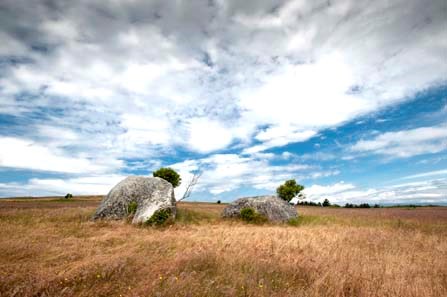
Gary Tarleton The vast, open prairie landscape of America Camp is uniquely beautiful and rather unexpected in the western portion of the Pacific Northwest, where evergreen forests dominate the cliffs to the shoreline. Here you can stroll through the same spring wildflowers and ruffling grasses that the native peoples experienced hundreds of years ago. Prairies were once fairly common in the Puget Sound and Salish Sea regions. As glaciers retreated, grasses and other prairie plants were first to colonize the landscape, and exposure to harsh conditions of direct summer sun, drying effects of wind, and low precipitation in the rain shadow of the Olympic Mountains allowed the prairie to thrive intact. But landscapes constantly evolve in response to climate change, geologic processes, and human impact. In this case, when Europeans brought livestock and cultivation to San Juan Island, they upset the delicate balance created by native peoples, who routinely set the prairie on fire in order to enhance the growth of camas, a diet staple, and maintain the prairie ecosystem overall. Settlers introduced invasive, non-native plants that choked out native prairie plants and animals such as the European rabbit, which has transformed acres of delicate native wildflowers into barren landscapes. You can see this in the park’s American Camp prairie above South Beach. To restore this increasingly rare and valuable open spaces, San Juan Island NHP is in the initial stages of prairie restoration at American Camp. |
 |
|
Last updated: December 9, 2015