
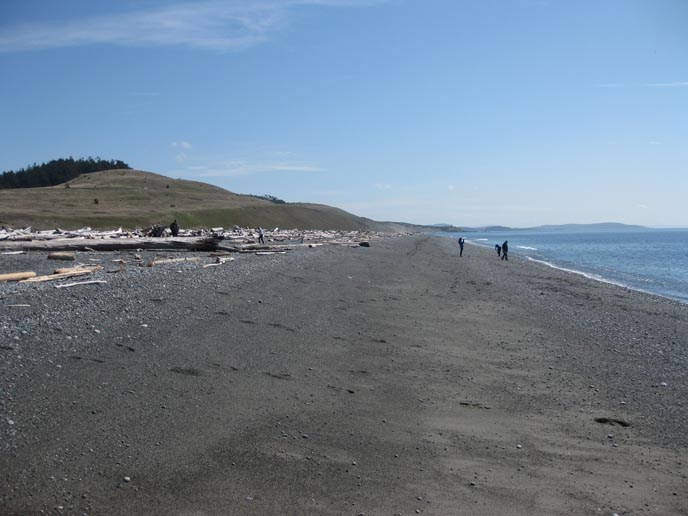
Mike Vouri Photo The sequence of rocks in the San Juan Islands is similar to that found to the east in the North Cascades and to the west on the east side of Vancouver Island. San Juan Island is covered with three major deposits and bedrocks. Both American Camp and parts of English Camp are covered with Quaternary alluvium and glacial deposits. To learn more about the geology of the park and the San Juan Islands download our Geologic Resources Inventory Report, produced in August 2014 by John P. Graham, a research associate with Colorado State University, under the auspices of the National Park Service Geologic Resources Division of the Geologic Resources Inventory. 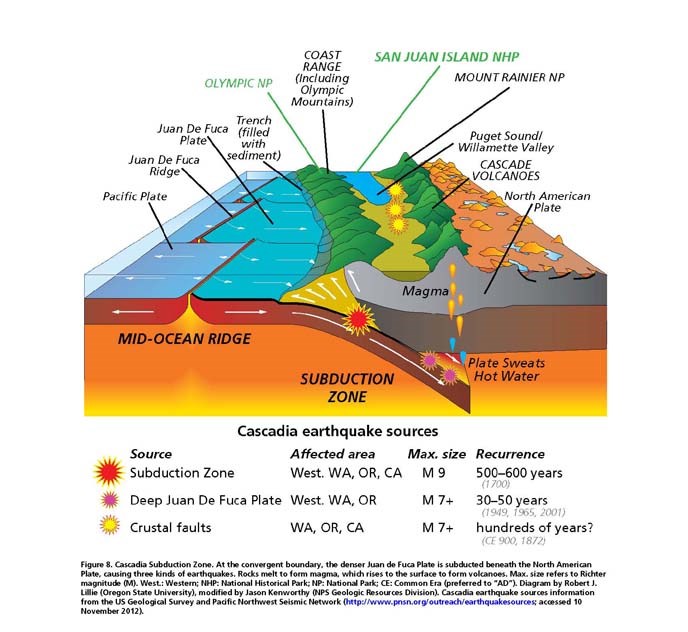
US Geological Survey and Pacific Northwest Seismic Network http://www.pnsn.org/outreach/earthquakesources |
 |
|
Last updated: March 1, 2015