
 |
 |
  |
|
|
|
 |
 |
| | |
San Juan Island National Historical Park
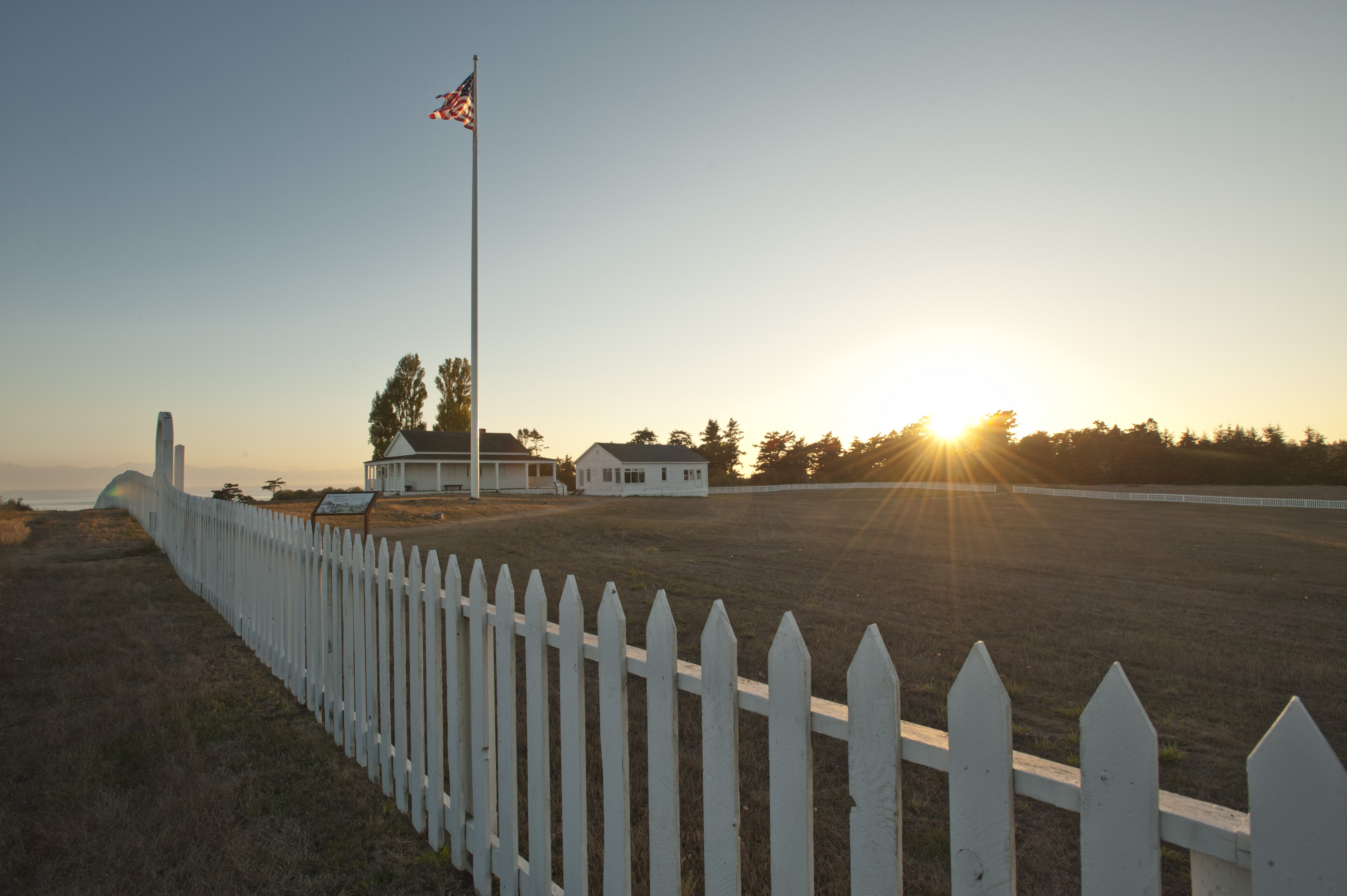
San Juan Island is well known for splendid vistas, saltwater shore, quiet woodlands and orca whales. But it was also here in 1859 that the United States and Great Britain nearly went to war over a dead pig. more...
| | | | |
|
|
 |
Prescribed Fire Scheduled September 14 on Young Hill
National Park Service fire crews conducted several small successful prescribed fires on the south slope of English Camp’s Young Hill concluding the operation on Friday, September 18. The crews may return in the next two weeks to finish up the scheduled work.
The prescribed fire is part of a continuing program designed to help restore the area’s Garry oak woodland by decreasing competition from species such as snowberries, found in abundance on the lower slopes of Young Hill, Dederich said. Previous prescribed burns have shown the importance of fire in the Garry oak ecosystem, as a bounty of seedling oaks have been found in following years. more...
|
 |
|
|
 |
Histories
Claims, Conflict and Compromise: The park is a tangible reminder that the San Juan Islands and Pacific Northwest were once contested by Imperial Spain as well as the United States and Great Britain. But at each critical point along the way, the competing nations chose peace over war. more...
|
 |
|
|
 |
The Lone Prairie
In a region well known for its abundant rainfall, lush forests and moderate maritime climate, American Camp’s prairie is an unexpected delight. Prairies were once common in Puget Sound and the Northern Straits regions. San Juan’s prairies were dramatically altered beginning the mid-19th century with the arrival of Europeans, who brought grazing animals, domestic agriculture and ornamental plants. Today American Camp prairie is dominated by non-native (or exotic) species including thistles, Himalayan blackberry, tansy ragwort and the European rabbit. Learn how the park plans to restore this priceless resource to a healthy state. more...
|
 |
|
|
 |
General Management Plan
A proposed new year-round visitor center at American Camp and the expansion of the English Camp boundary are among the highlights included in San Juan Island National Historical Park’s General Management Plan and Environmental Impact Statement released this week. Copies of the GMP/EIS are available at park headquarters, 650 Mullis St., Suite 100, Friday Harbor; and at the American camp Visitor Center, 4668 Cattle Point Road. Electronic copies may be accessed via the park planning website, http://parkplanning.nps.gov/sajh. In the development stage for more than six years, the document also identifies trails, programs and natural and cultural resource projects that will unite the park’s historical and natural themes, according to park superintendent Peter Dederich. more...
|
 |
| | |
|
Write to
PO Box 429
Friday Harbor, WA 98250
E-mail Us
Phone
Visitor Information (360) 378-2902
Park Administration (360) 378-2240
Fax
(360) 378-2996
|
 |
Climate
Cool summers and mild winters with summer highs occasionally peaking in the high 80's and winter lows briefly in the low 20's. Annual rainfall ranges from 18 to 36 inches, with higher counts in the islands' northern extremities. From September through early February, the Georgia Strait is affected by land fogs that form on cool nights with clear skies. During long cold periods, these may persist for several days.
|
 |
 |
|
|
 |
|
|
|
|
 |
|
Did You Know?
Mt. Finlayson is named for Roderick Finlayson, a Hudson's Bay Company employee who is credited with founding Victoria, BC. He is one of several Company men who have island roads and features named for them.
|
|
|
|
Last Updated: October 18, 2009 at 17:42 EST |