National Park Service LogoU.S. Department of the InteriorNational Park ServiceNational Park Service
National Park Service:  U.S. Department of the InteriorNational Park Service Arrowhead
Saugus Iron Works National Historic SiteCollage: Discovery of Hammerhead and Historic Patent
view map
text size:largestlargernormal
printer friendly
Saugus Iron Works National Historic Site
Animals
 
Each spring barn swallows migrate north to the Saugus Iron Works.

(Daniel Noon, NPS)

Barn Swallow

Numerous species of amphibians, birds, fish, mammals, and reptiles utilize the Saugus River and surrounding wetlands and riparian woodlands within Saugus Iron Works National Historic Site as an important refuge to thrive and reproduce. Some animals are seen for brief periods, while others make the historic site their home throughout the year.

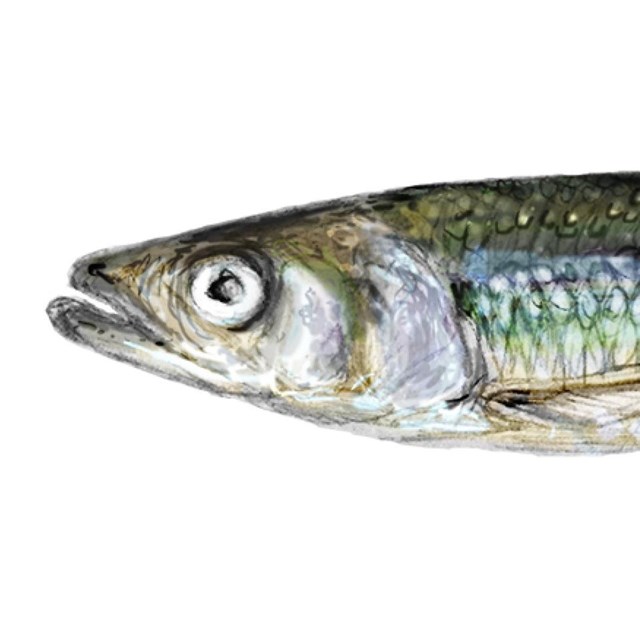
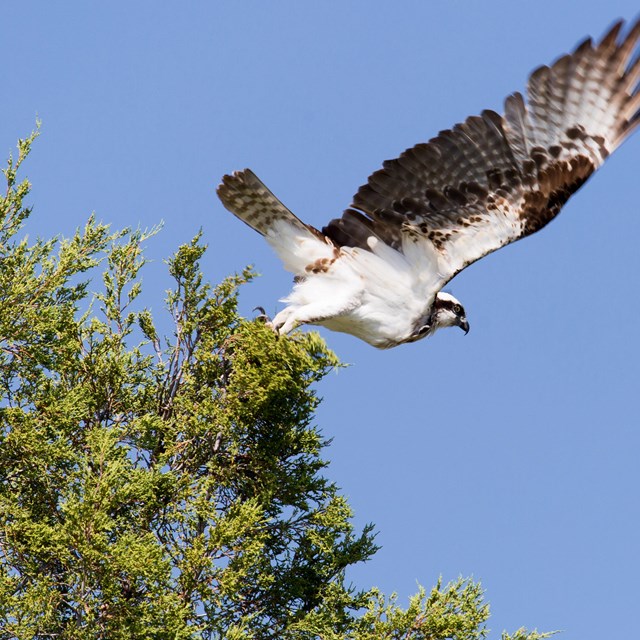
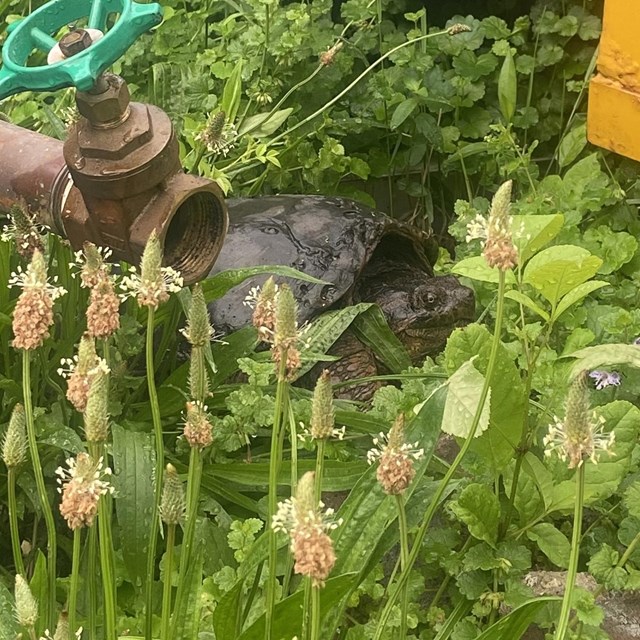
During the spring, the red-winged blackbirds and mallards prepare their nests within the tall wetland grasses, while the barn swallows return to the Iron Works to begin raising a new generation. In early summer, the snapping turtles lay their eggs, while the muskrats playfully swim in the cool waters of the Saugus River. Great blue herons and black-crowned night herons perch atop the maples and hickories along the winding river in search of the elusive alewife as the Atlantic Ocean tide slowly moves upstream, inundating the wetlands.

As the summer slowly disappears for the year, spotted sandpipers can be seen hopping about the river mudflats while the barn swallows teach their young how to fly swiftly before their long journey south to warmer climates.

Each animal, as well as many others whose stories have yet to be told, is an important part of the complex ecosystem within Saugus Iron Works.
A cup of water expands to 1,600 times its volume when boiled, changing from a liquid to a gas!  

Did You Know?
When boiled, a cup of water creates about 1,600 cups of steam! When the resulting steam is contained in a vessel such as a steam locomotive boiler, it can create up to 300 pounds per square inch of pressure. Learn more about steam locomotives at Steamtown National Historic Site!
more...

Last Updated: July 31, 2006 at 17:51 EST