• dogwood across creek

    Prince William Forest

    Park Virginia

There are park alerts in effect.
show Alerts »
  • Firewood

    Outside firewood is prohibited in Prince William Forest Park, unless it is certified USDA 'bug free' firewood. Dead and downed wood may be collected from designated areas for use while in the park. Help us protect the forest from invasive species!

  • Warm Wet Spring = More Ticks

    Please check yourself and your pets for ticks continually during and after your visit. Ticks are less prevelent if you stay on trail or in mowed areas. Wearing light colored clothing helps you spot them before the attach.

  • Temp. Closure C-Loop Bathroom

    Due to sequestration cuts, the C-Loop bathroom at Oak Ridge Campground will remain closed. Please use the B-Loop restroom, a short walking distance away. We apologize for the inconvenience.

Plants

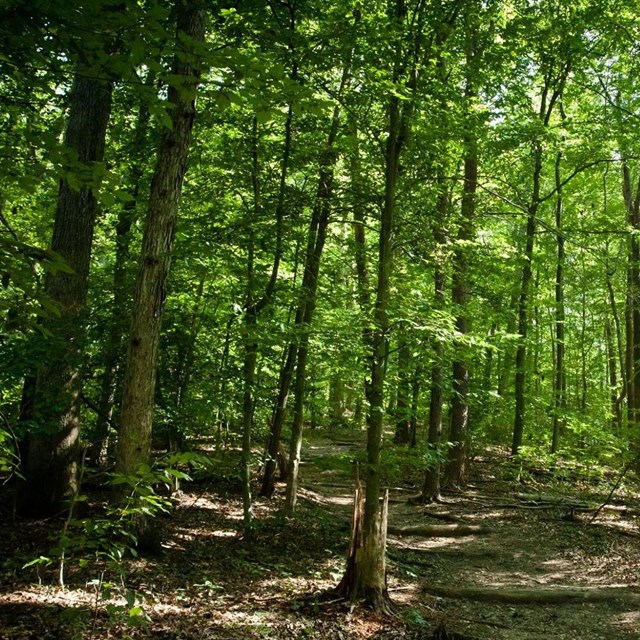
forest greenery
The forest primeval.
NPS Photo.
 

There are over 700 plant species in Prince William Forest Park. From the smallest wildflower to the tallest tree, each species has a special role to play in this forest ecosystem.

An Arboreal Meeting Place
Several of the plant species in Prince William Forest Park are at their distributional limits; southern species are found this far north and northern species are found this far south. This attests to the fact that the park is in a transitional zone between northern and southern climates, and eastern and western physiographic provinces. The park contains several rare communities, including a seepage swamp, remote stands of eastern hemlock, and several populations of rare plants. As surveys are conducted, other rare communities may be located in the park.

From Farms to Forest
The 15,000 acres of forest is in various stages of transition. As little as 70 years ago, much of this forest was farms. Since the National Park Service began protecting this land in 1936, the forest has made a comback and at various places in the park different levels of forest 'succession' is taking place. Beeches, which are found in this area, require undisturbed interior environments for their best development into a forest. Some uncommon or rare tree species are interspersed, including butternut, bigtooth aspen, black walnut, swamp white oak, and cottonwood, as well as floodplain species like American beech, box elder, and sycamore.

An Ecological High-Rise
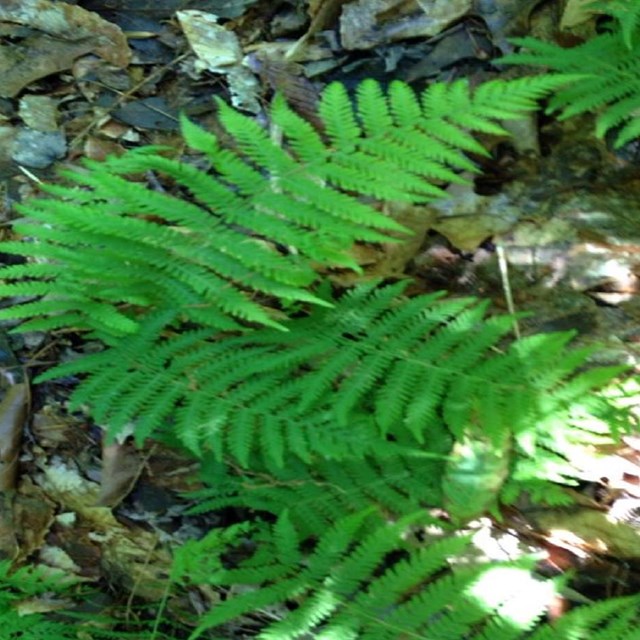
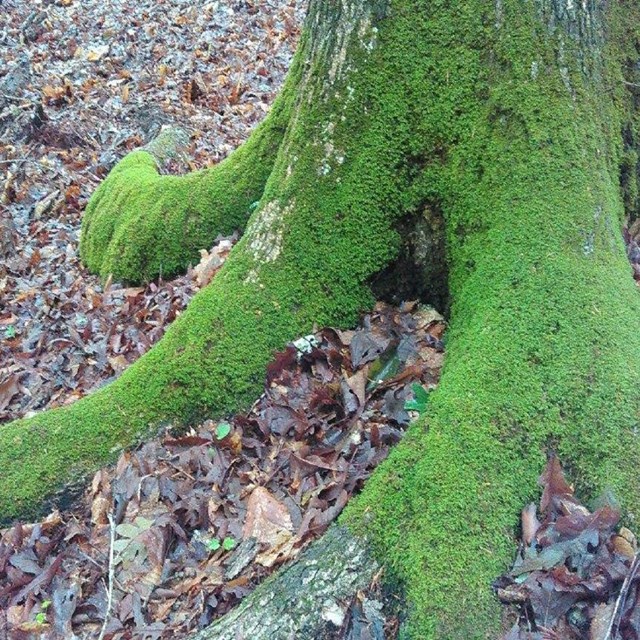
From the top of the forest canopy to the bottom of Quantico Creek, forest ecosystems act as entire communities, much like cities do for humans. Different animals and insect use the various 'stories' for the forest high rise for different reasons. Understory trees and vegetation, including dogwood, redbud, ironwood, mountain laurel, American holly, Solomon's seal, spotted wintergreen, and sassafras, are found throughout the forest. Ferns, mosses, vines, briers, and numerous wildflowers form the groundcover. Cardinal flower and Hercules club are common in the park, although uncommon and protected elsewhere.

A Small Flower With Big Power
The small-whorled pogonia, a federally listed threatened species, has been identified in the park. Because of its rarity, specialized habitat criteria, and proximity to developed areas, the management of this species is critical to ensure its continued survival.

Did You Know?

American beaver

By the 1900s, Beavers were entirely extirpated from Virginia and were difficult to find across the entire lower 48 states due to over-consumption by humans.  In 1950, Boy Scouts reintroduced 5 beavers into Prince William Forest Park.  Today are more than 80 beavers in the 15,000 acre park.