
Skip to SearchSkip to NavigationSkip to BodySkip to Footer
National Park Service LogoU.S. Department of the InteriorNational Park ServiceNational Park Service
National Park Service:  U.S. Department of the InteriorNational Park Service Arrowhead
Port Chicago Naval Magazine National MemorialWharf loading operations at Port Chicago in the 1940's - Navy Photo
view map
text size:largestlargernormal
printer friendly

Largest Homeland Disaster during World War II

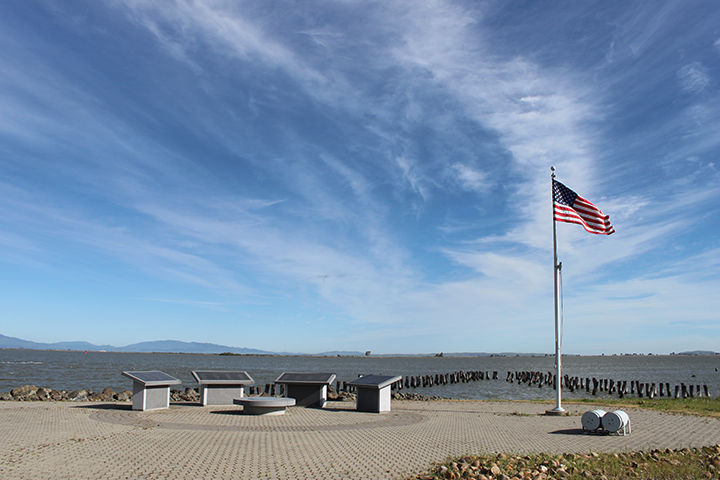
On the evening of July 17, 1944, residents in the San Francisco east bay area were jolted awake by a massive explosion that cracked windows and lit up the night sky. At Port Chicago Naval Magazine, 320 men were instantly killed when the munitions ships they were loading with ammunition for the Pacific theatre troops mysteriously blew up.

Reservations are required to visit this site.

 
Black & white photo of African-American US Navy sailors loading munitions on a ship at Port Chicago depot in Concord, California

The Port Chicago Disaster

Use these on-line teacher and student resource materials to learn about the 1944 explosion at Port Chicago. Information includes the site, explosion, mutiny trial, court martial, and pardon.

 
Black & white photo of African-American US Navy sailors loading munitions onto rail cars at Port Chicago depot in Concord, California

Naval Historical Center

For more information on the 1944 Port Chicago explosion, visit the on-line Naval Historical Center.
 

ATTENTION:

Tours to the Port Chicago National Memorial are temporarily suspended until June 14, 2008.


Write to

P.O. Box 280
Danville, CA 94526

E-mail Us

Phone

Information & Reservations
(925) 228-8860

Administration
(510) 232-5006

Fax

(925) 838-9471

Climate

The Memorial is along the Carquinez Straits waterway and is often windy. From April to October is it mostly dry with mild to warm temperatures (65-100 F). From November to March there can be periods of rain with cool to mild temperatures (45-65 F). There are no indoor facilities. Dressing in layers and comfortable footwear is suggested.
Skip to SearchSkip to NavigationSkip to BodySkip to Footer
Commemorative Flags at Asan Beach Unit  

Did You Know?
During the Japanese occupation of the Island of Guam, the area now known as Asan Beach Unit was a rice paddy.

Last Updated: May 23, 2008 at 19:44 EST