National Park Service LogoU.S. Department of the InteriorNational Park ServiceNational Park Service
National Park Service:  U.S. Department of the InteriorNational Park Service Arrowhead
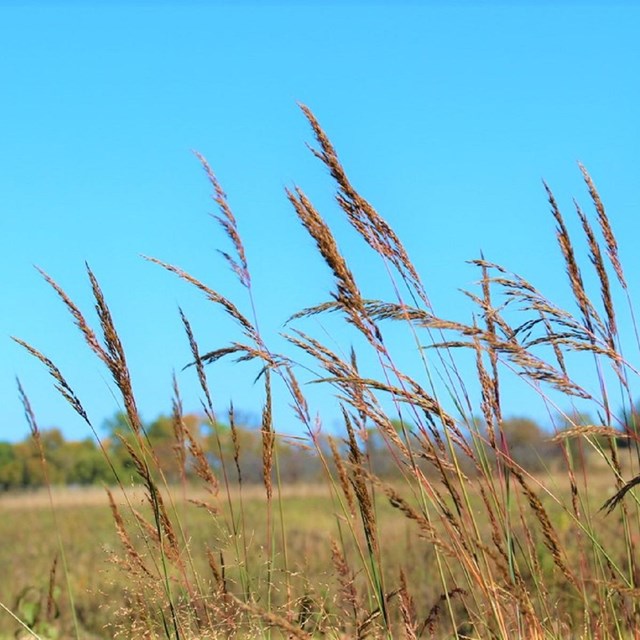
Pipestone National Monument Prairie landscape view of big blue stem grass
view map
text size: largest larger normal
printer friendly
Pipestone National Monument
Plants
Aster and Goldenrod

NPS, G. Wagner

Aster and Goldenrod

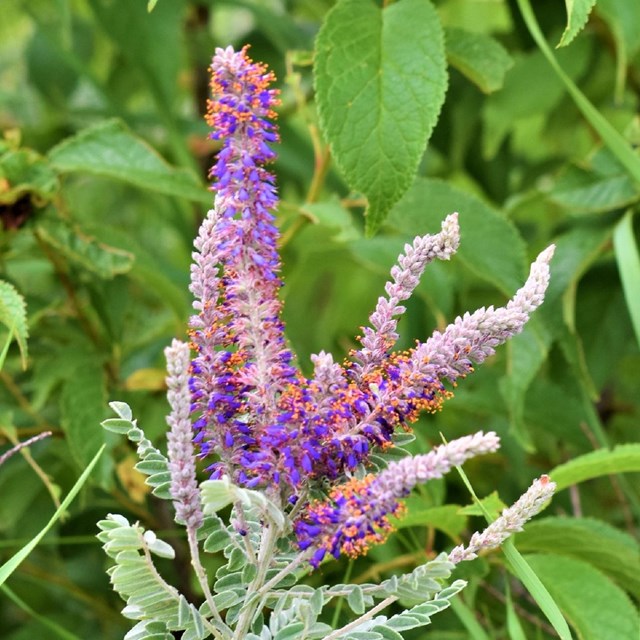
Pipestone National Monument, by virtue of its protected status, has some of the only native tallgrass prairie habitat left in the southwest Minnesota. The plants of the prairie can be seen close up along the Circle Trail and viewed as a stunning mosaic from the road. Over 500 species of plants occur at the Monument; many of them are rare. One federally threatened species, the Western prairie-fringed orchid, occurs at the Monument but is not visible most of the year from the Circle Trail. Between 9 and 13 state-listed rare species also occur at the Monument, mostly associated with the rock outcroppings.       

The tallgrass prairie is a vanishing ecosystem, and the staff at Pipestone National Monument is making every effort to preserve this valuable resource through the use of controlled burns and removal of non-native or introduced plant species.

You are exiting the National Park Service website

Thank you for visiting our site.

You will now be redirected to:

We hope your visit was informative and enjoyable.

The Nicollet Rock

Did You Know?
Joseph Nicollet and John C. Frémont, famous 19th century explorers, visited Pipestone National Monument in 1838 and carved their initials into the Sioux Quartzite cliff. The inscription is still visible along the Circle Trail.
more...

Last Updated: February 03, 2011 at 09:21 MST