
|
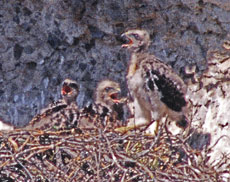
Photo by Gavin Emmons Annual measures to protect nesting raptors of Pinnacles National Monument will be reinstated as of January 12, 2007, according to Park Superintendent Eric Brunnemann. Last year, ten pairs of prairie falcons produced a total of 30 fledglings. Additionally, the monument had successful nesting by Peregrine Falcons, American Kestrels, Red-tailed Hawks, Red-shouldered Hawks, Cooper’s Hawks, and Golden Eagles. Park researchers will continue to monitor raptors to better understand these interesting and beautiful birds. “We ask you to refrain from any off-trail hiking and climbing in sensitive areas which include the High Peaks, the Balconies Cliffs area, Little Pinnacles, Citadel, Goat Rock, Pipsqueak Pinnacle, Gargoyle/Piedras Bonitas, Frog/Hand, Egg Rock/Teapot Dome, and the Scout Peak area,” said Brunnemann. “Without your cooperation in avoiding the advisory areas, this program could not be the success that it is,” he continued. The specific locations of these sensitive areas are posted on information boards at trailheads, at the visitor centers, on the web at www.nps.gov/pinn or by calling (831)-389-4485 ext 0.For more information regarding the monument’s raptor monitoring program, please call the office of Research and Resource Management at 831-389-4485 extension 270. |

Last updated: February 28, 2015