
NPS 
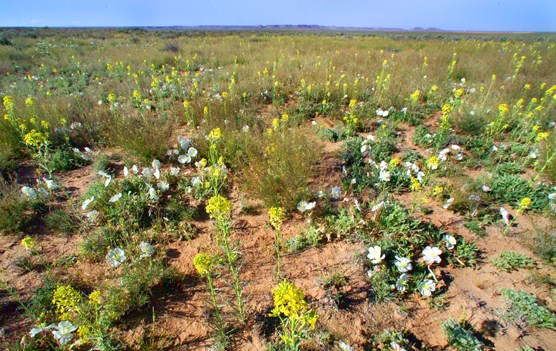
NPS Wildflowers have adapted to the arid climate at Petrified Forest National Park in many different ways.

NPS When can I see wildflowers? April and May, following winter snow and rain, are generally the best months to see wildflowers throughout the Southwest. Beginning in late August, if the summer monsoon season (July-August) has brought significant rainfall, different species bloom and color the landscape once again. Can't visit? You can view flowers year round on our Facebook and Flickr pages. 
NPS Plant and Pollinator The yucca and the yucca moth have a fascinating pollination relationship which includes trysts in the night. After mating, the female moth gathers pollen from a yucca flower and packs it into a ball. She then flies into the night until locating another yucca flower. Here she lays eggs in the base of the flower's pistil and packs pollen from her pollen ball down into the pistil, providing food for her young when they hatch. She visits several flowers during the night, each time distributing the pollen from flower to flower. Thus she fertilizes the yucca flowers while ensuring that her young will have nutrients to live on. Yucca plants and moths have a mutualistic symbiotic relationship, in which individuals of different species benefit from the activity of the other. Yucca flowers are only pollinated by yucca moths and yucca moth larvae only feed on yucca pollen. |
 |
|

Last updated: February 4, 2023