
|
Occasionally, Kemp's ridley nests are not found at egg laying and hence incubate on the beach (in situ), unprotected. This occurs in two situations. In one situation, tracks from the nesting turtles are found, but the nest cannot initially be located so the site is marked and biologists return to monitor for signs of nest predation or hatching. In the other situation, nests are found predated or hatched at sites that biologists have no previous knowledge of. Hatching success and survival of hatchlings is typically reduced for these in situ nests compared to protected nests. Emergence from an in situ nest can occur during the day or night. Once hatchlings start emerging from the nest, it can take from 15 minutes to 2 days for all to evacuate the nest. Emerging hatchlings take slightly different paths and travel at slightly different speeds. They slowly crawl towards the water and stop periodically until they enter the surf. Once in the surf they typically swim away vigorously. However, the trek to the sea can be perilous for the hatchlings. Hatchlings are difficult to see because of their small size and some have been killed at in situ nests elsewhere in Texas due to vehicle drive over. Some have been killed by predators (gulls, ghost crabs, coyotes). Also, some emerging at night have become disoriented by bright lights and traveled towards the vegetation instead of the water. 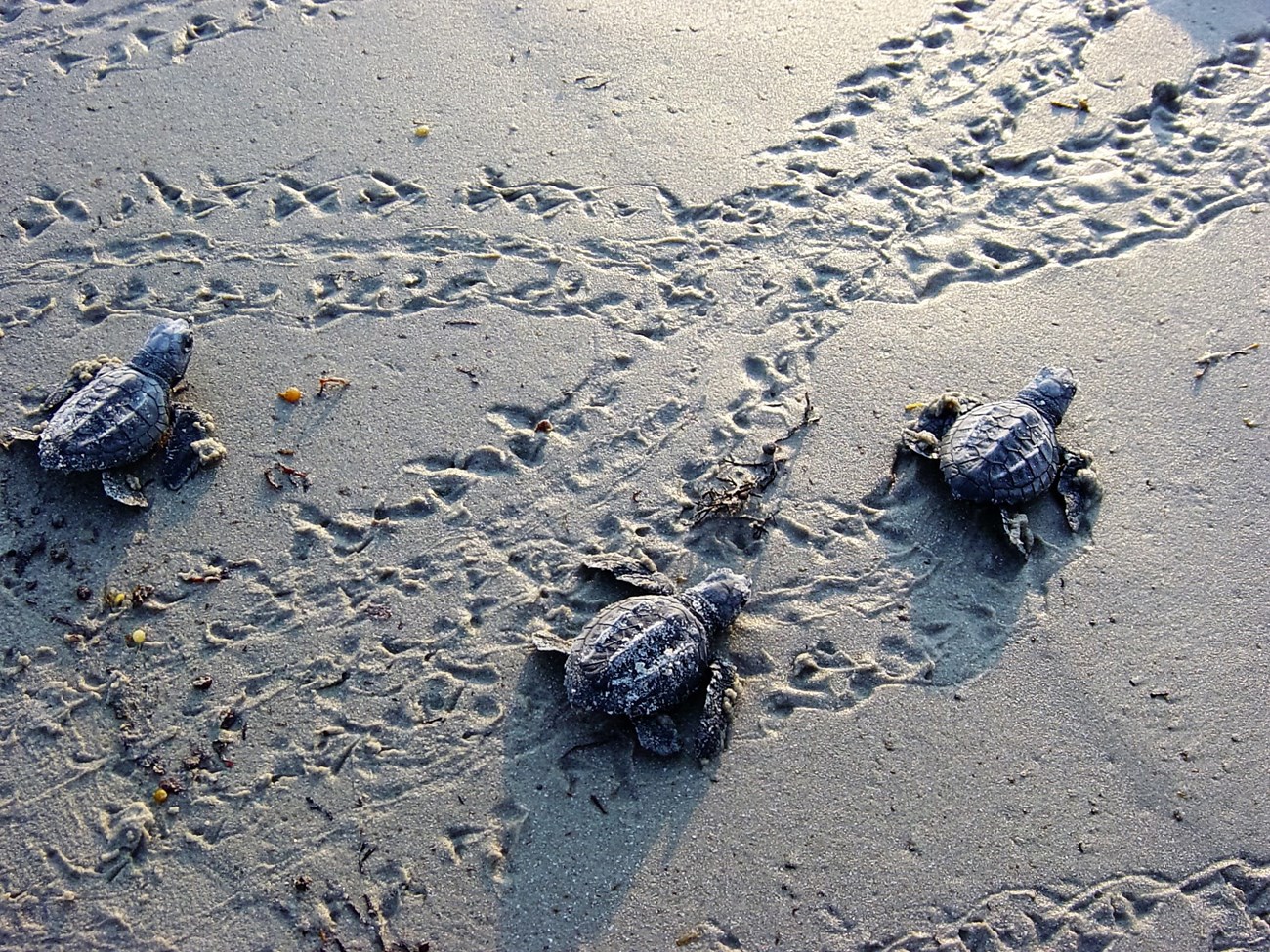
|
Last updated: October 19, 2018