
National Park Service LogoU.S. Department of the InteriorNational Park ServiceNational Park Service
National Park Service:  U.S. Department of the InteriorNational Park Service Arrowhead
Olympic National ParkBackpacks fording Elwha River
view map
text size:largestlargernormal
printer friendly
Olympic National Park
Flood Protection
 

Flooding is a relatively common occurance along the Elwha River. While the dams do not provide flood protection, they do hold back sediments. Once the dams are removed, sand, gravel and other sediments will again move downstream. As this occurs, sediments will accumulate along the river bed, raising its level and increasing slightly the risk of flood. In accordance with the Elwha Act, flood protection is being provided for downstream landowners.
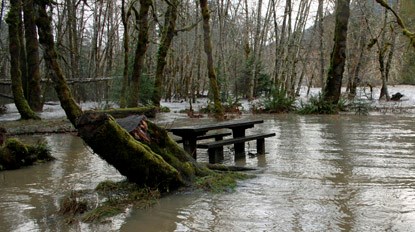
 
A flood in Altair campground
Altair campground - December 2007
 

Flood Potential:
With the amount of snowmelt and precipitation that occurs each year within the Elwha watershed, flooding is quite common. The average annual discharge from the Elwha is approximately 1,500 cubic feet per second; floods of up to 5,000 cubic feet per second happen nearly every year. Both the Elwha dam and Glines Canyon dam are operated as “run of the river” facilities, discharging through the dams the same amount of water that passes into the reservoirs, so they have little effect on river flows. While a levee protects much of the Lower Elwha Klallam Tribe’s reservation from up to a 200-year flood, other flood protection structures offer less protection.

 
The Elwha River during a storm

Raising the federal levee will protect land and property in the flood plain.

Reasons for Action:
Although the two dams do not alter flood levels, the river will rise as sediments are released from the reservoirs and the river's natural sediment transport regime is restored. The river has been mapped and areas at risk of aggradation following dam removal have been identified. Depending on location, the river bed may rise from as little as six inches in some areas to as much as 2.5 feet near the river mouth. Providing flood protection to the areas at risk will ensure the safety and protection of property and property holders.
 

Proposed Action for Flood Protection:
To maintain the current levels of protection, existing flood protection measures, such as the federal levee on the reservation and the dike on the west side of the river mouth, will be modified. The federal levee will be raised an average of 3.3 feet and armored with riprap. It will also be extended 1,650 feet to the south to protect against potential reactivation of two relic channels and 450 feet to the north to protect the northern portion of the reservation. The privately owned levee will also be raised to maintain its current level of protection.

A series of other small-scale flood protection measures will be carried out in order to protect private homes. This includes raising wellheads, dikes, roads, and property where necessary, but it will based in discussions with each affected home owner. A more detailed description of these mitigations can be found in the Elwha River Ecosystem Restoration Implementation Final SEIS (PDF).


undefined

This webpage was made possible in part by a grant from Washington’s National Park Fund.
Weather Forecasts
Weather Forecasts
Get the latest local weather forecasts
more...
water flowing over a dam spillway
Elwha Construction Contracts
Info on upcoming Elwha Restoration construction contracts.
more...
river in winter
Elwha Restoration
Learn about restoring the Elwha River's native fish and ecosystem.
more...
snow covered forest and meadow  

Did You Know?
That endemic Olympic snow moles are scurrying beneath this blanket of snow? Olympic National Park's Hurricane Ridge is blanketed with over ten feet of snow for most of the winter, providing water for summer and protection for snow moles in winter.

Last Updated: February 25, 2009 at 17:32 EST