



Last updated: April 10, 2025
Place
Old Stone House
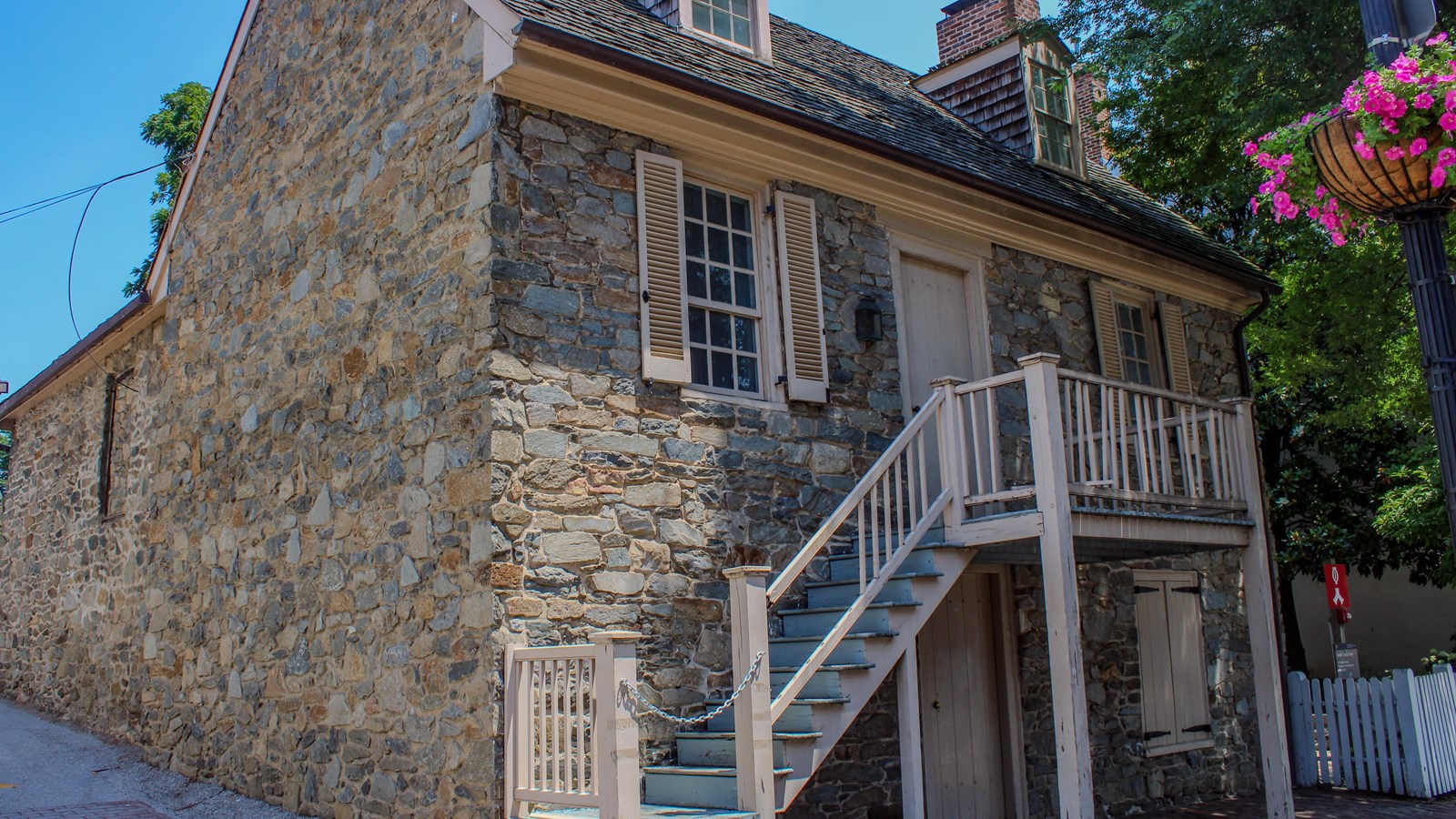
NPS / Jordan Land
Quick Facts
Location:
3051 M Street, NW, Washington, D.C. (Georgetown)
Significance:
Historic Building
Designation:
National Register of Historic Places
Amenities
5 listed
Gifts/Souvenirs/Books, Historical/Interpretive Information/Exhibits, Information, Public Transit, Wheelchair Accessible
The Old Stone House is the oldest structure on its original foundation in Washington, D.C. Built in 1765 in the British colony of Maryland, the house was already 59 years old when the British invaded Washington, D.C. in 1814. Although it is preserved for its architecture today, it was originally preserved through a case of mistaken identity and a desire to remember George Washington.
In 1791, George Washington and city planner Pierre L'Enfant were surveying the newly established District of Columbia. L'Enfant's ambitious plan for the city's layout depended on negotiating with local landowners for right of way. During one of these meetings, Washington and L'Enfant stayed in Georgetown's Fountain Inn at 31st and K Streets. The inn was better known to locals as Suter's Tavern, after its owner John Suter.
Over on Bridge Street (now M Street), John Suter's son, John, Jr., ran a clock shop in today's Old Stone House. As the years passed, local memory conflated the two buildings associated with the two John Suters. Thus, the desire to honor and remember George Washington's 1791 visit combined with a fuzzy memory led to the Old Stone House's preservation while so much changed around it.
The house was the site of a car dealership when the federal government purchased the property in 1953. The National Park Service opened the house to the public in 1960. Today, the house is a rare example of pre-Revolutionary architecture. Among the House's furnishings, you may find a clock built by one-time owner John Suter, Jr.