
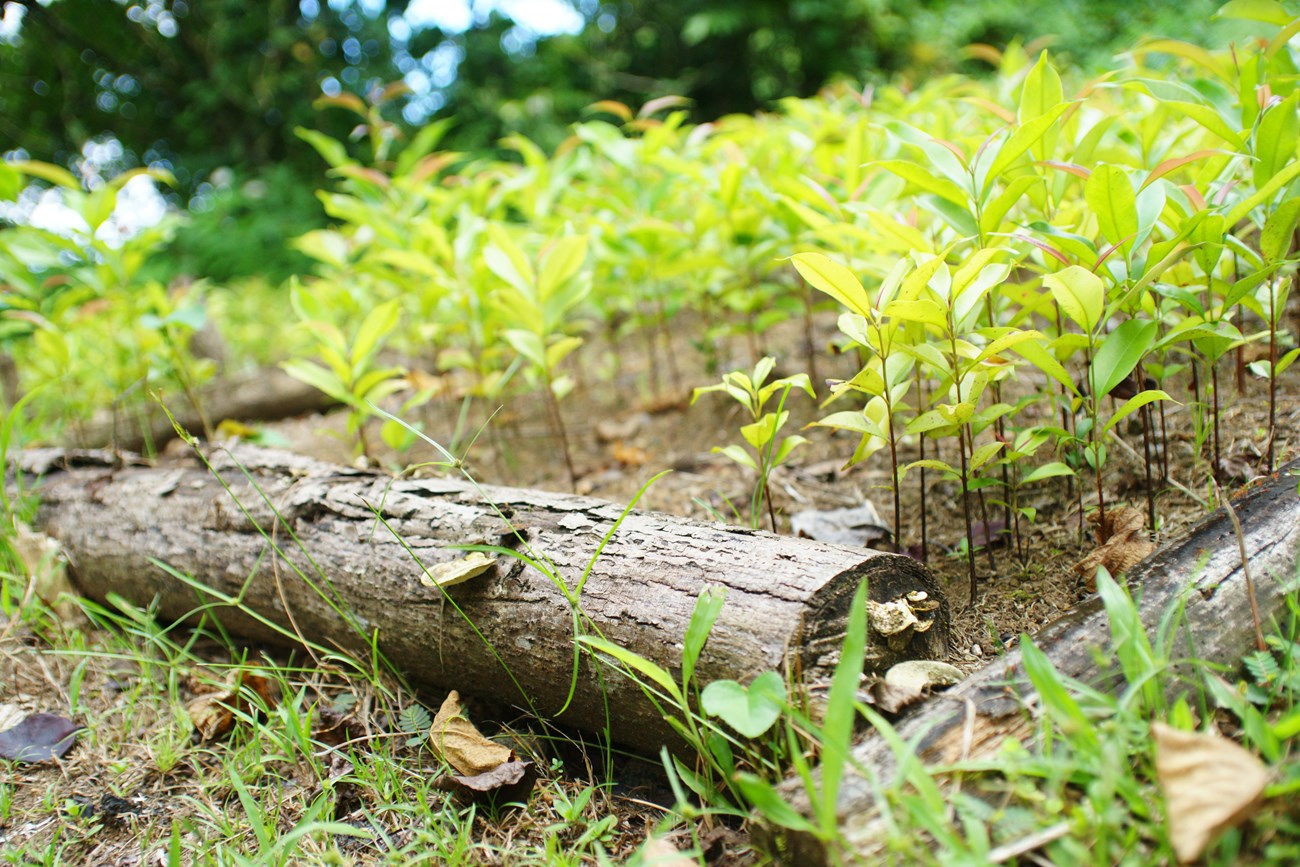
The park in American Samoa adds a unique scenic and ecological dimension to the U. S. National Park System. From ocean depths beyond the reefs to cloud forests on island summits the park has outstanding coral reefs, littoral strand and tropical rainforests on four beautiful, tropical island landscapes. Fringing coral reefs on the islands of Ofu, Olosega and Ta'u are outstanding marine environments. Their character is crystal clear, warm waters and a bewildering tropical sea biodiversity. (Check out the illustrated species lists to fishes and corals on the web links below.) Though the rainforests have long been occupied by humans (the To'aga archaeological sequence on the Ofu section of the park documents 3000 years of human occupation) the native tropical rainforest is the finest left in the U.S. possessions. Littoral strand, tropical rainforest (montane, ridge top, mountain-top scrub, and cloud forest) are well represented on the Ta'u and Tutuila park segments. With its mid-ocean, Southern hemisphere location the park offers a unique opportunity to sample the renown beauty of the South Pacific. |
 |
|
Last updated: February 28, 2015