




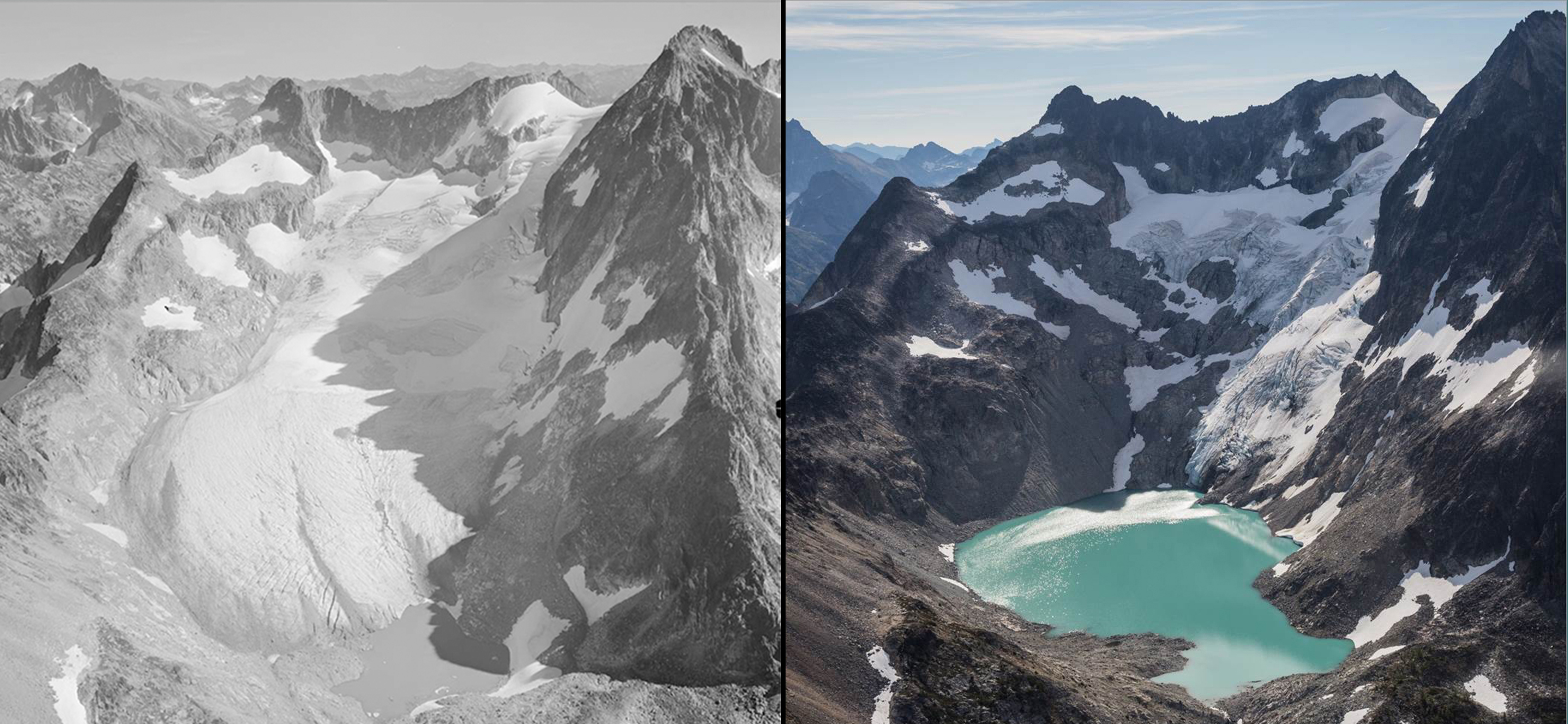
The North Cascades glaciers may be disappearing; most have shrunk dramatically during the last century. This is due to the combined effects of less precipitation and warmer summers, which most scientists now attribute to global warming. Glaciers mirror the trends of climate change, resulting in life changes through soil development and distribution of vegetation. Glaciers are indicators of climate changes such as temperature and precipitation. As reservoirs of snow from past winters, pollutants may wash into mountain lakes and streams where they enter the food chain. Salmon and other aquatic life, along with plant and animal life could encounter difficultiesand dramatic change as glaciers disappear. |
 |
|
Last updated: August 1, 2019