
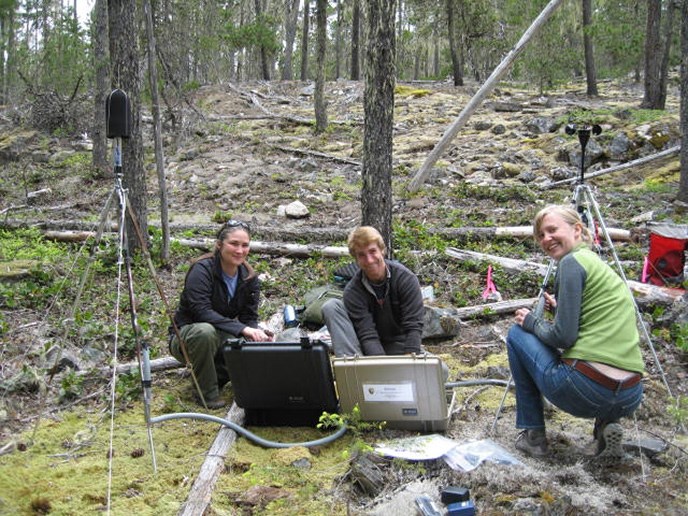
NPS/NOCA Acoustic monitoring provides a scientific basis for assessing the current status of acoustic resources, identifying trends in resource conditions, quantifying impacts from other actions, assessing consistency with park management objectives and standards, and informing management decisions regarding desired future conditions. North Cascades National Park Complex has been working with the National Park Service Natural Sounds Program to create a baseline of the acoustic environment in the Park Complex. Park scientists are currently monitoring acoustic conditions in as many as six sites per year. Sites are chosen to cover a diverse array of vegetation types, elevations, and locations across the landscape, along with areas which are of specific management concern. In these sites, automated sound monitoring stations are deployed, which collect continuous acoustic data for 30 days. This data consists of sound pressure levels, audio recordings, and meteorological data which scientists use to determine a representative sound profile for each site location. 
NPS/NOCA Off-Site Listening 
NPS/NOCA/David Astudillo |
Last updated: August 11, 2017