-
Cunard Road construction completed
Construction on the Cunard Road has been completed and the road is now open. Access may be delayed at times while striping is being painted.
-
Rend Trail closure
Repairs to the stone retention wall will cause closures from June through September, 2013. More »
McKendree Hospital
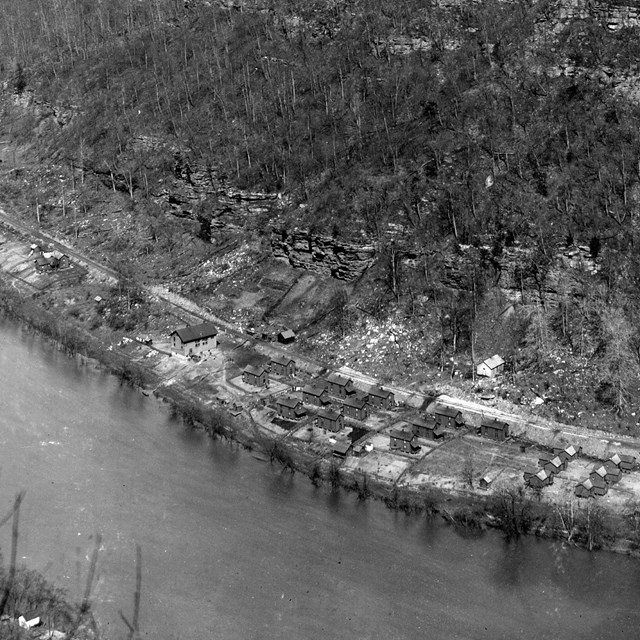
Imagine you are a coal miner in the late1870's, working at the Quinnimont mine site. You are busy picking through a pure seam of Bituminous coal, when a slag of rock collapses and crushes your arm. Your screams of agony alert the other miners of your plight. A rescue party is dispatched to your location. It is a time consuming affair for the rescue party to move the slag of rock in cramped area where it is virtually impossible to stand up or stand side by side. Finally the rock is removed; your arm is broken in many different places and you have lost a lot of blood. You are transported by your fellow miners to an area where the staff doctor does his best to save your life. It is an area that is unsterile; you are subject to multiple types of different infections. Coal dust is everywhere. Your doctor works feverishly, but he is not equipped with the training or the tools to be truly effective. Your arm is removed with an unsterilized saw, and your wound is smoldered up. You drink whiskey for your pain. It is better than having no pain killer at all, but it's a poor substitute for a true pain killer. Within a few days, a staph infection sweeps over your body and you die in the wilds of West Virginia far from the nearest hospital. By the 1880's, coal mining was becoming a booming industry and it was only getting bigger. The economic engine of industrialization was waking up in the isolated New River area. Local farmers, freed slaves from the south, and immigrants of all nationalities were flocking to this area. Towns began springing up out of nowhere thanks to the railroads, the coal industry, and the logging industry. The next logical progression was to open a hospital that catered to the injured and sick workers. In February 1899, the State of West Virginia legislature enacted legislation that would create 3 hospitals for the miners of the state. Miner's Hospital No.1 would be located in the Flat Top (current Pocahontas country) coal region. Miner's Hospital No. 3 would be in the Fairmont region of Marion country. Miners Hospital No. 2 would become McKendree Hospital. Why McKendree, West Virginia; a small community with a population of 44 residents in the 1880 census? A small community virtually isolated from all the other communities in the New River Gorge. Because Joseph Beury, the influential coal operator of Quinnimont, wanted the hospital in that location. Of the sites proposed, McKendree was the closest site to Quinnimont. Beury offered the land that became McKendree and offered a free five year supply of coal to help heat the facility. In 1901, Miners Hospital No. 2, or McKendree, opened its doors for business. The hospital was strategically placed near the train tracks that connected all the New River coal companies.
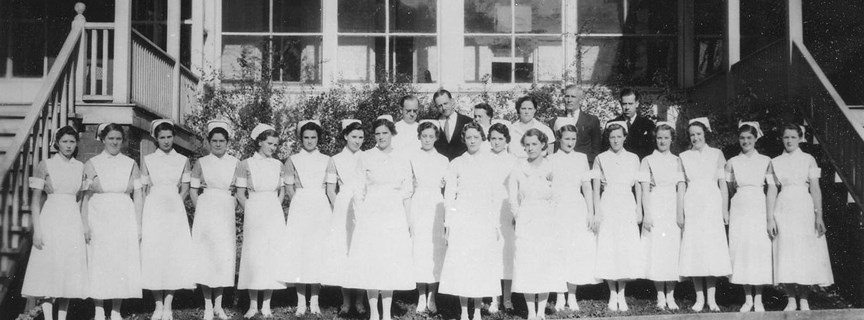
In the first year of operation there were 171 patients. While the purpose of the hospital was to treat on the job mining accidents, the hospital also treated farmers, laborers, carpenters, and those that did not have on the job accidents. For instance, the hospital treated 30 people who had suffered gunshot wounds in the first year of operation. As the New River Gorge coal mining area expanded, so too did the needs for expansion of McKendree Hospital. However, it was problematic to recruit qualified nurses to an isolated community where they would be paid an impoverished wage. As a result, McKendree Hospital suffered grave staffing problems. To counteract the staff shortages, McKendree Hospital established a nurse's training facility on March 1st, 1910. The nurses were initially paid $10 dollars a month, received food and shelter, and had to give a two year commitment, in which they would train by working at the hospital. By 1915, the program was so successful that McKendree Hospital had to expand its facilities. By October 1917, a nurses' home building, containing 17 rooms and a fenced in tennis court was completed. The hospital itself was 3 stories high. The first story of the building contained the white ward on the east side of the building and the west side contained the colored ward. The second story consisted of offices and residences for nurses and surgeons. Finally, the third story housed the operating room, the sterilizing room, and several small rooms which were used by white female patients. For more information about McKendree Hospital, please read Melody Bragg's wonderfully insightful "Window to the Past" books. The information gathered from this article was taken from her third book on the composition about McKendree Hospital
|
Did You Know?
Between 1987 and 1991, over thirty peregrine falcons were released within New River Gorge. Think you saw one? If so, please contact the park wildlife biologist at (304) 465-6542. More...