
|
The Heart of the Monster is sacred to Nimiipuu (Nez Perce) culture because it is the place of their creation. Nimiipuu families have been visiting this site for thousands of years and continue to visit today. Southeast of Kamiah, you too can see the basalt mounds that are the heart and liver of the slain Monster. 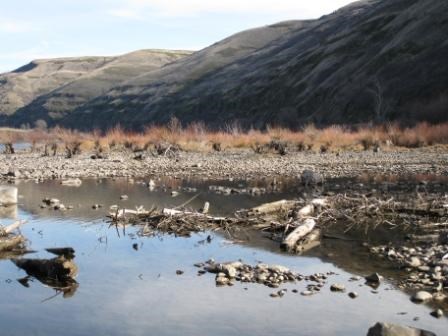
NPS Photo 
NPS Photo Most of the mountains in central Idaho were formed by granitic intrusions forcing the local terrain upward to elevations of 3,000-7,000 feet. The entire area, called the Idaho Batholith, is deeply dissected, exposing the granite core over vast areas and creating local relief of more than 3,000 feet in many areas. To the east of the batholiths is an area of linear valleys bordered by mountain ranges (basin-and-range topography). The Lolo Trail crosses the northern boundary of the batholiths and drops into the area of these basins and ranges. Big Hole National Battlefield is situated on the west flank of the basin-and-range. To the west of the batholiths are the Blue Mountains, which generally do not exceed elevations of 8,000 feet. The Snake River cuts a channel between the batholiths and the Blue Mountains that is deeper than the Grand Canyon!! Many of the higher elevations in this area have been glaciated. |
 |
|
Last updated: August 30, 2020