National Park Service LogoU.S. Department of the InteriorNational Park ServiceNational Park Service
National Park Service:  U.S. Department of the InteriorNational Park Service Arrowhead
Nez Perce National Historical Park Replica dugout canoe at Canoe Camp site with Clearwater River in the background
view map
text size: largest larger normal
printer friendly
Nez Perce National Historical Park
Canoe Camp
Canoe Camp

Nez Perce National Historical Park

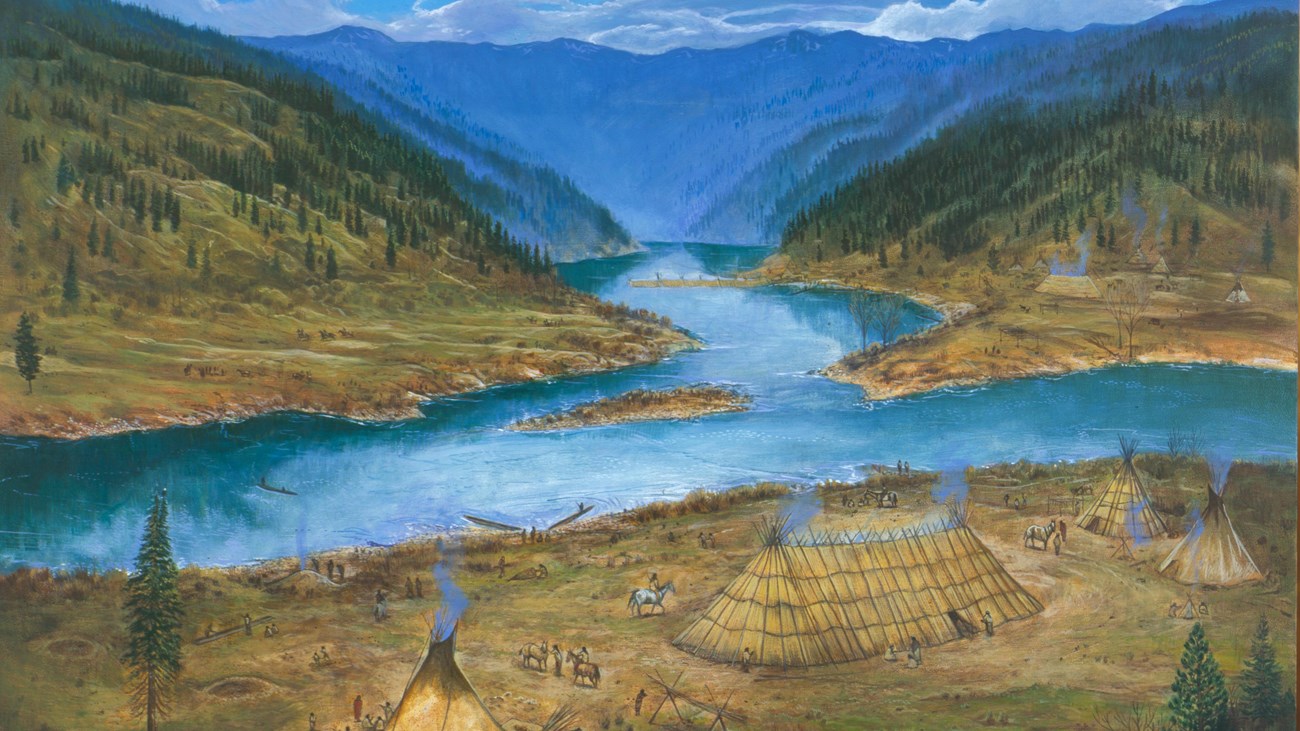
Canoe Camp is where Lewis and Clark built the canoes that would take them to the Pacific Ocean.

These grounds have been inhabited for thousands of years by the Nez Perce people, but are best known as the place where the Lewis and Clark Corps Of Discovery worked with the Nez Perce to carve the canoes that took them to the Pacific Ocean in 1805.

The Corps was unable to find enough food along the Lolo Trail, so by the time they got here, they were starving. At their first meal with the Nez Perce, they ate so much of the rich salmon and camas root that they were sick for days. Even in their weakened state and slowed by hot weather, they still managed to carve five canoes in twelve days. 

As the Corps left for their journey to the Pacific, they cached their saddles and gear and left their horses here in the care of the Nez Perce until their return in the spring.

To read what Captains Lewis and Clark recorded in their journals, you can read it as a MSWord document (26.5 kb) or as an Adobe pdf (18.6 kb).

You are exiting the National Park Service website

Thank you for visiting our site.

You will now be redirected to:

We hope your visit was informative and enjoyable.

Josiah Redwolf, the last survivor of the 1877 Nez Perce War in 1968 with the Big Hole Superintendent. NPS Photo NEPE-HI-3044.

Did You Know?
Josiah Red Wolf was five years old when the 1877 war began. His parents were killed at the Battle of Big Hole in Montana. He returned to Big Hole at the age of 91 to help dedicate the new visitor center in 1968.

Last Updated: May 15, 2011 at 02:54 MST