



The Nationwide Rivers Inventory (NRI) is a listing of more than 4,500 free-flowing river segments in the United States that have been identified as eligible or potentially eligible for inclusion in the National Wild and Scenic Rivers System. Nationwide Rivers Inventory river segments possess one or more regionally or nationally significant "outstandingly remarkable" natural or cultural values.
All federal agencies must seek to avoid or mitigate actions that would adversely affect NRI river segments. Learn more about consultation guidance on projects potentially affecting NRI segments.
In 2024, the NRI was updated using readily available federal planning information sourced from the four federal river administering agencies, Bureau of Land Management (BLM), National Park Service (NPS), United States Forest Service (USFS), and United States Fish and Wildlife Service (USFWS) for their lands. Technical corrections were made to add tributaries, forks, and creeks and to remove duplicate segments and segments that have been designated as part of the National Wild and Scenic Rivers System. This update also included the launch of a modernized, public facing interactive map (arcgis.com).
Wild and Scenic River designation preserves select rivers, or sections of rivers, by prohibiting the construction of dams or other projects that may alter free-flow conditions and river values. It protects the natural, cultural, and/or recreational values of a river “for the benefit and enjoyment of future generations” (Wild and Scenic Rivers Act). Learn more about the Wild and Scenic Rivers Act and laws and policy related to the Nationwide Rivers Inventory.
However, fewer than 14,000 miles, or less than 0.5% of all the river miles in the United States, are protected as Wild and Scenic Rivers. The Nationwide Rivers Inventory includes an additional approximately 78,000 miles of eligible or potentially eligible river segments – more than five times the mileage of rivers in the National Wild and Scenic Rivers System. The intention of listing a river on the NRI is to preserve river values for which it might be designated. Consult with the NPS prior to taking actions that would effectively foreclose a future wild and scenic designation of NRI rivers.
The NRI is a public source of information for:
- Statewide river assessments and federal agencies involved with stream-related projects
- Any group concerned with ecosystem management, the inventory can provide the location of the nearest naturally- functioning system which might serve as a reference for monitoring activities.
- It may also provide a list of plant and animal species for restoration efforts on a similar section of river.
- For the recreationalist, it provides a listing of free-flowing, relatively undisturbed river segments.
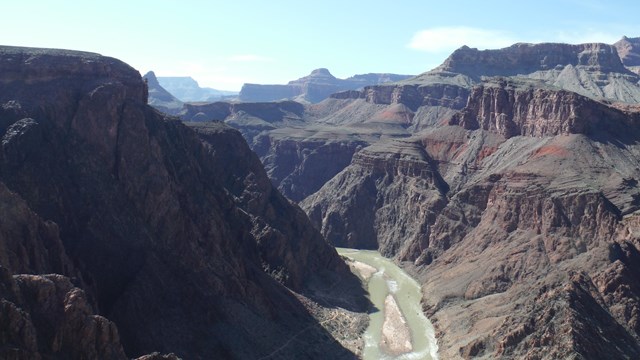
Download NRI Data
Download spatial and attribute data for the Nationwide Rivers Inventory
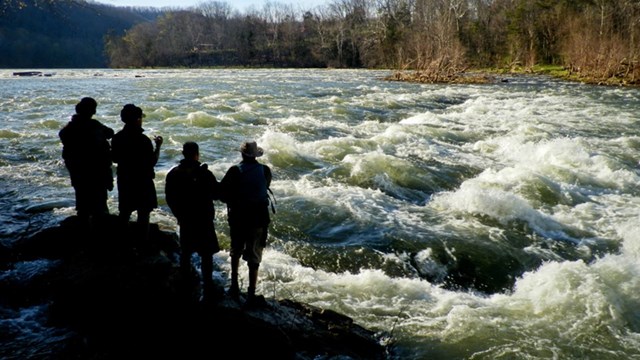
Consultation Guidance
Find instructions on the consultation process with the National Park Service on projects potentially affecting NRI segments.
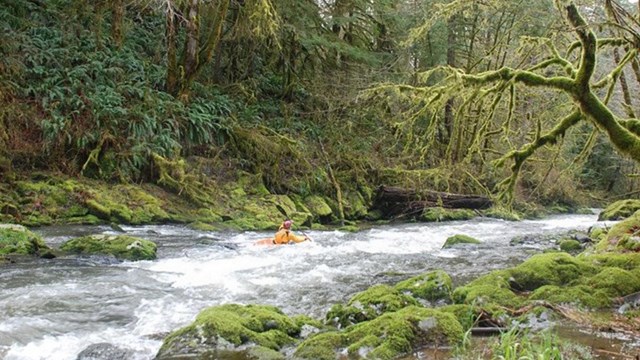
Contact Us
Questions about a specific project or want information on a Wild and Scenic River? Contact the appropriate regional coordinator.
Wild and Scenic Rivers
Explore the National Wild and Scenic Rivers System.
History
Learn more about the history of the Nationwide Rivers Inventory
Eligibility
Learn about what makes a river eligible for the Nationwide Rivers Inventory.
Last updated: June 12, 2026