|
1. Decide
on Content
Most likely
your newsletter will be mailed periodically, not daily or even weekly.
Thus the stories will not be late breaking news but items of general
interest about the project, the area and its people as well as the
project schedule or the publication of findings. Make the text interesting,
keep it short, and use the active voice ("we are" versus "we have
been"). Consider also including:
- A community
bulletin board where people can share their project activities
and accomplishments.
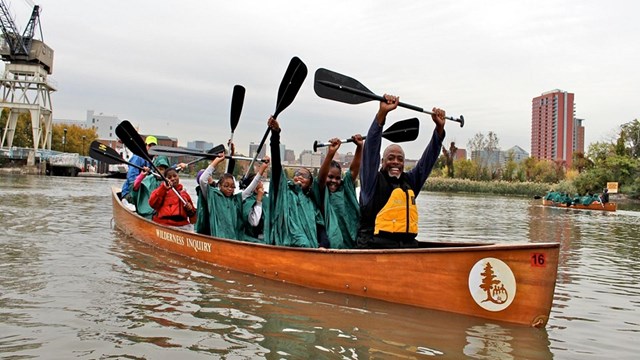
- Pictures
of people in action.
- Quotations
and poetry to enhance images or messages.
- A coloring
page for children, activity ideas or references for learning more.
- Theme issues
that include interviews with experts on that subject.
- Profiles
of landowners, volunteers, employees or other stakeholders.
- Descriptions
and dates of upcoming events.
2. Design
for Readability
Since the ultimate
purpose of your newsletter is for people to get information, it
needs to be easy to read and not all fonts are easy. Use only two
or three different fonts, or typefaces, in the entire newsletter.
Make sure the size is also easy to read (11-12 point size). Don’t
try to squeeze in more copy with a small font (size 8-10); it’s
better to make the stories shorter or add more pages. Also use plenty
of white space, which refers to blank areas that have neither copy
nor images. To immediately create white space, try increasing the
margins.
3. Select
Images Carefully
Select only
quality photographs and artwork. Images should be used both to attract
people to the information and to enhance their understanding of
the message. To aid in understanding, always include a caption for
each image. Avoid using photographs, maps and drawings that are
inserted just for decoration and do not strengthen a story.
4. Give it
Style
Create an identifiable
look that allows immediate recognition when people pick it up from
their mailboxes. Be consistent from issue to issue by placing sections
like contents, letters from the chairman and community calendars
in the same locations. But do take freedom to vary formats of articles
like number of columns, use of bullet statements, question-and-answer
format, etc.
5. Proof
It
Always, always
have a person who was not involved in the writing or design of the
newsletter give it a careful read before printing. This is not only
to look for typos, it is also to make sure paragraphs were not accidentally
dropped, captions are included, page numbers are correct, dates
and contact information is accurate and that every story and image
make sense.
6. Print
It
Printing can
be as easy as making copies or as complex as a four-color production
on glossy paper. What method of printing is chosen will depend upon
budget. But whether a newsletter is black-and-white and stapled
in the corner or full-color and bound like a magazine is not as
important as the content and design.
7. Mail It
Depending upon
the size of your mailing list, and if your organization is a government
agency or a nonprofit, there are several options for reducing mailing
costs such as a bulk mail permit for groups mailing to 200 or more.
Before starting your first newsletter, determine the best method
by visiting your post office to find out what is involved.
|