

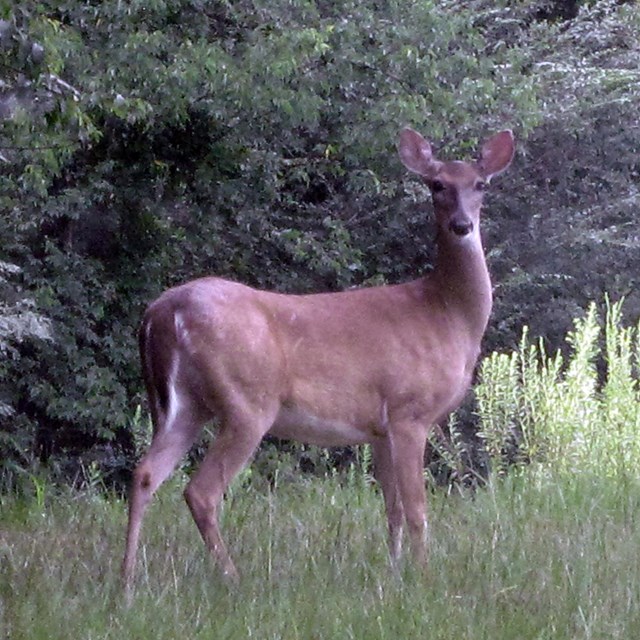
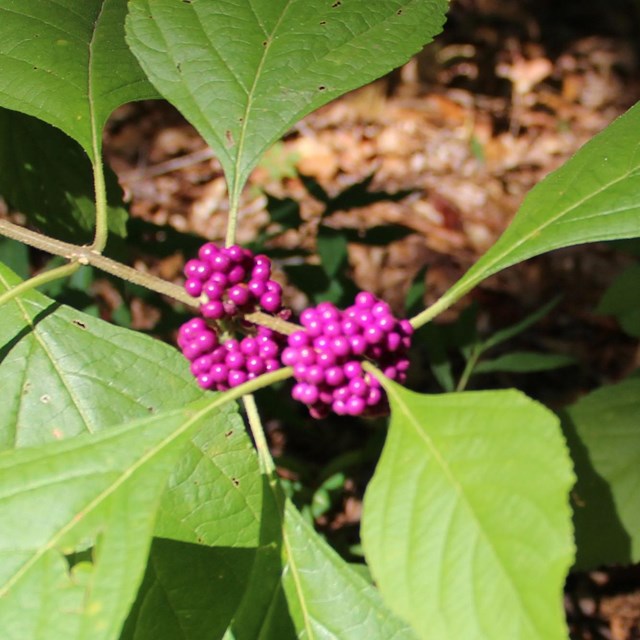
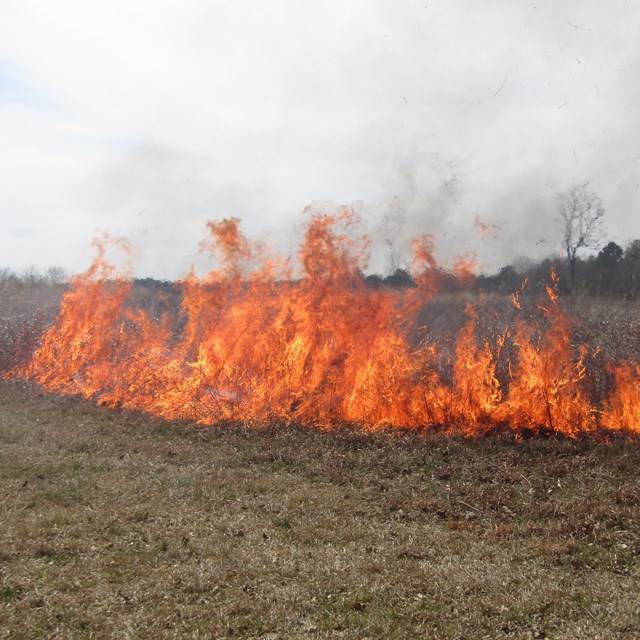
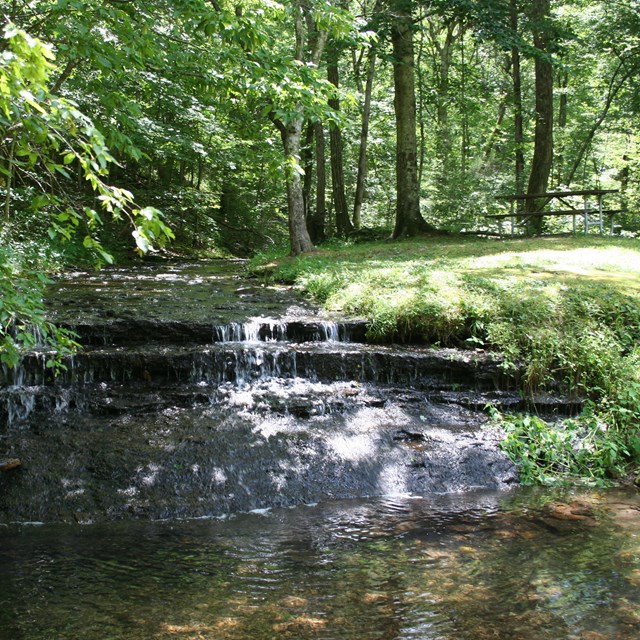
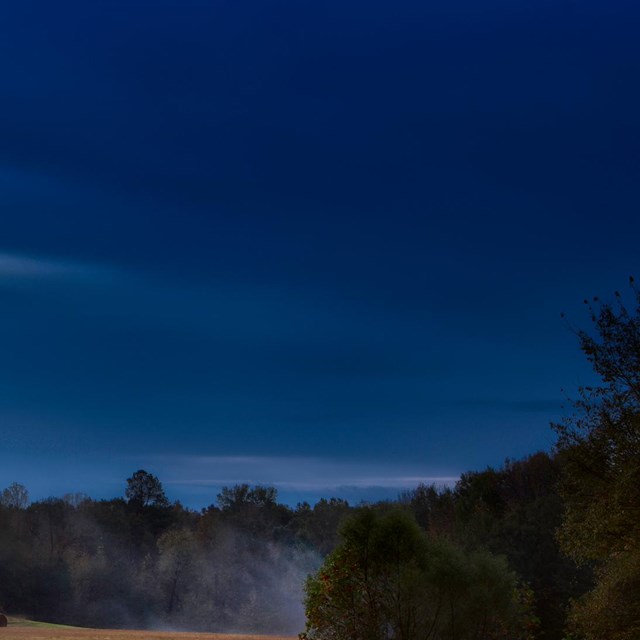
Photo by Marc Muench Nearly 39,000 of the Natchez Trace Parkway's 52,000 acres are maintained in a "natural" condition, i.e., forests, non-agricultural fields, and open water. The majority of these lands are contained within the narrow 800 foot wide boundary that parallels the parkway itself. While it is by no way an intact, pristine ecosystem, the park is still exceptional from a natural resources standpoint. The Natchez Trace Parkway forms an almost continuous greenway, or transect, from the southern Appalachian foothills of Tennessee to the loess soil bluffs of the lower Mississippi River. Over its length it crosses four ecosystem provinces, eight major watersheds, and twelve physiographic regions. Forest types range generally from oak-beech in the far south, to oak-pine mixes covering the vast middle section, to oak-hickory dominating in the north. Habitats represented within the park are diverse and include: streams, lakes, swamps, riparian woodlands, bottomland hardwood forests, upland hardwood forests, pine and mixed hardwood forests, prairie, fallow fields, and agricultural croplands. These habitats are preserved as living laboratories for scientific research, but are also available for the enjoyment and education of the visiting public. Parkway Nature
|
 |
|
Last updated: February 14, 2023