




NPS Photo Mount Rainier, the most heavily glaciated peak in the contiguous United States, offers an exciting challenge to the mountaineer. Each year thousands of people successfully climb this 14,410 foot active volcano. There is access to over twenty different climbing routes and ski descents via four main trailheads to approach the mountain: Paradise, Westside Road, White River, and Mowich Lake. Reaching the summit via any route requires a vertical elevation gain of more than 9,000 feet and traveling over ten miles in distance. Climbers must be in excellent physical condition and well prepared. Technical glacier-travel rope skills are also required to ascend and descend the mountain safely. Either independently or with a guide, climbing and skiing on Mount Rainier offers an unparalleled experience within the Pacific Northwest's Cascade Mountain Range. Climbing Regulations at Mount RainierClimbing regulations are established in the Code of Federal Regulations, Title 36, 7.5 (b) and describe three rules.
Depending on your climb and when you want to do it, there are four types of permits that you may be required to obtain before your trip begins: 1. Climbing RegistrationRegister depending on the season:
Winter Self Registration (September 15 – May 21)Very few people try to climb Mount Rainier in the winter. During this period, there are no occupancy issues at any of our high camps or Wilderness zones. We allow “self-registration”. There are two steps to take:
Summer Walk-Up Registration (May 22 – September 30)During the summer season, there is NO self-registration. You must come to a wilderness information station to register for your climb. The park holds roughly 50% of capacity at each camp and in each Wilderness zone for walk-up registration. You may register for a walk-up permit 24-hours before your climb begins.
Summer Reservation ActivationYou may also complete your registration when you activate your climbing reservation at a ranger station with a ranger. Read more below about Wilderness Permits and Reservations. 2. Wilderness PermitDuring the high-use, summer period (May 1 – September 15), a wilderness permit will also be issued at the time of your climbing registration. The wilderness permit system works like a hotel reservation system and ensures that our camps and zones don’t overfill and there are no crowding issues on our climbing routes. A wilderness permit is $12 per person per night. Visit the Wilderness Permit page for detailed information. Because we are managing not only our camp sites, but climbing use along the whole climbing route, even if you are not camping, or “single pushing”, you are still required to obtain a Wilderness Permit. Once again, if occupancy on the climbing route is full when you’re online trying to obtain a reservation, you may still obtain both a Climbing Registration and a Wilderness Permit by walking up to a ranger station within 24-hours of your climb. These permits are issued “first come, first served.” 3. Wilderness ReservationThe “peak” climbing season is from May 1st to September 15th. Camps and zones fill up quickly especially on Friday nights and on weekends. Our advice is to not rely on getting a ‘walk-up’ Wilderness Permit. Obtain a reservation. They are worth the time and effort in providing you some assurance that you will be able to go on the dates you want. Visit the Wilderness Permit page for details on how to apply for your reservation. 4. Solo Climbing36 CFR 7.5 (b) (3) states that “a party must consist at least of two people” unless specific authorization is obtained by an application that considers a variety of factors such as your experience, anticipated weather and conditions, the route you’re climbing, and other factors. Roughly 200 people apply to solo climb Mount Rainier each year, but fewer than half of those receive permits to do so. Before you apply, we recommend building your resume with ample ascents of Mount Rainier participating as a team member or climbing other mountains that are heavily glaciated such as Mount Baker, Denali, or Mont Blanc. You can apply for a solo permit via the Solo Application Form. A climbing ranger will review your application and get back to you within a week or two. We deny wilderness permits and climbing registrations in only the rarest of occasions, but solo permits receive a lot more scrutiny. Weather and ConditionsWeather, snow, and route conditions can change rapidly, making the difference between a pleasant and rewarding experience or a tragedy. Before beginning a climb, obtain a current weather forecast. Rangers at both Camp Muir and Camp Schurman can give out updated forecasts before your summit attempt, but look for a general trend in the weather before arriving at the park. 
NPS Photo Guide ServicesClimbing instruction, multi-day summit climbs, multi-day climbing seminars, and private climbs are available through: There are also 15 single-trip guide services authorized to perform only one guided trip per year. Check the list of current Commercial Use Authorizations for approved guide service companies. Route BriefsRoute briefs are official in-depth descriptions of climbing routes on Mount Rainier. Use the Route Briefs to familiarize yourself with these four popular routes. Produced by the climbing rangers, they contain the information needed for planning your climb, including route statistics, common pit-falls, and some of the climbing history of the route. Annual Mountaineering Reports and StatisticsAnnual Mountaineering Reports summarize highlights of the climbing program, including search-and-rescues, statistics, and climbing staff. Climbing Resources
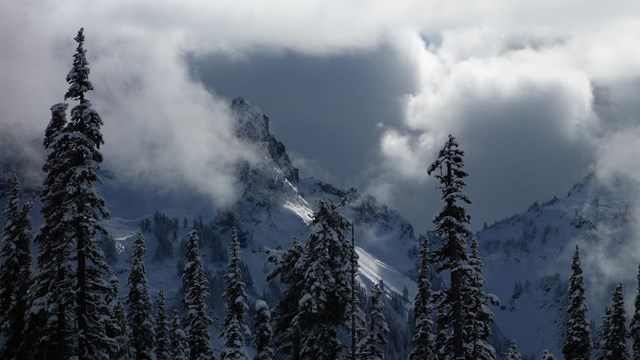
Weather
Be prepared for Mount Rainier's changeable weather. 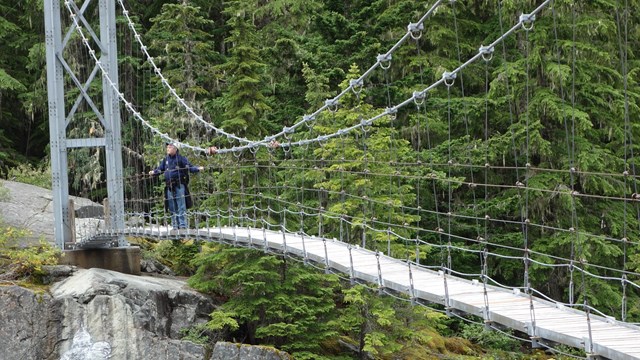
Hiking Safety
No matter the length of your hike, being aware of risks can help make your hiking experience safe and enjoyable! 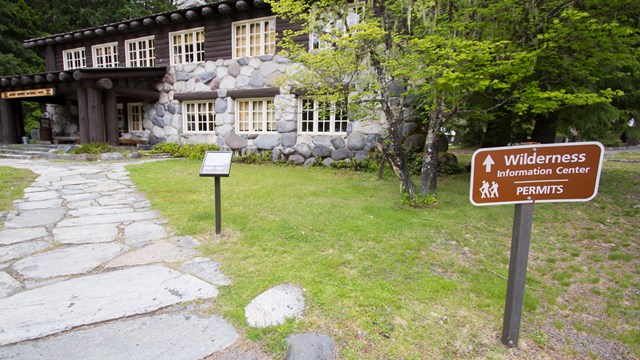
Wilderness Permits
A wilderness permit is required for all overnight camping. Learn how to reserve a permit or acquire a first-come, first-served permit. |
Last updated: May 5, 2026