
|
Day and night, mammoth sandbagging operations along the river corridor attempted to keep pace with the rising waters, with limited success. By the 9th, myriad small businesses had been knocked out, as well as the Twin Cities' water treatment plant at Pig's Eye, resulting in the discharge of raw sewage directly into the river. Railroad service was maintained by switching from modern diesel-powered units (whose low-slung engines would be inundated) to older steam engines, and raising the track beds, a majority of which lay along the river on reclaimed flood-plain. Even then, trains had to crawl through water for six hours along the river before they could detour into relatively drier Wisconsin. Fledgling Northwest Airlines was not as lucky, however, having to curtail service after its repair facilities at downtown's Holman Field went under, soaking millions of dollars in equipment. One of the few major riverfront industries to remain dry was the stockyards of South St. Paul. With countless millions of seasonal dollars at risk, they utilized 3,000 men, 300 trucks, and 25 bulldozers around the clock to raise 4 miles of dike as much as 3 feet, only inches above the eventual crest. 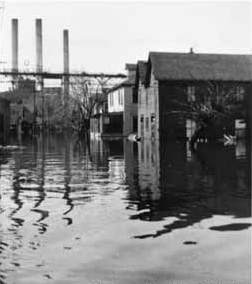 Courtesy of MN. Historical Society Slow and congested in even the driest weather, St. Paul commutes were made especially nasty by the flood. By the 15th, the High Bridge was the only feasible river crossing for those without a boat, as the approaches of both the Wabasha and Robert Street bridges were under water, and only the river flowed along the recently completed Kellogg Boulevard viaduct. Compounding the congestion, and particularly frustrating the efforts of relief convoys and the Fire Department (busy, in the midst of the flood, with a record number of grass fires), thousands from around the Upper Midwest were flocking to St. Paul to witness the torrential waters, especially over the long Easter Weekend. |
Flood of 1952 |
Last updated: November 22, 2019