National Park Service LogoU.S. Department of the InteriorNational Park ServiceNational Park Service
National Park Service:  U.S. Department of the InteriorNational Park Service Arrowhead
Mesa Verde National Park View of Spruce Tree House from above.
view map
text size: largest larger normal
printer friendly
Mesa Verde National Park
Architectural Documentation
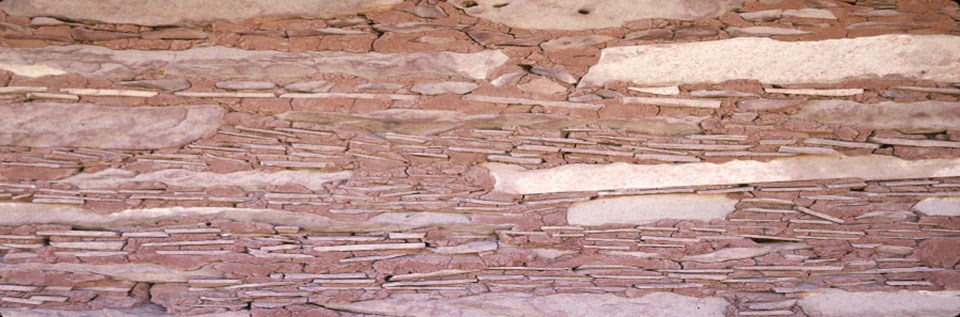
Detail of masonry wall.
NPS Photo
Detail of masonry wall in a backcountry cliff dwelling.
 
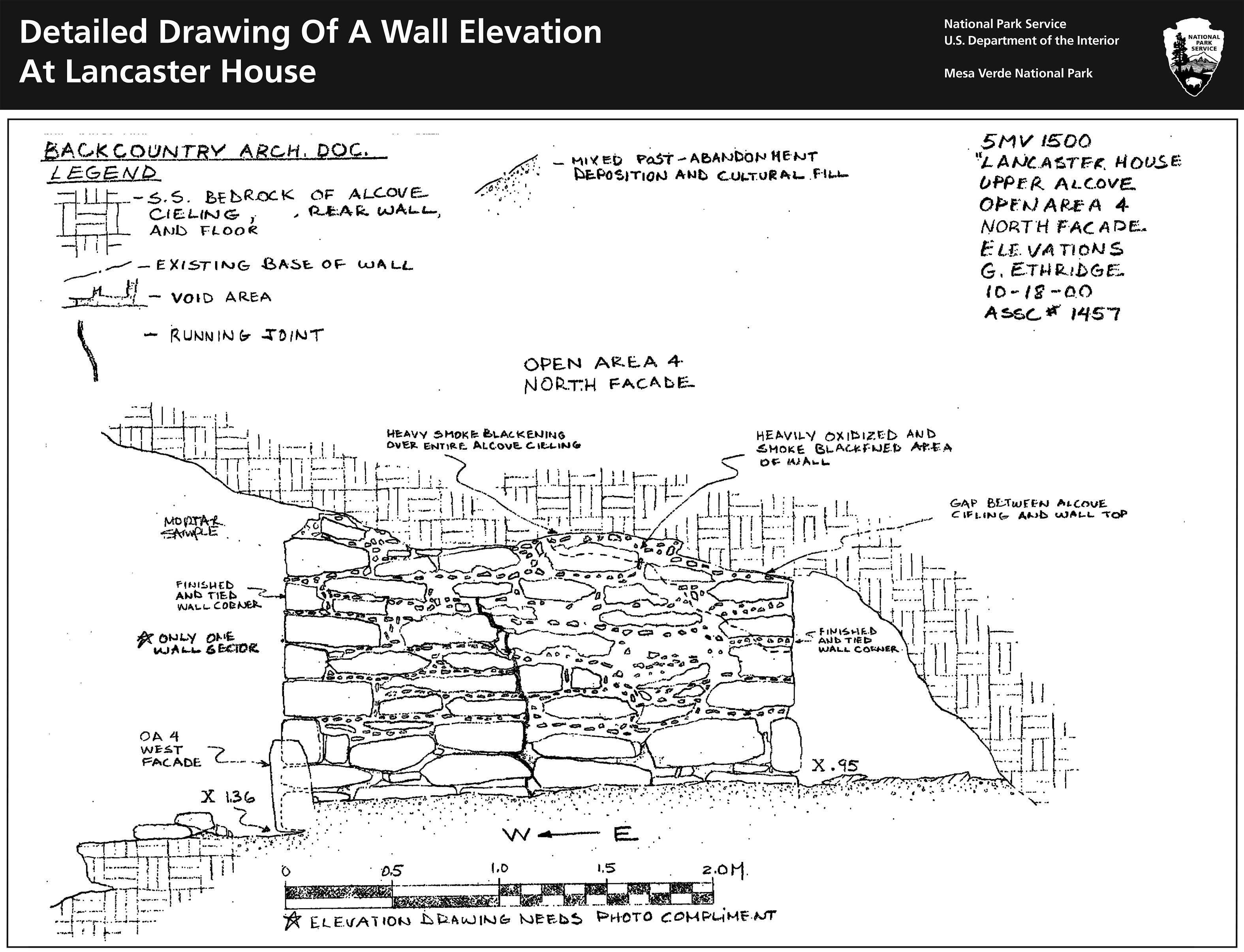
Detailed drawing of a wall elevation at Lancaster House.

NPS Photo

Detailed drawing of a wall elevation at Lancaster House. (Click on image to download a pdf of the drawing.)


Architectural documentation is the most detailed type of recordation. At this level, walls are thoroughly photographed, every stone is mapped, and all construction attributes and features are recorded on field forms. The purpose of this type of documentation is to record and analyze architectural details in order to answer specific research questions. Also, this type of documentation is completed when certain areas of sites are recommended for stabilization. In cases where it is necessary to alter original fabric in order to preserve the wall, architectural documentation ensures that original features and construction methods are recorded before treatments are applied.

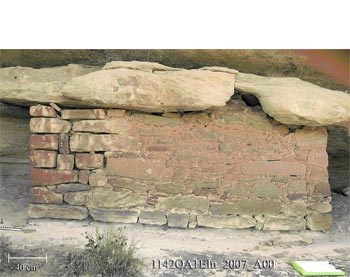
Architectural documentation records specific details and features, such as building stone shaping techniques, mortar application, doorways, hearths, and vents to name a few. This is done by creating detailed drawings or scaled digital photographs of each wall within a site. To date, architectural documentation projects have been completed at Cliff Palace, Spruce Tree House, Oak Tree House and several smaller alcove sites located in the backcountry of Mesa Verde National Park.

Recording architectural features can help us determine how the structures were originally constructed and what alterations might have taken place over time. The use, reuse, and function of each structure, as well as the spatial relationships between rooms and kivas can also be determined. Features and details can also tell us how individual rooms may have been used, and also help to determine the size and composition of Ancestral Puebloan households. This in turn helps archeologists determine population size not only within certain sites, but in the Mesa Verde region.
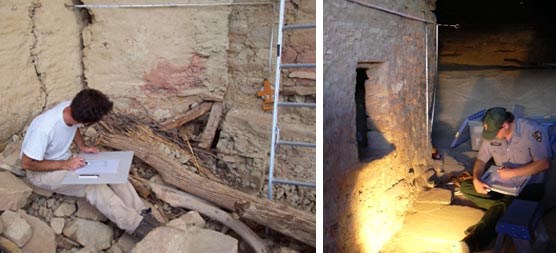
 
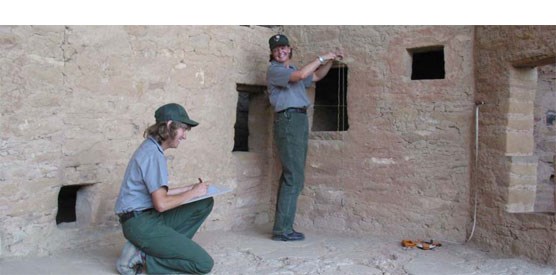
Archeologists documenting sites.
NPS Photo
Left: Archeologist Greg Stoehr recording a wall in Spring House. Right: Archeologist Aron Adams documenting a wall in Spruce Tree House.
 
Two archeologists working in Spruce Tree House.
NPS PHOTO
Archeologists Kay Barnett and Julie Bell document an Open Area at Spruce Tree House.
 
A scaled digital photograph of a wall.
NPS Photo
A scaled digital photograph created by Robert Jensen, photographer.

You are exiting the National Park Service website

Thank you for visiting our site.

You will now be redirected to:

We hope your visit was informative and enjoyable.

Last Updated: October 06, 2010 at 14:41 MST