



|
Next: Power Looms
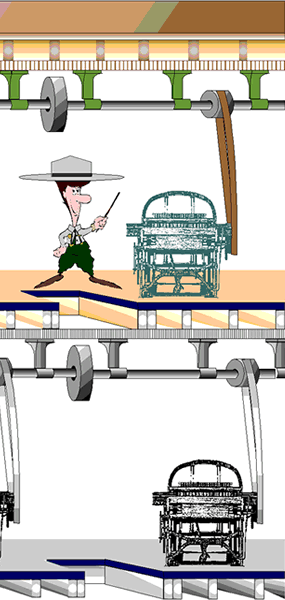
National Park Service Once a wheel or turbine had harnessed the waters power, the mill engineer had to transfer the power throughout the mill to hundreds of machines. British and early American mills ran a vertical shaft off the main drive shaft, then transferred the power by gears to overhead shafts on each floor. Because it was difficult to get precisely machined gears, American mills were rough and noisy and had to be run at slow speeds. A few small mills used belting, but it wasn't until Paul Moody used belting in the Appleton Mills in 1828 that it was seriously considered as an alternative to shafting. Leather belts transferred power directly to the horizontal shafts on each floor. Belts allowed faster speeds and were quieter and less jarring than shafting. Belting was also much lighter, easier to maintain, and more forgiving of imprecise mill construction. By mid-century, belting had become a distinguishing characteristic of American mills. Source: Lowell National Historical Park Handbook 140
Next: Power Looms
|
Last updated: March 20, 2024