 |
 |
  |
|
|
|
|
Lowell National Historical Park
Making Textiles
|
|
|
|
|
|
 |
|
|
| National Park Service |
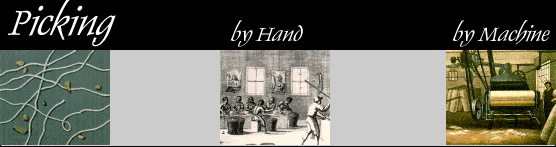
| Picking removed foreign matter (dirt, insects, leaves, seeds) from the fiber. Early pickers beat the fibers to loosen them and removed debris by hand. Machines used rotating teeth to do the job, producing a thin "lap" ready for carding. |
|
|
| National Park Service |
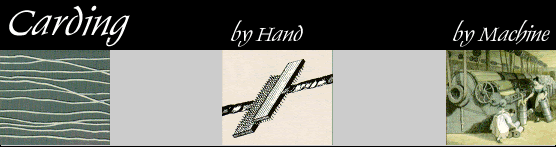
| Carding combed the fibers to align and join them into a loose rope called a "sliver." Hand carders pulled the fibers between wire teeth set in boards. Machines did the same thing with rotating cylinders. Slivers (rhymes with divers) were then combined, twisted, and drawn out into "roving." |
|
|
| National Park Service |
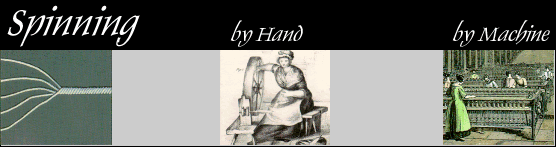
| Spinning twisted and drew out the roving and wound the resulting yarn on a bobbin. A spinning wheel operator drew out the cotton by hand. A series of rollers accomplished this on machines called "throstles" and "spinning mules." |
|
|
| National Park Service |
| Warping gathered yarns from a number of bobbins and wound them close together on a reel or spool. From there they were transferred to a warp beam, which was then mounted on a loom. Warp threads were those that ran lengthwise on the loom. |
|
|
| National Park Service |
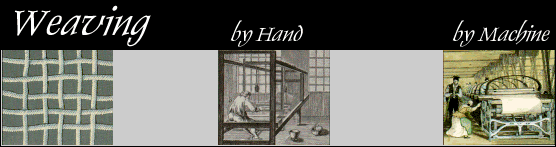
| Weaving was the final stage in making cloth. Crosswise woof threads were interwoven with warp threads on a loom. A 19th century power loom worked essentially like a hand loom, except that its actions were mechanized. |
|
|
|
 |
|
|
|
|
|
 |
|
Did You Know?
The factory bells dominated daily life in Lowell. They woke the workers at 4:30 a.m., called them into the mill at 4:50, rang them out for breakfast and back in, out and in for dinner, out again at 7 p.m. at the day's close. The whole city, it seemed, moved together and did the mills' bidding.
|
|
|
|
Last Updated: August 22, 2006 at 13:19 EST |