

N. Myrah, Artist, Catalog No. FOCL 698 Prior to the establishment of Lewis and Clark National Historical Park, archeological investigations related to the search for the location of the 1805-1806 Fort Clatsop, and the activities of the Lewis and Clark expedition, were a continuing theme in the development of the museum collections for the park. Research and compliance activities within the park have added materials related to Native American Tribes in the area, early settlement and development, and historic transportation. Archeological materials currently comprise 17% of the park’s museum collections. There are no museum objects within the collections that can be positively associated with the Lewis and Clark Expedition. Most of the historic objects are representative artifacts from the time period, replicas of historic artifacts for exhibit, or historic objects related to the establishment and expansion of the park. The historic collection accounts for approximately 2% of the park collection. 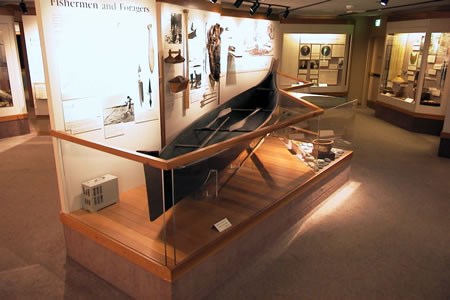
The ethnological collection documents the material culture of the Clatsop and Nehalem Tribes of Oregon, the Chinook tribe of Washington State, and other tribal groups on the Columbia River. These objects include baskets, cedar hats, woven mats and bags, glass beads, a traditional high prow canoe and paddles, and cedar objects associated with fishing. The ethnological collection accounts for 2% of the museum collection. A large part of the biological collection includes modern botanical voucher specimens collected to reflect Lewis and Clark’s plant documentation activities during their stay at Fort Clatsop. A limited number of small mammal specimens and several bird specimens are included in the collection. The biological collection makes up 2% of the museum collections. The park has one geological specimen and no paleontological specimens. The park’s archival collection has shown the most growth of any part of the museum holdings, and contains 77% of the cataloged collection. These records include a large number of historic photographs, archival documents related to the establishment and management of Fort Clatsop National Memorial and Lewis and Clark National Historical Park, and documentation for the park’s research activities.
|
 |
|
Last updated: February 16, 2022