
NPS Photo / Andrew S. Muñoz 
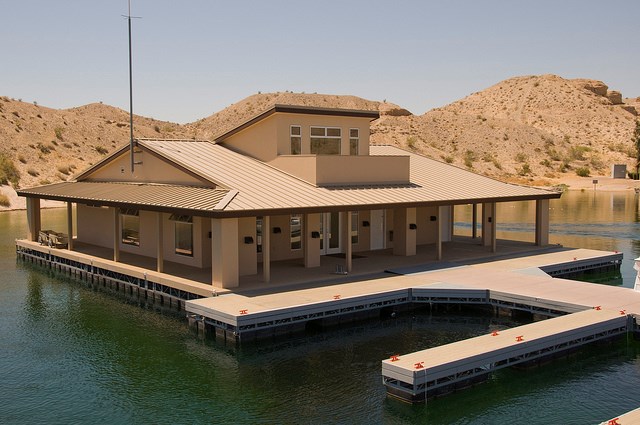
This groundbreaking - well more like water displacing - structure is the first floating building ever constructed to U.S. Green Building Council (USGBC) standards and registered to seek LEED Gold certification. LEED (Leadership in Energy and Environmental Design) is an internationally recognized green building certification system developed by the USGBC. The structure serves as the Cottonwood Cove Marina and Resort marina services building. Park visitors will be welcomed here by Forever Resorts staff before they venture out on their rental boat or houseboat vacation. It also serves as an example of sustainable construction. Constructed for the National Park Service by its partner and concessionaire Forever Resorts, the floating eco-friendly structure features sustainable modular construction and state-of-the-art energy-efficient and environmentally responsible materials and fixtures.

NPS Photo / Andrew S. Muñoz Decking is made of a composite of rice hulls and recycled plastic and the exterior stucco is made of recycled tires. Use of low or no volatile organic compound materials, paints and adhesives will rid the building of the typical new building smell, improving the overall indoor air quality. Additionally, every piece of leftover material was tracked to reduce the amount of waste sent to landfills and ensure maximimum reuse or recycling. The project's key earth-minded elements and commitments include the integration of the concessionaire's environmental management systems and a mix of new and existing programs:
The structure is designed to last over 40 years without significant maintenance. 
|

Last updated: February 9, 2016