



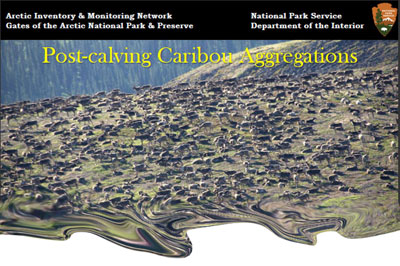
 National Park Service wildlife biologist Kyle Joly just released an update on the "spectacular" aggregations of the Western Arctic caribou herd. Every weekend Kyle receives an email that contains GPS coordinates from radio collars worn by 40 caribou, allowing him to monitor the routes and timing of the 2,000 mile round-trip migration between their winter range and the calving grounds. Kyle's account of the the post-calving aggregations he witnessed earlier this week can be found by clicking on the image above.
Previous issues include "Spring Migration Running Behind" and "Daring Dash Across Sea Ice". To learn more about the work being done by the NPS Inventory & Monitoring Program on Alaska's largest caribou herd and to see a map of their range, click here.