



Select a Park:Select a Species Category (optional):
Search results will be displayed here.
From bringing large numbers of brown bears to areas for bear viewing, and creating great recreational fishing opportunities, the different species of fish are a crucial part of Katmai’s ecosystem. They have great local economic significance, and provide exceptional visitor experiences. No matter when or where you visit, fishing in Katmai requires extra care and responsibility to protect the wildlife and experience. 
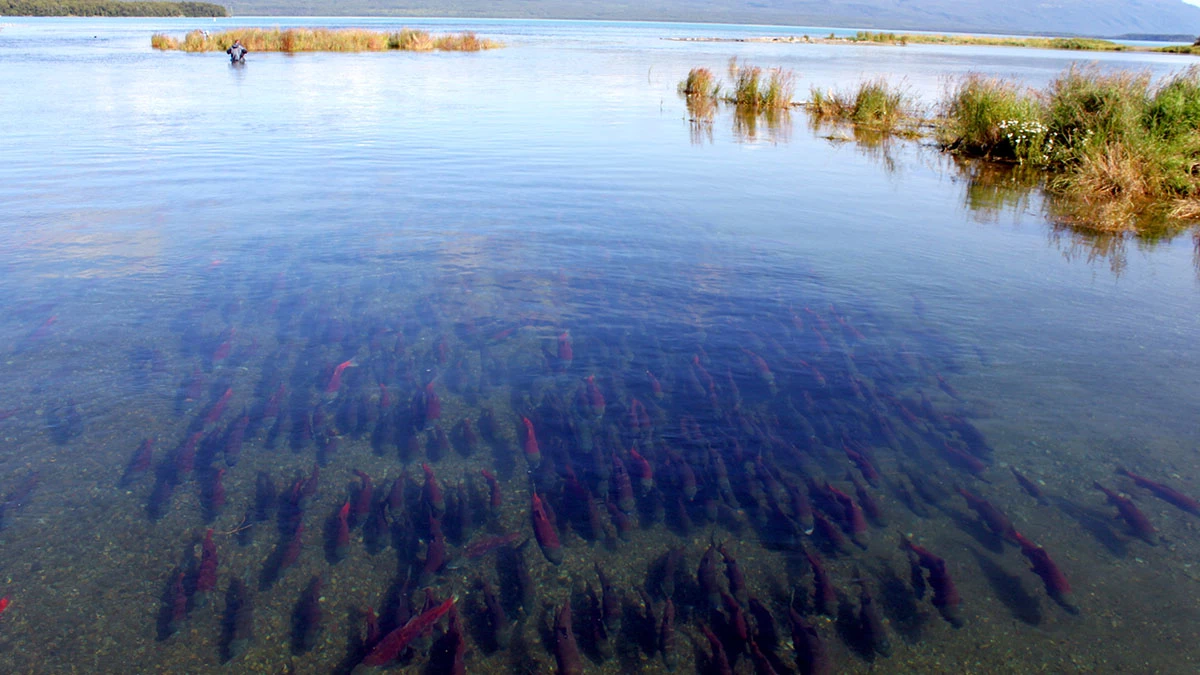
Sockeye Salmon (Oncorhynchus nerka) The salmon run begins here in late June. By the end of July, a million fish may have moved from Bristol Bay into the Naknek system of lakes and rivers. Salmon stop feeding upon entering freshwater, and physiological changes lead to the distinctive red color, humped back, and elongated jaw they develop during spawning. The salmon spawn during August, September, and October. Stream bottoms must have the correct texture of loose gravel for the eggs to develop. The stream must flow freely through winter to aerate the eggs. By spring the young fish that have just hatched, called "fry" or "juveniles," emerge from the gravels and migrate into the larger lakes, living there two years. The salmon then migrate to sea, returning in two or three years to spawn and begin the cycle once again. Salmon provide food for the bears, bald eagles, rainbow trout, and directly or indirectly for the other creatures that forage along these streams. Find out more about sockeye salmon in Katmai. 
Rainbow Trout (Oncorhynchus mykiss) 
Lake Trout (Salvelinus namaycush) 
SWAN is analyzing lake trout to monitor mercury concentrations in lakes throughout Katmai. This long-term monitoring project is working to find the source, natural or not, of mercury in Katmai’s pristine aquatic ecosystems. Learn more about the Southwest Alaska Network. |
 |
|
Last updated: November 7, 2019