



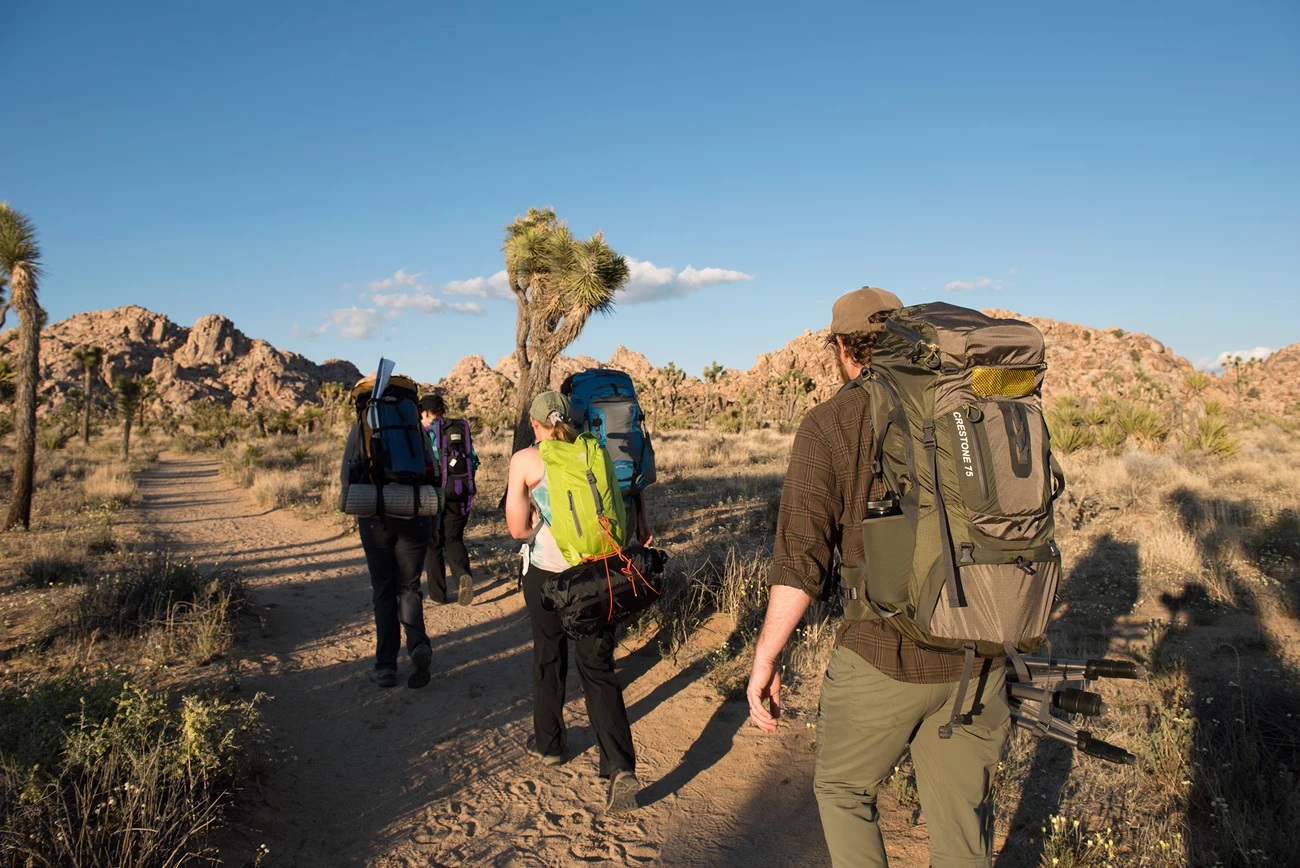
NPS / Hannah Schwalbe With stunning landscapes, scenic vistas, and hundreds of square miles of designated wilderness, Joshua Tree National Park offers outstanding backpacking opportunities. It gives visitors the chance to find solitude, view seldomly seen areas, and experience nature on its own terms. By observing the guidelines below, you can help protect the national park and have a safer experience. Backpacking is only recommended for those with the proper backcountry skills and gear. It not recommended for unprepared campers who could not find a site at a campground. Camping is only permitted in specified backcountry areas and designated campgrounds. Camping is not allowed at trailheads, along roadsides, and in day-use areas. If you have questions, ask a ranger or call the permit office at 760-367-5554. It is your responsibility to know and abide by park regulations. PermitsA permit is required for all overnight stays in the backcountry. A permit costs $6 and allows for a group size of 1 to 12 people to stay up to 14 nights. Permittees are allowed to stay up to three consecutive nights in an individual zone. Permits may be booked up to 6 months in advance. They can be acquired in one of three ways: ZonesWhen booking a permit, you are required to camp within one of fifteen zones. For most zones, there is no limit to the number of permits available. To camp in the high-use Boy Scout zone, backpackers must camp in one of the 14 designated sites. If you do not have a permit for a zone, you are welcome to backpack through the zone, but may not camp in the zone. For all other zones, campsites must be
Camping is not allowed in day-use areas. To view where camping is allowed, check out the maps on the zone webpages. ParkingOvernight backpackers may only leave their vehicles at backcountry trailheads or outside of the park. When filling out a permit, you will choose your entry and exit points from a drop-down menu of the 13 backcountry trailheads. If vehicles are left in day-use parking or left along side of the road, they will be subject to a fine and/or towing. If parking outside of the national park, you are responsible for knowing where to legally park. To avoid trailhead parking congestion, please carpool into the park. 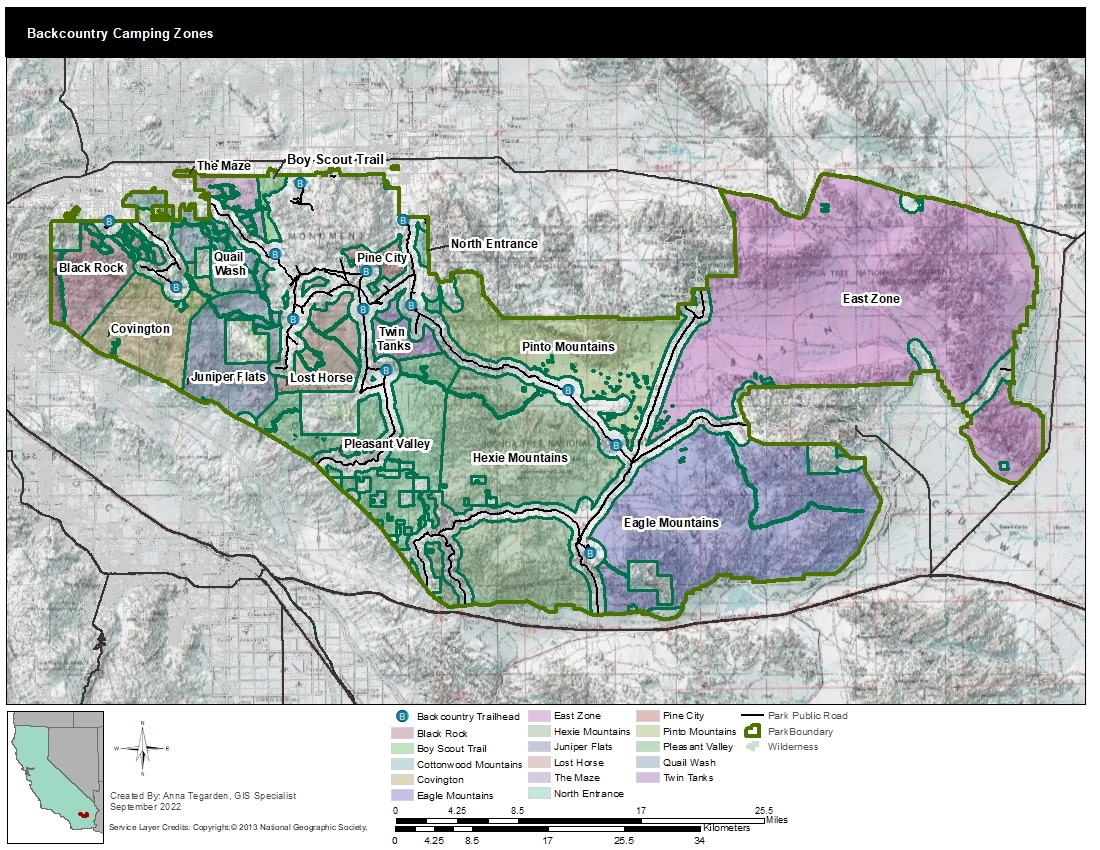
For more information and individual zone maps, please visit the zone webpages:
Visit our keyboard shortcuts docs for details
Learn about the rules, regulations, and best practices for backpacking in Joshua Tree National Park. Rules and Regulations
NPS / Robert Zuniga 
NPS / Robert Zuniga Food and WaterBring all your own water. We recommend at least one gallon per person per day; more if you're hiking on hot days or strenuous trails. Natural water sources are rare and delicate biological resources and should not be taken from. You are welcome to cache water.
Secure your food at night. If you leave it out in the open, rodents, ravens, and coyotes are likely to get into it. No FiresCampfires are illegal in the backcountry. Joshua Tree is susceptible to destructive wildfires. Most Joshua trees do not survive fires and have a hard time repopulating in burned areas. You are welcome to use backpacking camp stoves. Travel and Camp on Durable SurfacesGood campsites are found, not made. Do not set up your tent on vegetation. Look for previously established campsites or durable surfaces like rock slabs, hardened soils, and sandy washes. Washes (dry sandy stream beds) are great leave-no-trace spots and tend to have fewer spiky things. However, if it's summer monsoon season or there is a chance of significant rain, do not camp in washes, because they can flow with water. For more information, view our Flash Flooding webpage. Do Not Camp in Rock SheltersRock shelters may contain sensitive archaeological resources that help researchers understand the history of people who lived in this region for thousands of years. Camping in these areas can unintentionally damage or disturb these sites. Many rock shelters may also be culturally significant to Indigenous tribes connected to this landscape. Avoiding these areas helps respect and protect places that may hold cultural importance. Rock shelters are also commonly used by wildlife. Small mammals may leave droppings that can carry diseases, which can pose health risks to visitors. 
NPS / Robert Zuniga Dispose of Waste ProperlyPack out all trash and left-over food. Human Waste BagsHuman waste bags (wag bags) are highly encouraged but not required. Leave What You FindCollecting natural and cultural objects is strictly prohibited. All plants, rocks, wildlife, and historic and prehistoric materials are protected in the park including wildflowers. Leave everything just as you find it. This helps scientists and archeologist better understand the park's ecosystems and history and allows other visitors to share in the experience of discovery. Let photos, drawings, and memories be your souvenirs. Group Size and Camping LimitThe maximum group size is limited to 12 people. If groups larger than this are separated into multiple, smaller groups, then groups must hike at least 10 minutes apart and camp at least 1 mile apart. The designated campsites in the Boy Scout zone have different capacity limits: 1-4 people, 5-8 people, and 9-12 people. You are allowed to backpack up to 14 consecutive nights in one trip. 
NPS / Robert Zuniga Proof of PermitYou must carry your permit with you. It may be a printed copy or an electronic copy on your phone. PetsDogs and pets are not allowed in the backcountry. This is for the protection of our animals and yours. The presence of carnivores, such as domestic dogs, impairs the feeding, travel, and reproductive cycles of animals struggling to survive in the wild. Even leashed dogs cause extra stress on wild animals and are only allowed in campgrounds and within 100 feet of designated roads. Be Considerate of OthersBecause we share park lands with people who have different recreational pursuits, a cooperative spirit is required. Loud music, excessive noise, and bright lights disturb those recreationists who wish to enjoy the dark night sky and listen to nature’s sounds. Please minimize their use in the backcountry. Your Safety is Your ResponsibilityArrive PreparedJoshua Tree weather can range from blistering hot to freezing cold and can include gale-force winds, heavy rain, and snow. Hiking AppsMany visitors use hiking apps with crowd-generated information. Please know that apps and blogs can give misleading or false information. They can incorrectly label the difficulty level or present user-generated routes as "trails." These routes are often not designated trails, can involve rock scrambling in remote areas, and require advanced route-finding and off-trail navigation skills. This has led to search and rescue calls involving lost or injured hikers. They can also instruct visitors to camp in illegal day-use areas. You are responsible for knowing where you can legally camp. The EssentialsWe recommend carrying a first aid kit, map, compass, and satellite communication device with you and know how to use them. Check out our maps webpage for links to USGS topographical maps. Also, download the official NPS app. On the app, you can download detailed "offline" maps to use in the park when there's no cell phone signal. CommunicationTell someone your plan before heading out into the backcountry. There is very little cell phone service if there’s an emergency. When you register for a permit, please provide a detailed itinerary. This will help us located you in the event of an emergency. A Rescue is Not GuaranteedA search and rescue team may take hours or days to reach you. Plan ahead and prepare, make sound decisions, and know what to do in case of an emergency. Questions?Email us at jotr_backpacking_permits@nps.gov or call 760-367-5554. | ||||||||||||||||||
 | ||||||||||||||||||
|
Last updated: June 8, 2026