
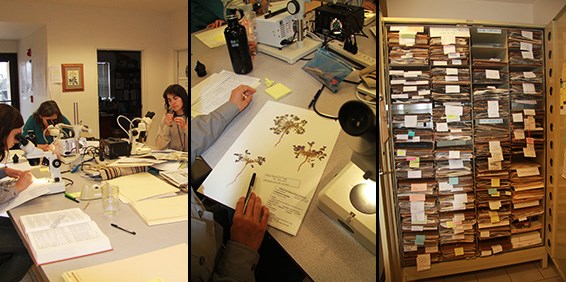
Although botanical explorations in the Joshua Tree area have been occurring since the mid-1800s, the importance of continuing botanical inventories is exemplified by the recent discovery within Joshua Tree of three species that are new to science and additions to the park's plant list of species not previously known to occur in the park, as well as significant range extensions for several taxa. These types of discoveries are not possible unless voucher specimens are collected, identified, and properly curated in a herbarium, for without a voucher accurate identification can never be attained, nor can distribution of a species be accurately described. The first "herbariums" were often bound books of dried medicinal plants pressed and glued onto archival paper. Today's herbariums serve as important resources for research, land management, and education. Vouchers are labeled with information such as date of collection, habitat, soils, associated species, and many other ecological characteristics that can be used in a variety of ways, including taxonomic or biogeographic research. Joshua Tree's herbarium currently has over 3,500 vouchers, approximately 90% of the species known to occur in the park. Voucher information is available in the Consortium of California Herbaria online database. A complete inventory of vascular plant, bryophyte, and lichen species will enable researchers to measure change based on what was present in the past, which will provide scientifically sound information to park managers as they plan for the future. |
Last updated: February 28, 2015