National Park Service LogoU.S. Department of the InteriorNational Park ServiceNational Park Service
National Park Service:  U.S. Department of the InteriorNational Park Service Arrowhead
Joshua Tree National Park fan palm oasis
view map
text size: largest larger normal
printer friendly
Joshua Tree National Park
Environmental Factors
 
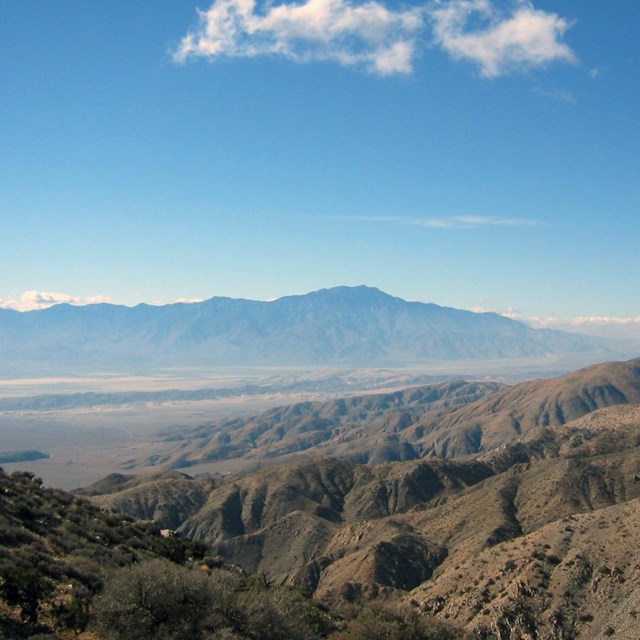
Except for the occasional spectacular wildflower bloom, the desert appears to the casual visitor as an unchanging landscape. In reality it is a dynamic, constantly shifting ecosystem shaped primarily by wind and rain.

Geologic processes are continually at work as well, but are so slow that we only notice their presence in the occasional earthquake. While wildfire and human caused factors such as air pollution and off-road vehicle use can change the landscape very quickly.

The park is a “living laboratory” that helps us understand how environmental factors have shaped this desert ecosystem and how they may be changing it at present. It also shows the sharp contrast between a less-disturbed ecosystem and the completely human-shaped one in the urban areas nearby.

Park staff carefully monitor the effects of changes in air quality, and the effects of nitrogen deposition, wildfires, and invasion by nonnative plant species. Their watchful eyes can alert managers and the public to threats to desert resources in time for useful action.

You are exiting the National Park Service website

Thank you for visiting our site.

You will now be redirected to:

We hope your visit was informative and enjoyable.

a tarantula

Did You Know?
When cornered by a predator, a tarantula will rub its hind legs over its abdomen, brushing hairs into its enemy’s eyes.
more...

Last Updated: September 08, 2010 at 13:31 MST