



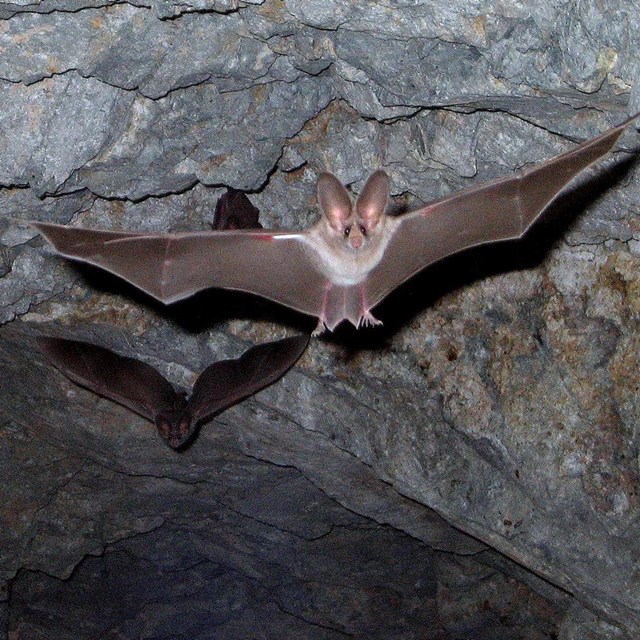
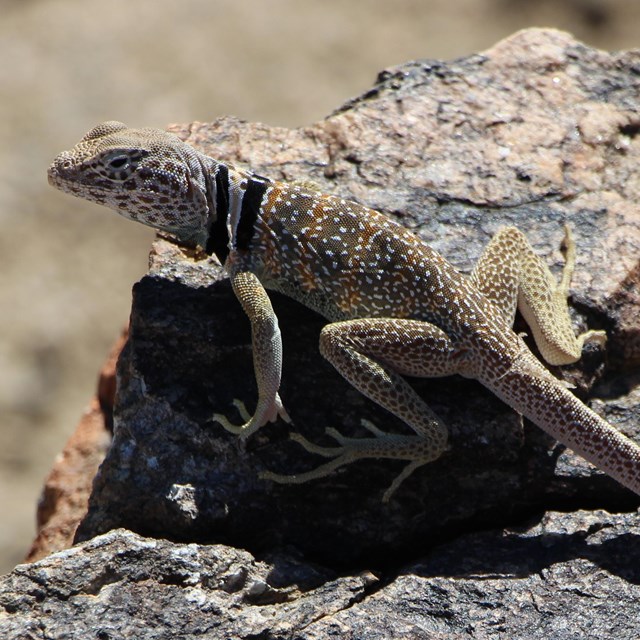
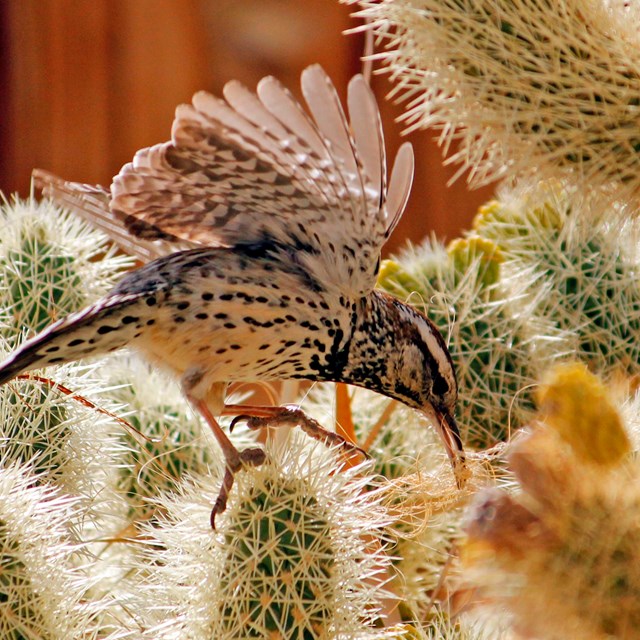
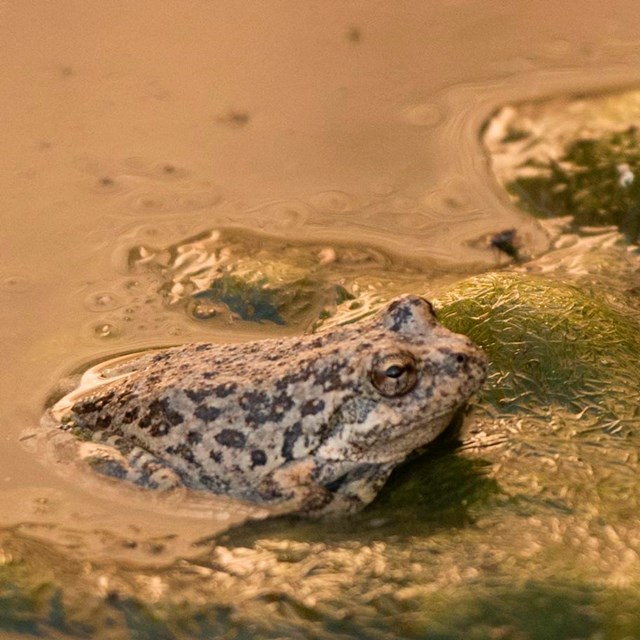
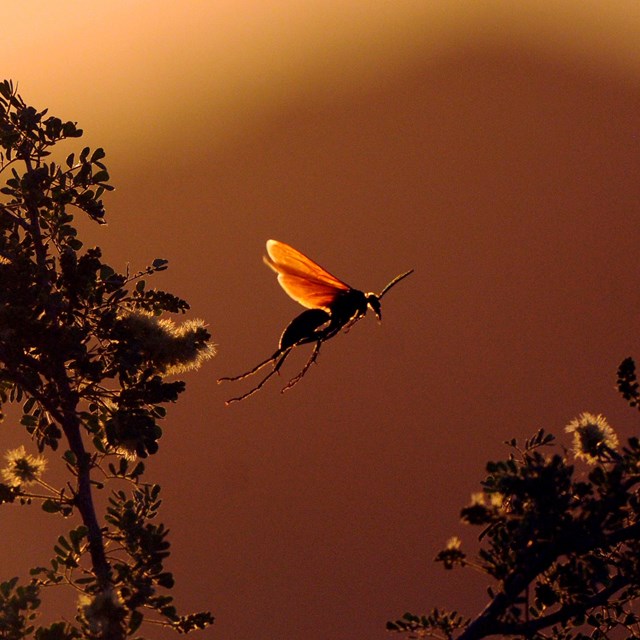
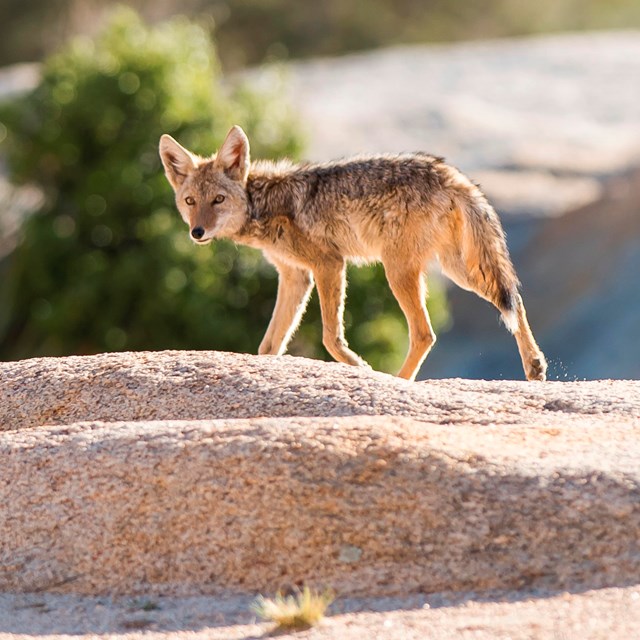
An Animal KingdomWith over 1,200 square miles (3,108 k) of land and elevations ranging from 536 feet (163 m) to 5,814 feet (1,773 m), Joshua Tree encompasses a variety of habitats: oases, sand dunes, valleys, and mountains. These habitats host a wide variety of wildlife including 350 vertebrate species. Many of these species have specialized desert adaptations to help them thrive in a hot and dry climate. The park is home to 57 species of mammals. Some of the most common species are white-tailed antelope ground squirrels, kangaroo rats, and coyotes. More rare species to see include fox, bobcat, bighorn sheep, and mule deer. Some of our mammals primarily come out at night like our 16 species of bats. Joshua Tree hosts 46 different species of reptiles including lizards, snakes, and the desert tortoise. Some of the most commonly seen reptiles are lizards, including desert spiny lizards. Snakes are less commonly seen but 26 species live in the park. Rattlesnakes alone account for seven of the snake species. Desert tortoises were once an abundant species in the park but their populations have been in sharp decline. They are now classified as a federally threatened species. There have been over 250 bird species recorded in the park. Some are year-round residents, some stay for a season to mate and nest, and some just make a pit stop on their migratory journey. Commonly seen residents include ravens, gambel’s quail, red-tailed hawks, and road runners. Joshua Tree is along the Pacific Flyway, a migratory flight path that extends from Alaska to South America. The park will host migrating warblers, tanagers, orioles, and occasionally ducks, geese, and shorebirds. Despite having few water sources, the park has two species of amphibians: the California tree frog and the red-spotted toad. Both species will come roaring back to life in the spring after winter rains and in the summer after monsoonal storms. There are thousands of species of arthropods. This includes insects, arachnids (spiders and scorpions), and myriapods (millipedes and centipedes). These invertebrate species represent a vast world of life that is often goes unnoticed by the human eye. Many of our animal species are being negatively impacted by human-caused climate change. Learn more about the effects of climate change on Joshua Tree. To report wildlife sightings, please click here. |
 |
|
Last updated: February 12, 2024