



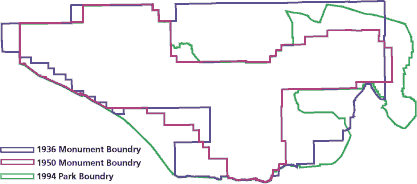
While the Joshua Tree area has been inhabited by humans for at least 10,000 years, by the late 1920s the development of new roads into the desert had brought an influx of land developers and cactus poachers. Minerva Hoyt, a Pasadena resident who was extremely fond of desert plants, became concerned about the removal of cacti and other plants to the gardens of Los Angeles. Her tireless efforts to protect this area culminated in 825,000 acres being set aside as Joshua Tree National Monument in 1936. The monument was administered by the superintendent of Yosemite National Park until James Cole was appointed as the first superintendent in 1940. The eastern portion of the historic Oasis of Mara was deeded to the National Park Service by the Twentynine Palms Corporation in 1950. That same year the monument's size was reduced by 265,000 acres to exclude some mining property. A National ParkAs part of the Desert Protection Bill, Joshua Tree National Monument was elevated to National Park status on October 31, 1994. The bill also added 234,000 acres. The new park boundary follows natural features and includes complete ecological units such as entire mountain ranges. Previous boundaries divided these ranges along survey lines. The additions provide better resource protection with easier boundary identification and monitoring and important habitat for desert bighorn sheep. Elevations in the park range from a low of 536 feet to a high of 5,814 feet at Quail Mountain. WildernessIn 1976 Congress designated 420,000 acres within the monument as wilderness. Of the park's current 792,623 acres, 591,624 is designated wilderness. ResourcesJoshua Tree provides habitat for 813 higher plant species, 46 reptile species, 57 mammal species, and over 250 bird species. The federal register lists one park reptile, the desert tortoise, as threatened and one park plant species, the triple-ribbed milk vetch, as endangered, and one plant species, Parish′s daisy as threatened. In addition there are 49 plant species of special concern being protected within the park. Joshua Tree has one paleontological area and potentially eight more. The park protects over 700 archeological sites, 88 historic structures, 19 cultural landscapes, and houses 230,300 items in its museum collection. FacilitiesPark staff maintain 93 miles of paved roads and 106 miles of unpaved roads, nine campgrounds with 523 campsites and two horsecamps, and 10 picnic areas with 38 picnic sites. There are 32 trailheads and 191 miles of hiking trails throughout the park. Park staff greet visitors at three entrance stations, three visitor centers, and one nature center. Behind the scenes the park maintains two water treatment facilities, 13 solar power stations, four maintenance facilities, eight employee housing units, and 95 vehicles. |
Last updated: April 17, 2024