TPS graphic header with link to ParkNet


PRESERVATION TECH NOTES     WINDOWS NUMBER 20


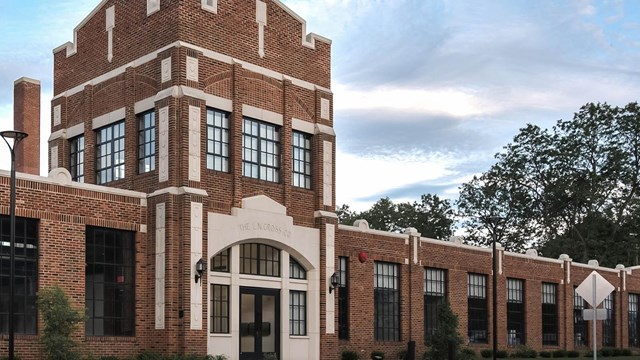
photo of completed Sears Building elevation with new windows
  Figure 10. The replacement windows designed for the Sears building rehabilitation met energy efficiency and aesthetic goals while providing for the continued historic appearance of the structure. Photo: Bruner/Cott & Assoc., Inc.
Conclusion
The Sears project illustrates that a combined approach of both window repair and replacement with a custom window designed to match the historic unit is a viable alternative when large-scale building rehabilitation is undertaken (see figure 10). Such a solution provides the opportunity to retain significant historic fabric and a wholly authentic original appearance in the most visible locations. In areas where the original windows have experienced significant deterioration, are in less prominent locations and where there are no suitable alternative means of enhancing thermal performance, replacement windows that are intended to match the originals in detail and appearance are acceptable. The window solution developed for the Sears building acknowledges modern demands for both a marketable aesthetic appearance and increased energy efficiency while retaining the historic visual appearance of the structure. Already the custom replacement window developed for the Sears building is being installed on other historic buildings with comparable windows that are deteriorated and in need of replacement.


PROJECT DATA

Building: Sears Roebuck and Company Mail Order Building (Landmark Center)
Boston, Masssachusetts

Owner: The Abbey Corporation
Boston Massachusetts

Project Architect:
Bruner/Cott & Associates, Inc.
Boston, Massachusetts

Preservation Consultant:
Leslie Donovan
Tremont Preservation Services
Boston, Massachusetts


Window Manufacturer:
Custom Window
Denver, Colorado

Window Contractor:
JK Glass
Boston, Massachusetts

Project Date: 1996-2000


Project Cost:
The project’s size and budget were sufficient to absorb the added expense of developing the new window system and its numerous custom extrusions. Engineering time and the cost of tooling and producing new extrusion dies for the Sears project totaled approximately $25,000. As additional $15,000 was spent on mockups and testing, bringing the development cost to approximately $45 per frame in 1998 dollars.

The total expenditure for replacement window work including all development costs, installation labor, perimeter caulking, dealer markup and the 890 window units themselves came to approximately $1.75 million, or $1,966 per window. This figure does not include expenses associated with removing the original units. Repairing and repainting the two hundred windows that were retained on the second floor and along the stairwells cost an additional $158,000, or approximately $800 per unit. The overall rehabilitation cost for the building was approximately $100 million.


THE PRESERVATION TECH NOTE was prepared by the National Park Service. Charles E. Fisher, Heritage Preservation Services, National Park Service, serves as the Technical Editor of the PRESERVATION TECH NOTES. Information on the window work at the Sears Mail Order Building was generously supplied by Leslie Donovan, Tremont Preservation Services; Henry Moss and Simon Tempest, Bruner/Cott Architects; Edward Bartlett, Custom Window Company; Jim Kfoury, JK Glass; and Alan Aulson, Aulson Company. Thanks also go to Sharon Park and JoEllen Hensley of the National Park Service’s Heritage Preservation Services for their review and comments.

PRESERVATION TECH NOTES are designed to provide practical information on traditional practices and innovative techniques for successfully maintaining and preserving cultural resources. All techniques and practices described herein conform to established National Park Service policies, procedures and standards. This Tech Note was prepared pursuant to the National Historic Preservation Act Amendments of 1980 which direct the Secretary of the Interior to develop and make available to government agencies and individuals information concerning professional methods and techniques for the preservation of historic properties.

Comments on the usefulness of this information are welcomed and should be addressed to PRESERVATION TECH NOTES, Technical Preservation Services, National Center for Cultural Resources, National Park Service, 1849 C Street, NW (2255), Washington, DC 20240.

ISSN: 0741-9023 - PTN 48 - November 2003


Introduction

Introduction


Contents

Print Version