Exterior Woodwork
Number 2
Paint Removal from Wood Siding
Alan
O’Bright
Midwest Regional Office
National Park Service
Truman Home
Harry S. Truman National Historic Site
Independence, Missouri
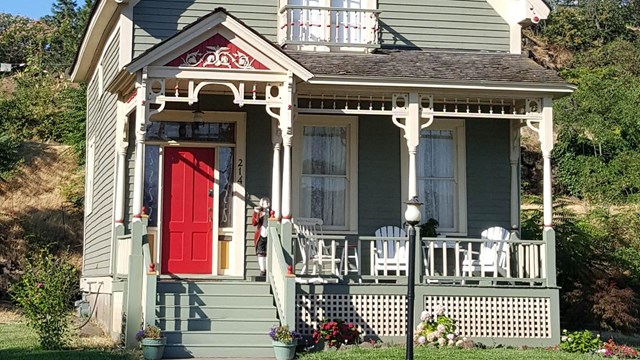
Harry S. Truman National Historic Site anchors one end of a local historic
residential district in the city of Independence, located just east of
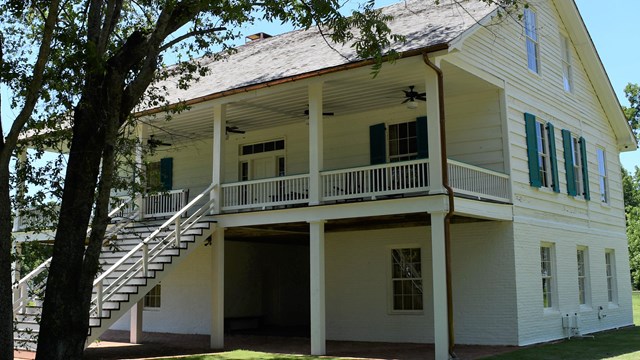
Kansas City, Missouri. The Truman Home was constructed in three major
phases. The initial pre-Civil War construction is believed to have consisted
of a simple two-story rectangular structure. Major additions in 1867
and 1884 enlarged the building to 15 rooms, totaling approximately 4000
square feet. Characteristic of the early Queen Anne style, the wood-sided
exterior of the 2 ½ story frame home was embellished with over
200 wooden brackets, decorative jig-sawn porch frieze boards, and layered
cornice mouldings.
The Truman property was willed to the United States upon the death of
Mrs. Truman in 1982 and placed under the administration of the National
Park Service. Immediate preservation problems such as metal roof replacement,
rewiring, and grounds maintenance were accomplished prior to the official
opening in May 1984, the centennial of Mr. Truman’s birth. Given
the nature of the problem, the Service delayed the necessary removal
of the deteriorated exterior paint and repainting until after the park’s
opening.
Problem
Examination of the exterior paint finishes in areas directly exposed
to the elements revealed severe paint film failure, including cross-grain
cracking, alligatoring, and peeling. Even in places
shielded by porches and cornices, moderate paint film failure had occurred.
A number of exposed areas, including soffits, fasciae, and siding,
experienced near total paint failure due to recent moisture penetration
from deteriorated roofs and built-in gutters. Windows were also in
very poor condition; many exhibited loose glazing, broken glass, and
rotted sash. More than 20 coats of paint concealed deteriorated woodwork
and cladding from direct examination. On much of the projecting millwork,
the final layers of paint had been applied so heavily that stalactites
in excess of one-quarter inch were apparent due to paint dripping.
On one section of the building, constant moisture penetration from
a poorly detailed sleeping porch floor deck had caused total paint
failure. Rainwater had soaked wall cavities of a ground floor bathroom
causing the paint to peel off in hand-size sheets. It was clear the
exterior finishes had lost most, if not all, of their elastic integrity.
In order to achieve a sound surface for painting, the decision was
made to remove a majority of the exterior paint finishes to bare wood
in preparation for a three-coat paint application.
Solution
As part of the planning required before the selection of the paint
removal method, a physical investigation was conducted of the exterior
structure to determine the method of construction and condition.
This is particularly critical whenever paint removal is planned. Decisions
as to which paint removal methods will be used—especially
methods involving heat—are in part guided by the potential flammability
of the wall material and debris in the wall cavity and cornices. Sections
of lapped siding were carefully removed and the underlying board sheathing
cut with a hole saw to reveal the wall cavities. Fortunately, the bulk
of the balloon-framed structure was found to be in good condition and
the project team believed that potential fire risks could be minimized.
With the exception of the 1884 addition, all wall cavities had been filled
from foundation sill to soffit with soft brick and mortar. A majority
of the house was sheathed in white pine tongue-and-groove boards.
Three methods of paint removal were considered: hand scraping and sanding,
chemical strippers, and thermal removal. Prior experiences with hand scraping
and sanding on a large scale had shown this method to be very damaging to wood
surfaces and the workmanship was very difficult to control. Chemical strippers
are very messy and difficult to control on exterior vertical surfaces. After
application, the volatile chemicals usually need to be covered with sheet plastic
to keep them from rapidly evaporating.
The use of propane torches to remove the paint was not considered because of
the high risk of starting a fire or at least of scorching the wood. Two thermal
paint removal techniques, however, were evaluated—radiant heat plates
and heat guns. The radiant heat plate gives a consistent heat flow, but heat
intensity is less controllable. The plate housing also obstructs the laborer’s
view of the working surface, making it difficult to tell when the softened
paint is ready to remove. If the paint is overheated, it can ignite and scorch
the wood as the plate is withdrawn.
The heat gun was chosen because of the following advantages: the heat is controllable;
the working surface is exposed to view, allowing better control; and all layers
of paint can be softened and removed down to the original surface in one pass
without mechanical damage to wood.
Although chemicals and hand scraping were rejected as the primary paint removal
method, chemicals and scrapers were used in other areas such as porch ceilings,
soffits, windows, and brackets, where the working surface was too complex,
or where there was a risk of overheating unexplored cavities. The majority
of the exterior walls, sheathed or filled with brick noggin, apparently caused
the radiant heat to dissipate considerably before reaching wall cavities. Furthermore,
the sheathing formed a barrier protecting the wall cavities from direct hot
air blast through cracks and joints in the siding and trim. Nevertheless, strict
fire precautions still were taken throughout the project.
Tools and Techniques
A heavy-duty heat gun was approved for the contractor’s use.
The metal encased unit featured variable heat control (500-750°F) through
adjustable side vents, and a cool down switch, which extends the life of the
replaceable heating elements. Since these elements can have a working life
as short as 60 to 80 hours, extra elements were purchased and were available
at the site for immediate replacement of those in the five heat guns used in
the project.
Each unit operated on its own 20-ampere circuit to prevent constant tripping
of breaker switches due to the high-energy consumption of the heat guns (14
amps, 120 volts). Temporary weatherproof electrical outlets with ground fault
interrupters were installed in the most advantageous locations to prevent voltage
drop due to long extension cords.
Workers used alternative paint removal methods on some portions of the structure,
including porch ceilings and cornices, because of the increased risk of overheating
cavities in these locations. They exercised particular caution around windows
and doors where siding butt-joined the trim. An additional concern was the
potential for dust and other debris to overheat in the hollow areas behind
the casing, such as in the sash weight boxes. For safety, siding paint was
removed thermally no closer than 6 inches from window and door trim and alternate
paint removal or feathering methods were employed for the remainder. The workers
used chemical strippers around glass instead of heat guns to avoid heat stress
fractures.
Special care was taken in the removal of paint from decorative millwork. Scorching
of decorative wood trim can occur easily, especially if the heat gun is trained
on the same area too long in an attempt to remove all the irregular paint build-up.
The heat gun was set at the lowest temperature and adjusted higher as necessary
to compensate for the thickness and condition of the paint.
During paint removal, the scraped paint tended to adhere to the putty knife,
slowing the paint removal process. The workers tried several putty knives and
scrapers, but none was successful in shedding the paint residue from the blade.
Therefore, the knives had to be periodically cleaned of gummed paint with another
putty knife. For siding, a 2 to 2 ½ inch-wide rigid putty knife worked
best. Narrower blades were used for millwork and tight spots. To reduce chances
of the workers gouging the wood with the putty knives, the edges of the blades
were rounded using a grinder.
The workers used two techniques for thermal paint removal with equal success.
In the first case, one worker alternately heated and scraped the surface. Time
was lost in this method because the heat gun had to be set down periodically
in order for the worker to clean his putty knife. The second technique, developed
by the contractor’s site supervisor, was to fasten two heat guns together
side by side using metal bars bolted to each gun base. In this
way one worker heated the surface while another scraped in a continuous process.
This method worked very well for expansive areas of siding and attained an
average rate of 8 to 10 square feet per crew hour. On siding in tight areas
where one worker operated a single heat gun, paint was removed at a rate of
approximately 4 square feet per crew hour.
The siding was inspected for rot and cracks, and suspect sections were marked
for repair or replacement. The marked sections were passed over in the paint
removal process.
Fire Safety
Thermally removing paint using a heat gun does carry certain fire risks
that require precautions both in the planning as well as in the execution
of the work. With an ignition temperature of approximately 200-250°F,
the wood itself can ignite from the hot air blast, leading to potentially
serious fire damage to the historic building.
In assessing the risk of the wood igniting, a number of factors need to be
taken into account. The moisture level of the wood definitely affects the temperature
at which the wood ignites. Wall studs behind the siding that are adjacent to
high temperature heating pipes would be very dry compared to the siding. If
the heat from the gun did not dissipate fast enough within the wall cavity,
studs or deadening boards could begin to smolder in particularly hot spots
or areas of very dried wood, even though the siding is not immediately affected.
And where there is insulation in the wall, heat build-up would be greater,
thereby increasing the fire risks. Even the daytime temperature and prevailing
breezes need to be considered, since cooler temperatures and a mild breeze
will help cool the siding faster. On the other hand, strong winds will make
it more difficult to remove the paint, increasing the fire risks in a variety
of ways.
Another factor to be considered is the surface condition of the siding. Very
rough edges are more susceptible to ignition than smooth surfaces. A more common
problem that must be taken into account not only in planning but also throughout
the work is the tendency of the laborers to get impatient or careless, directing
the heat gun in one spot too long or adjusting the heat gun to a higher temperature.
In addition to the possibility of igniting the wood, there is the even greater
risk of ignition of flammable debris commonly found in wall cavities and behind
cornices. Debris such as bird and rat nests, builder’s trash, accumulated
dust and building material waste can all be more flammable than the wood siding.
Examining selective areas of the wall cavity and cornices prior to selecting
a paint removal method can establish the extent of potential fire risk from
debris and building material.
Additional precautions need to be taken in the course of work. Both the work
crew and park staff at the Truman home were thoroughly familiarized with the
fire risks involved. Besides using scrapers or chemical strippers in the areas
of highest risk, workers were instructed to avoid overheating the wood. This
tends to occur at uneven wood surfaces, such as found in decorative trim or
in cornices. Since workers tend to get overly confident and very casual as
the job proceeds, someone on the crew should be assigned responsibility as
the “fire-safety inspector.”
Suitable fire-fighting equipment should be readily available. At the Truman
home, carbon dioxide and water fire extinguishers were within immediate reach
of every workstation where a heat gun was being used. The contractor added
glycol to the water extinguishers during cold weather work to prevent freezing.
In addition, a long garden hose was kept near the work site during warm weather.
Since debris and wood will tend to smolder for a number of hours before breaking
out into flames, the building should be equipped, if possible, with a temporary
fire detection system in the attic eaves and adjacent to exterior walls. Furthermore,
paint removal using heat guns should stop at least several hours prior to the
site being vacated each evening, to increase chances of early detection of
any smoldering fire. The area of the day’s work must be carefully inspected.
And finally, if there is a night watchman, extra diligence should be demanded
during the weeks when paint removal is occurring.
Health and Safety Considerations
Since most of the pre-1950s paint used on the house exteriors is lead-based,
additional special precautions are necessary in removing such paint.
When thermally removing paint, workers should use respirators approved
by the National Institute for Occupational Safety and Health (NIOSH)
that have cartridges specially designed to filter lead. For projects
as large as the Truman home, replacement filters available at the site
are recommended to permit the necessary frequent changes of filters without
interrupting the work schedule. Workers should wear separate clothing
for paint stripping and provide for full leg and arm protection. An industrial
vacuum cleaner placed outdoors permits periodic cleaning of clothes and
the work area.
Additional time should be provided for workers to clean up properly before
eating, and no eating should take place within the work area.
As at the Truman home, large plastic drop sheets should be used to collect
the paint chips and prevent the lead-based paint from being deposited in the
soil. Collected each day, paint chips need to be safely stored for disposition
in accordance with the local and state health boards’ guidelines for
toxic waste.
To keep the inside of the building from being overexposed to toxic vapors when
removing exterior paint, it is necessary to close all doors and windows and
to turn off intake fans. Workers should not be permitted to walk into the building
wearing contaminated clothes. They must also wash their clothes separately
from the rest of their laundry. As a final precaution, the work area should
be closed to all but essential personnel, but in any event, caution must be
exercised to prevent small children, pregnant women, and people in ill health
from entering the site.
Evaluation
Areas on the Truman home where paint was removed with the heat guns
and then lightly sanded provided an excellent painting surface.
By using workers experienced with thermal removal of paint, very few
scraper tool marks were left that were noticeable. The new paint
bonded well to the wood and should perform well for about 7 years before
repainting is necessary.
Proper planning and an awareness of safety concerns were important to the successful
removal of paint from the Truman home. It cannot be overemphasized that anyone
considering exterior paint removal using heat guns should thoroughly evaluate
the structure for susceptibility to ignition under a hot air blast. Where thermal
removal of paint is the selected method, fire prevention and health safety
measures should be stressed emphatically to workers throughout the project.
Removal of paint using a heat gun is slower than utilizing a propane torch
because the temperature of the gun is only half that of the torch flame which
can reach as high as 1500°F. Use of an open flame is strongly discouraged
because of the far greater fire risks involved as a result of the higher temperature.
Such intense and concentrated heat not only compounds the existing fire risks
already identified with the heat gun but also presents additional ones. For
example, nails in the siding may conduct concentrated flame heat, thereby causing
deadening boards, wall cavity debris, or untreated cellulose insulation to
ignite. In addition to the unacceptable fire risks with the propane torch,
use of an open flame inevitably scorches the wood surface considerably—damage
that is totally unnecessary.
Even with heat guns, however, scorching and tool mark damage may result. Patience
is required; working too fast can be counter productive, causing damage to
the wood surface and heightening the fire risks. The hot air blast from the
heat gun will soften the paint by raising the latent oils. If a worker is impatient
and either works too large an area or gets the paint too hot before it is scraped,
the oils will be driven off and the paint will harden again. If this occurs,
continued application of heat will not soften the paint again, instead it will
eventually ignite.
Inexperienced laborers should be taught the mechanics of using heat guns on
non-significant woodwork, perhaps even on another building, prior to work on
a significant historic structure. Workers need to be familiar with different
scraper sizes and the range of flexibility in scraper blades and putty knives.
They should also know how to grind scrapers to match molding profiles in the
wood work, know the appropriate angles in which scrapers should be set and
used, and how to round the edges of knives and scrapers to avoid gouging the
wood. Once rudimentary skills are learned, a worker should then begin on a
simple, easily accessible portion of the structure to build confidence in this
technique.
Regardless of the skill level of the workers, test patches should always be
undertaken. Approved test patches thus serve as the standard of workmanship
for the entire project and the basis as acceptance or rejection of the work.
If after careful planning and examination of the test patches there is any
doubt as to the ability of a structure or portions thereof to withstand thermal
removal of paint, then alternative means should be considered.
Project Data:
Building:
Harry S. Truman National Historic Site
Independence, Missouri
Owner:
National Park Service
Harry S. Truman National Historic Site
Independence, Missouri
Project Dates:
October 1984—November 1985
Project Staff:
Midwest Regional Office
National Park Service
Omaha, Nebraska
Alan O’Bright
Project Architect
Michael Lee
Preservation Specialist
Lee Jameson
Preservation Specialist
Skip Brooks
Facility Manager
Harry S. Truman National Historic Site
Independence, Missouri
Contractor:
Campos Construction Company
Ernest Callaway
Contractor’s Site Superintendent
Omaha, Nebraska
Project Costs:
For paint removal using heat guns on 5,800 square feet of siding and
1,000 square feet of porch deck, the labor costs averaged $4.00 per
square foot. For the 2450 square feet of decorative millwork, the labor
costs averaged about $5.50 per square foot. Total investment in paint
removal equipment including heat guns, putty knives, extension cords,
and lights was approximately $950. In addition there were substantial
costs for temporary electrical outlets and scaffolding. The total cost
for paint removal by heat gun, scraping and sanding, and chemicals
from all surfaces including siding, millwork, 74 window sashes, 7 door
openings, 200 brackets, porch ceiling, soffits, and fasciae was about
$57,000. The above figures do not include contractor’s overhead
and profit.Photo: Michael Lee
This PRESERVATION TECH NOTE was prepared by the National Park Service.
Charles E. Fisher, Preservation Assistance Division, National Park Service,
serves as Technical Coordinator for the PRESERVATION TECH NOTES. Special
thanks go to Don Wilson, Ernest Callaway, and the work crew of Campos
Construction for providing cost and technical information; Michael Lee
for his technical assistance; and Harry S. Truman NHS Superintendent
Norm Reigle and his staff for their input and petience throughout the
project. Thanks also go to Hugh Miller and Randy Biallas, Park Historic
Architecture Division, National Park Service; tc Susan LeVan, Forest
Producers Laboratort, U.S. Department of Agriculture; and to Phillip
Marshall, Architectural Artisanry Program, Swain School of Design, for
their comments and assistance in the preparation of the Tech Note. The
following Technical Preservation Services staff contributed to its production:
Theresa L. Robinson, Brenda Siler and Michael Auer. Cover Photo: Al O'Bright.
PRESERVATION TECH NOTES are designed to provide
practical information on innovative techniques and practices for successfully
maintaining and preserving cultural resources. All techniques and practices
described herein conform to established National Park Service policies,
procedures, and standards. This Tech Note was prepared pursuant to
the National Historic Preservation Act Amendments of 1980 which direct
the Secretary of the Interior to develop and make available to government
agencies and individuals information concerning professional methods
and techniques for the preservation of historic properties.
This publication is not copyrighted and can be
reproduced without penalty. Normal procedures for credit to the author
and the National Park Service are appreciated.
|