|
RESEARCH DESIGN FOR David G. Anderson and
John E. Cornelison, Jr., Co-Principal
Investigators
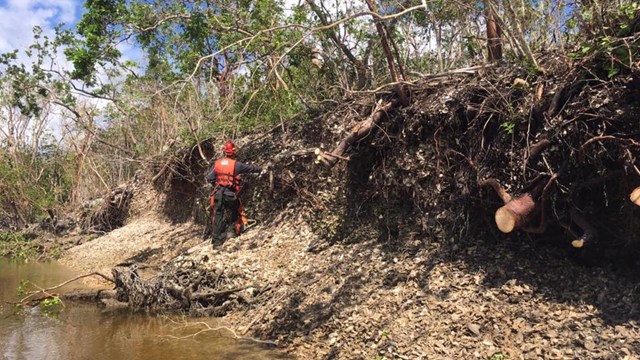
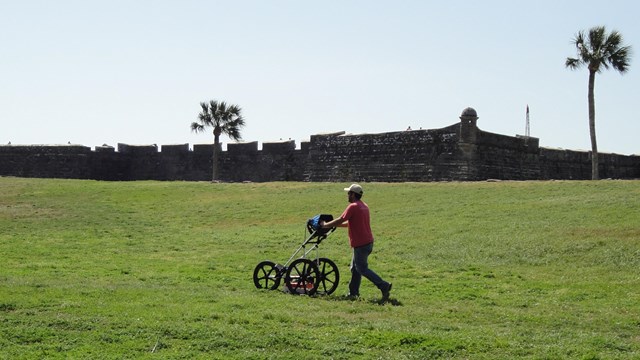
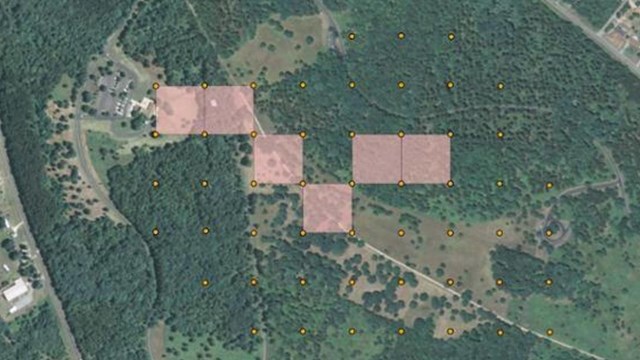
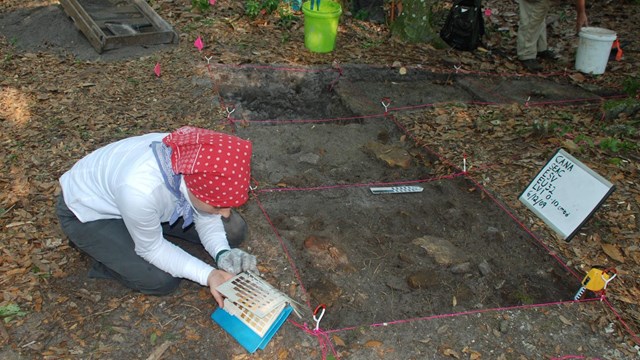
The Shiloh Indian Mound Group National Register and National Historic Landmark site is the largest late prehistoric Mississippian period site in the Tennessee River Valley, and one of the largest mound groups in the National Park system land in the country (Figure 1). The Shiloh mound and village complex were built in the centuries immediately following A.D. 1000, when the site was the political and ceremonial center of a society dominating this part of the region. Figure 1. Map of the Shiloh Indian Mound Group, Showing the Major Mounds and Excavation Units (from Welch 2001). Mound A and adjoining areas of the Shiloh Indian Mound Group are eroding into the Tennessee River, and studies indicate an appreciable portion of the mound will be lost over the next 25 years. Section 106 of the National Historic Preservation Act mandates that the effects of this loss be assessed and mitigated. Ground penetrating radar work indicates Mound A has a complex internal structure, suggesting it was built in a series of stages over several generations. In response to these studies, a program to assess the impact area and develop mitigation measures to avoid or lessen the impact has been developed. To these ends a testing program is proposed, consisting of remote sensing, coring, precision mapping, dispersed test pitting, and the excavation of a 2 m wide step trench into two sides and across the top of Mound A. From this work, a determination can be made concerning the cultural resources in Mound A and adjoining areas, and the data potential thereof. Following the completion of the fieldwork and an assessment of the data recovered appropriate actions will be recommended to the park manager. Using Roberts's detailed mapping notes, together with records from other investigations conducted at the site, Welch has produced a contoured base map showing the location of major site features (Figure 1). This map includes the approximate location of some of Roberts's 1933 excavation units, which are extensive. The location of most of these units is unknown or approximate because no map illustrating them has survived. Some of these units, as well as internal features in many of the site's mounds, were located during 1999 fieldwork at the site by Southeast Archeological Center (SEAC) personnel through a program of ground penetrating radar analysis and limited testing (Anderson et al. 1999, Anderson and Cornelison 2000; Welch 2001). This same fieldwork showed that this base map is off by as much as 20 feet in places. The Threat from Streambank Erosion Mound A and adjoining areas of the Indian Mound Group are perched at the edge of a ca. 80 foot high sheer bluff face adjacent to the Tennessee River. For the past thirty years NPS has conducted limited testing to determine the extent of possible loss (Beditz 1980a, 1980b; Beditz and Bellomo 1980; Smith 1976). The entire east slope of Mound A, evident on the 1934 map, has been lost, and in recent years portions of the level summit area itself have been lost. Several feet fell into the river in the early 1990s, in fact, when a park ranger was nearby, and witnessed the loss. The erosion represents a threat to public safety as well as a serious loss of cultural resources and associated important information. That this part of the Shiloh Indian Mound Group is eroding into the river is uncontested. At present, how much more will be lost remains unknown, but is assumed to be extensive, particularly in the vicinity of Mound A. A preliminary engineering study conducted by the Nashville Corps of Engineers (COE), and dated 12 August 1998, estimated that at least 25 feet of Mound A and the bluff margin within ca. 75 m to the north and south, and possibly appreciably more, would be lost over the next 25 years. The loss of 25 feet was considered an absolute certainty, while the letter also stated that "inland from that point, the potential for long term stability increases." In subsequent discussions with COE in July of 2000, it was learned that there was a ca. 50% probability that up to 40 feet of Mound A and adjoining areas may be lost over the same 25 year interval. Appreciable portions of the site will be lost to erosion in the near future. The 40 foot estimate, furthermore, was based on the assumption that a proposed stabilization plan the COE was to put in place would work, and prevent even further erosion to the site in the years to come. The shoreline stabilization project is intended to halt further erosion at the base of the bluff, but not before somewhere between 25 and possibly 40 feet of Mound A and adjoining features are lost. Unfortunately, during the initial construction phase of the stabilization effort, the project experienced a significant geologically influenced structural failure. Stabilization operations were temporarily terminated to permit the National Park Service and COE time to assess the level and significance of structural deterioration, and provide data to make recommendations for actions that will either alleviate or correct the problem. In the six months since active stabilization work was halted in late 2000, significant additional erosion at the site below Mound A has been observed and documented by the National Park Service and COE (Figure 2). Figure 2. February 2001 Erosion Below the Face of Mound A at the Shiloh Indian Mound Group. The Shiloh Indian Mound Group are a threatened archeological resource within the National Park system. This research design details how the National Park Service proposes to assess significance, evaluate impact, and develop a mitigation plan to avoid or lessen the impact to the Shiloh Indian Mound Group. Accordingly, what is recommended here is a testing program to evaluate the site significance and assess impact. Based on that, a mitigation plan will be developed, followed by long term stabilization of those site areas that appear likely to survive. This approach has been discussed with the Chickasaw Nation, NPS and COE agency personnel, archeologists, historians, and other scientists, and members of the public. A team of archeologists from the Southeast Archeological Center (SEAC), assisted by a wide range of technical specialists, will conduct fieldwork in threatened areas of the site in 2001. The investigations will be sufficient to determine the data potential of the Mound A area and will allow the researchers to determine if additional mitigation is warranted. The investigations will also be undertaken with sensitivity to and in accordance with Native American concerns, following terms agreed upon through formal consultation. Specific procedures that will be employed during the fieldwork and subsequent stabilization effort are described below. The field investigations will be conducted by a team of specialists and SEAC technicians under the direction of SEAC archeologists David G. Anderson and John E. Cornelison, Jr., under the overall administration of George S. Smith, SEAC Associate Director, Investigation and Evaluation Division. The investigations proposed are based on the recommendations of a group of prominent archeologists, NPS land managers, state of Tennessee officials, and a representative of the Chickasaw Nation who met at the park to discuss these matters in June 2000. The research questions listed below were raised by this group, who considered them worthy of consideration in future investigations. The investigations and research questions are also based on commentary received on a draft version of this research design, which was widely circulated to NPS managers, archeologists, the Chickasaw Nation, and the Tennessee SHPO office before being finalized. Research Questions to Address during the Shiloh Excavations The following are broad general questions to be considered during the proposed testing excavations at Shiloh. The purpose of the testing is to determine if the kinds of data exist to answer these kinds of questions, and determine how such data can be best recovered during large area excavations. While answers to some of these questions may well come from the testing program, most will require the excavation of a much larger area. (1) When was construction initiated at Mound A? When did it end and why? (2) How many construction stages were used to create Mound A? How often was a new stage built? (3) What did Mound A look like during use? That is, what did the slopes and upper platform look like? What types of vegetation, if any, was present on the surface? What structures were present atop each stage, if any were present, and what kinds of activities were occurring in them? (4) How were the Mound A slopes used? Was trash dumped down the sides, or down a favored corner, as evidenced at many Mississippian sites? Do these assemblages suggest special ceremonial or feasting behavior? (5) Do changes in stage structures and contents suggest changing fortunes over the life of the center? That is, is the political history of the center in any way reflected in successive mound stage episodes, if these are found to be present? (6) Is there evidence for the Late Woodland to Mississippian transition to be found at the site? What happened, and why? (7) Are early Woodland occupations present on the site, or within Mound A? That is, is there evidence for an earlier, possibly Middle Woodland period mound within Mound A? (8) What is the function of the apron? Is it a late addition, or was it built first, with Mound A later built on top of it? What is the nature of features associated with it? (9) Is there evidence for status differentiation, or changes in status and wealth over time among the site's inhabitants? (10) Is there evidence for the onset of intensive maize agriculture at the site? When did it occur and why? Many more questions can and will be addressed with materials obtained from the excavations. How successfully these questions can be addressed will depend, of course, on the nature of the archeological materials found during the Step 1 investigations. Determining the Extent of the Threat Data are needed on how much of Mound A may be lost to erosion over the long term, and how much of the mound, and the bluff face below the mound, will need to be removed to create a surface that will be stable over the long term. NPS needs more specific data before determining how the stabilization and associated archeological mitigation should proceed. Although studies are not complete, COE engineers believe there is a 100% chance that 25 feet of Mound A would be lost in 25 years, and a ca 50% probability that ca. 40 feet would be lost over the same interval, and that ca. 35 degrees of slope would be needed to create a stable surface. The project will consist of two steps. Step 1 would include remote sensing and step trenching in two sides of Mound A, and testing in adjoining threatened site areas, sufficient to determine the nature of the archeological remains present, and to permit realistic planning for the Step 2 excavations. Step 1 is a comprehensive exploratory and planning effort, to determine how much further excavation would be necessary to adequately mitigate the erosion to the site. The goals of the testing would be to determine how many stages or other unusual features were present in the threatened areas of the site, the condition of these remains, and the kinds of field procedures and specialized analyses that would be appropriate to use at the site. Such preliminary intensive investigation is essential to plan the Step 2 excavation. If warranted, Step 2 would be the excavation of sufficient portions of the mound and adjoining plaza to ensure that further excavations in the foreseeable future would be remote. Estimates of the volume of fill to be removed in Step 1 are listed below. Step 1: Remote Sensing, Step Trenching, and Sample Testing Mound A: ca. 150 cubic meters Step 1 Specific Excavation Procedures The proposed work to be conducted in 2001 (Step 1) includes the following activities, listed in the order in which they are to be undertaken: (1) Initiating a detailed map of the site area, and a 1 m grid in the direct impact area, using a total station and close interval point mapping. Discussion: Using the total station a 1x1 m grid will be established in the direct impact area on the eastern side of Mound A and in the adjoining areas to the north and south within 10 m of the bluff margin, to guide the placement of the step trenches and test units. Wooden reference stakes with grid coordinates labeled on them will be placed every 2 meters in this area, from which the smaller, 1x1 m units locations can be determined. The grid will conform to that used by SEAC in its 1999 investigations at the site, to ensure units opened in the vicinity of Mound A are consistently oriented and placed. A series of permanent site datums will be established away from the direct impact zone, and rendered sufficiently stable (i.e., using a stainless steel rod placed in concrete) to ensure they will survive and can be relocated easily in the future. The location of these datums will be GPS'd to sub-meter accuracy. Using the total station a detailed map of the Shiloh Indian Mound Group will be initiated, with points recorded on a two meter grid in the central mound/plaza complex (defined as the largely cleared area bounded by Mounds A through G), and at somewhat coarser resolution in the wooded areas beyond this. The purpose for such detail will be to correct deficiencies in the 1934 map (locations are up to 20 feet off) and to resolve micro-topographic variation within the core of the site, that might indicate the location of former houses, ditches, borrow pits, or areas where cutting and filling occurred. mapping will be initiated at the start of the fieldwork and continue as necessary throughout the project. (2) Remote sensing of the direct impact area, using a variety of procedures, including coring/augering, ground penetrating radar, metal detecting, and other predominantly noninvasive procedures. Discussion: Using augering/soil coring procedures (a 2-inch vibracore), the location and extent of Robert's trench immediately to the west of Mound A will be located. This task should be easily accomplished, since the 1999 excavations revealed that, in several places, the trench fill was distinct from the surrounding apron. Coring will also be used to examine areas within the direct impact zone that will be subject to subsequent investigation, such as in the vicinity of the step trenches, on the apron below the mound, and the mound summit area near the bluff edge. Close interval GPR and other remote sensing procedures as deemed necessary will be used across the direct impact area to help delimit features to explore with test units or in the subsequent large scale excavations. GPR transects will be conducted in N/S and E/W directions along the site grid lines established previously. Systematic metal detecting will be conducted in the direct impact area to delimit possible historic/Civil War era features. Hits will be flagged and mapped, but will only be excavated as part of subsequent testing or data recovery activity. (3) Sample test pitting in the threatened areas only within ca. 75 m to the north and south of Mound A near the bluff edge, using 1x1 m units, or combinations thereof as needed. Discussion: Based on previous remote sensing and/or coring results, a series of 1x1 m units will be opened in the direct impact area to the north and south of Mound A. These units will be excavated using 1x1 m squares and 10 cm levels and taken to culturally sterile deposits. If features are encountered, or distinct soil strata warranting removal as a unit or using special procedures, excavation strategies may be adjusted. Should units exceed ca. 80 cm in depth, additional adjoining 1x1 m units may be opened to facilitate excavation of the deeper deposits. At least ten 1x1 m units each will be placed to the north and south of Mound A, half of which will be chosen from within the existing site grid using random selection procedures. The other five will be placed in accordance with project needs. In the event no preserved deposits are encountered in these tests, as may be the case in the gully to the north of Mound A, excavation of all ten units may prove unnecessary in this area. In the event features or living surfaces (i.e., large features, house floors) are encountered, excavation may cease until a larger area can be opened, which may not occur until Step 2 investigations. All profiles and level surfaces will be mapped and photographed as necessary to document what was found. All fill, with the exception of soil associated with human burials, will be water screened through ¼ inch mesh if an appropriate source can be located, with special samples taken as necessary. If a water source is not available and the soil matrix contains moderate amounts of clay, rendering dry screening difficult, fill will be removed to a laboratory area for water screening. Every effort will first be made to water screen fill at or near the area where it was removed, to avoid logistical problems transporting large quantities of fill. Screens will be suspended from tripods or using fixed legs. If the soil is dry screened fill will be placed on tarps and covered as necessary to prevent erosion. If water screening is the primary method used, a silt trap and retention pond will be constructed. (4) Excavation of two 2-meter wide stepped trenches up to 4 m in cumulative depth, safety conditions permitting. Step trenches would be opened on the north and south sides of Mound A near the eroding bluff face, and running from 4 meters onto the apron to the summit. Discussion: Two meter wide step trenches excavated in 1x1 m squares will be opened on the north and south sides of Mound A. The north and south trenches will ideally be on the same north south grid lines, although all or portions of one trench or the other may be offset as needed (i.e., to enhance crew safety, avoid trees, explore unusual features encountered during the trench excavation). A wooden stairway/safety barrier will be constructed beside each step trench to facilitate the transport of personnel and fill up and down the sides of the mound. In addition, wooden platforms consisting of sheets of ½ inch cut plywood will be placed in each unit being excavated, to distribute excavator weight. Finally, adjacent steps will not be excavated simultaneously, for safety reasons. That is, steps will be excavated in a staggered fashion, with at least one vacant 2 m area of the trench between each excavation group. Based on coring and remote sensing, either the east or west 1 m half of the two meter trenches on the sides of Mound A will be opened first, using 1x1 m squares excavated in arbitrary 25 cm levels, with all fill screened. The goal of this procedure is to quickly determine mound stratigraphy in a small window, encompassing half the trench width. Level depth will be determined from below the highest point in the unit. Each step will be taken down until it encompasses two 1x1 m squares on the mound slope. Each step will be opened into the mound in this fashion to a depth of ca. 1.5 m. Decisions to combine two or more steps, to explore deeper into the mound (i.e., creating a 1x4 or 1x6 m trench), will depend on safety considerations, and will be made at the discretion of the excavators. Once the initial 1 m portion of the trench has been excavated, the profiles will be used to guide the removal of the other 1 m wide segment of the trench. In this case, however, excavation will proceed using strata recognized in the profile, with proveniences ideally consisting of stage surfaces and fill. Decisions about which strata to remove, unit thickness, and special sampling activity will be made based on the results of previous testing. Special sampling will be directed primarily to this segment of the trench, since the constituent strata will be better resolved than in the initial 1 m trench. In the event features are encountered (i.e., mound ramps, pits), excavation may cease until a larger area can be opened, which may not occur until Step 2 investigations. All profiles and level surfaces will be mapped and photographed as necessary to document what was found. All fill will be dry screened through ¼ inch mesh, with special samples taken as necessary. If the soil matrix contains moderate amounts of clay, rendering dry screening difficult, fill will be removed to a laboratory area for water screening. Every effort will first be made to dry screen fill at or near the area where it was removed, to avoid logistical problems transporting large quantities of fill. Screens will be suspended from tripods or using fixed legs; shaker screens requiring the technician to hold some or all of the weight will not be employed. Screening of fill from Mound A slope excavation units will take place at the base or top of the mound, to avoid safety or contamination problems. Fill will be moved up and down the mound slope using 5 gallon tagged buckets or some similar sized unit of fill. If possible, a slide or small rail line may be used to move the fill up and down the mound slope. No fill will be transported over where crew members are working, for safety reasons. Dry screened fill will be placed on tarps and covered as necessary to prevent erosion. (5) A trench at least 2 meters wide will be excavated across the top of Mound A, on line with and connecting the two step trenches in the sides, to sufficient depth to ascertain the preservation of the top and final stage of mound construction and use. As time permits, additional areas on the Mound A summit near the bluff edge in the threatened area will be examined. Discussion: A 2 m trench opened using 1x1 m squares to retain fine grained provenience control will be opened across the top of Mound A in the direct impact zone. This trench is designed to determine the condition of the last/final stage of Mississippian period mound use, as well as to assess the extent of subsequent historic use and disturbance. The trench is expected to be comparatively shallow, perhaps no more than 20-30 cm deep. Each 1x1 m unit should be opened in 10 cm levels, until or unless more logical strata can be recognized, in which case these could be taken out as a unit, at the discretion of the excavators. The remains of the final Mississippian temple/chiefly residence should be atop this stage. A historic structure was also built atop Mound A in the early 20th century. The condition of these remains will be very useful in assessing the condition of deeper structures and surfaces in the mound. In the event features are encountered (i.e., summit structures, historic pits or construction features), these will be excavated as time and resources permit. In the event unusual or unusual numbers of features are found, excavation may cease until a larger area can be opened, which may not occur until Step 2 investigations. In the event that time permits, a larger area on the summit may be opened in the direct impact/threatened zone, to better clarify conditions and features of the last occupation surface. Ideally the temple summit 2 m wide trench will use the same grid lines as the 2 m wide step trenches on the north and south sides of Mound A, to give a continuous profile across the entire mound. All profiles and level surfaces will be mapped and photographed as necessary to document what was found. All fill will be dry screened through ¼ inch mesh, with special samples taken as necessary. If the soil matrix contains moderate amounts of clay, rendering dry screening difficult, fill will be removed to a laboratory area for water screening. Every effort will first be made to dry screen fill at or near the area where it was removed, to avoid logistical problems transporting large quantities of fill. Screens will be suspended from tripods or using fixed legs; shaker screens requiring the technician to hold some or all of the weight will not be employed. Dry screened fill will be placed on tarps and covered as necessary to prevent erosion. (6) Location and excavation of one or more of Robert's trenches, starting with the north-south trench in the apron immediately west of Mound A. Discussion: During the 1999 SEAC test excavations, the outline of one of Frank Robert's 1934 excavation trenches was located at the base of and directly west of Mound A, oriented north to south on the apron. The edges of this trench can be precisely delimited by relocating the 1999 excavation units with the transit, and though coring and, if needed, GPR work. Once the trench location has been precisely relocated, a backhoe will be used to re-excavate it along its length. This will provide a great deal of valuable information about the mound apron, with minimal disturbance. The old excavated trench fill will be removed to within a few inches of the undisturbed walls. Hand equipment will be then be used to remove the soil down to the original walls and floor of the trench. One or both profiles will then be carefully cleaned, drawn, and photographed, and special samples will be taken as needed. No new excavation of undisturbed fill, beyond the special sample collection, is expected to occur. Artifacts found in the walls during cleaning will be collected and their location documented. Small units (ca. 50 to 100 cm wide by 10-20 cm deep) may be opened into the wall to collect artifacts to better determine the age of the deposits, if sufficient artifacts aren't found during the profiling. The excavated trench can be used as a reburial location for any human remains of American Indians found at any time during the project investigations. Additional detail on this point is found in the section of NAGPRA consultation below. As time permits, additional old trenches may be excavated, cleaned, drawn, profiled, and sampled, provided they can be examined with minimal disturbance to existing undisturbed site deposits. At least 24 east-west trenches were opened between Mounds A and C into the plaza. It may be feasible to locate one or more of these with a shallow stripping effort guided by remote sensing. That is, using a front end loader, it should be possible to remove ca. 10 cm of surface deposits from a narrow (ca. 1-2m wide) N/S trench. Upon cleaning through shovel skimming, one or more of Robert's trenches should be visible, and amenable to exploration. Even if trenches cannot be found in the plaza, at least three E/W cross trenches are known to have intercepted the N/S trench immediately to the west of Mound A in the apron. It should be possible to recognize one or more of these in the west profile of the excavated trench, and follow them with a backhoe, taking care to excavate only previously disturbed deposits.
Discussion: Specialized sampling will be a routine part of the test excavations, to document site preservation conditions, and the feasibility of using these procedures in subsequent investigations. The kinds of sampling that will be conducted are discussed below, in general terms. Sampling will proceed in consultation with specialized consultants. Charcoal samples from secure context will be collected and submitted for radiocarbon dating, to determine the age of Mound A and its stages, and hence construction history. Samples will be taken from identified features or stage surfaces, and ideally building construction debris (wall posts, cane thatching), to ensure reliable dating. Samples from redeposited general midden fill will not be processed. At least ten dates will be processed, assuming samples in secure context can be located. A critical question to be explored will be resolving what Mound A looked like and how it was used by the Mississippian inhabitants of Shiloh. It is unlikely that the original mound surface was mowed Bermuda grass, as they are maintained in most parks. Careful sampling of the surfaces of each construction stage will be essential to resolve what activities were occurring on them and what these surfaces actually looked like. Soil samples will be collected for phytolith (silica structural components of plants) and pollen analysis. Pollen samples will also be collected from a number of settings to see if a sequence can be established to document vegetation in the general site area over the period of use. Cores from ponded deposits or possible borrow areas may offer this kind of preservation. Flotation samples will be routinely taken from recognizable features and stage surfaces to collect carbonized and uncarbonized plant remains. The volume of each sample will be recorded, and each will be dried prior to processing. A SMPA machine will be used to process all fill, which will proceed under the direction of the project ethnobotanist. Geoarchaeological research will be a major part of the project, to document mound and apron construction history, appearance, and contents. Sampling of stage surfaces will be conducted to see how long they may have been open and exposed to erosion, and what they may have looked like when in use. In addition, stage fill and wall construction (i.e., wattle) soils as well as the site depositional matrix itself will be explored, to determine where building materials came from, and what preservation to expect throughout the mound, and in adjoining areas. Zooarchaeological and malacological (shell and snail) investigation of faunal remains found on the site will be conducted. These will be used to determine what the site inhabitants ate, whether specialized feasting behavior took place on or near Mound A, and what the site environment was like. Shellfish and particularly snail remains are an excellent indicator of fine grained environmental conditions, and will be sampled from stage surfaces, feature fill, and from general midden areas. The treatment of human remains will be conducted in consultation with the Chickasaw Nation, as discussed below. If human remains are encountered in the threatened area, sufficient analyses will be conducted to determine their cultural affiliation (historic era, and particularly Civil War era remains may be present). Minimal excavation is anticipated in non-threatened site areas, and no human remains will be excavated from these areas, unless they are clearly non Native American historic burials (i.e., Civil War era). The only fieldwork planned for such areas is the excavation of one or more of Robert's old trenches, to obtain samples from the profiles. Each specialist will visit the site one or more times during the excavations, to guide sample collection. The results of each investigator will be known to the others, to ensure appropriate feedback. This will be a multidisciplinary project, and communication between project participants will be encouraged. The project directors, in fact, plan to serve as a clearinghouse for this information, seeing that results are passed back and forth among team members. Ideally, most or all of the project research team will be brought to the site toward the end of the Step 1 investigations, to assist in the planning for the large scale Step 2 data recovery activity. (8) If it can be done without undue risk to crew health and safety, obtain a profile of the eroding east face of Mound A. Discussion: Much of the proposed field effort in 2001 is designed to locate earlier stages within Mound A, and sample these surfaces. A complete profile of the interior of Mound A is thought to already exist on the eroding east face. That is, since the east face of the mound has eroded all the way back to the flat summit, a complete record of the interior of the mound should be present, at least on this side. This profile is partially overgrown and undercut, however, and is poised above at least a 40 foot sheer drop down to the boulders placed on the riverbank as part of the stabilization effort. If this profile can be safely accessed and cleaned, perhaps through rappelling or climbing from below using safety lines, it could be an invaluable guide to understanding the construction history of Mound A. Investigators would have to be tied in to safety lines secured from above, and would have to be careful to avoid undercut areas. To date, efforts to reach this face from the sides have been unsuccessful. (9) Hold a planning meeting toward the end of the Step 1 fieldwork to propose what should be done in the subsequent large scale Step 2 investigations. Discussion: Late in the Step 1 excavation program, the original June 2000 planning workshop participants will be invited back to the site, to meet with members of the 2001 research team, and help plan the subsequent Step 2 data recovery excavations. At least two days will be spent in this effort and, as during the first workshop, the discussion will be recorded. (10) Stabilize the excavation area at the close of the Step 1 fieldwork. Discussion: Late in the Step 1 excavation program, sufficient information will have been collected to determine whether subsequent large scale Step 2 investigations will occur. If further investigations are planned for the near future, the existing excavation units will be stabilized to facilitate safety concerns and subsequent excavation requirements. If no further investigations are planned, the excavation units would be completely backfilled and compacted, to ensure that the ground surface and mound appearance are returned to as close to the original status as possible. If additional work was anticipated, the mound deposits would be covered with plastic, and shored or braced with wooden retaining floors and walls as needed. Limited or complete backfilling may be necessary, as well as the placement of secure protective barriers or fencing around open units, to ensure public safety. Step 2 Specific Excavation Procedures Work conducted during Step 2 (large-scale excavation) will be shaped by what is found during Step 1. While it is assumed that Step 2 will entail the total excavation of the direct impact/threatened area, this remains to be determined. Some parts of the direct impact zone may not contain significant remains (i.e., possibly the low area north of Mound A) or may be redeposited fill (i.e., in the apron to the south of Mound A) that only need to be sampled at stage surfaces. In addition, the extent of specialized sampling to be undertaken is contingent on how useful these procedures prove to be during the Step 1 fieldwork. If estimates of the extent of loss change, and include portions of the site beyond 40 feet from the bluff edge, the estimated level of effort will change. As additional information becomes available we will adjust the "direct impact area" and mitigation effort accordingly. Given the problems with the current stabilization effort, the Step 1 testing effort will be especially critical, since it is possible appreciably more of Mound A and adjoining site areas may have to be ultimately examined. Assuming funding is available, Step 2 investigations would begin soon after the close of Step 1, and after the mitigation plan is developed. Ideally, fieldwork would continue from Step 1 directly into Step 2. In reality, some down time may be necessary, to allow the evaluation of the Step 1 fieldwork. The results from the Step 1 field effort will be used to prepare recommendations and a mitigation plan for the Step 2 fieldwork and analysis effort. Assuming funding is available to permit a quick turnaround from Step 1 into Step 2, the results of the two steps would be combined into a single report. This would be completed in draft form two years after the completion of the final excavations. The final report, following technical review, would be completed within one year after this date. If funding for Step 2 does not materialize, the results of Step 1 will be released in a report that would be submitted in draft form within one year of completion of the fieldwork, with the final report to be completed within one year after that date, following technical review. The results of the 1999 SEAC testing work at the Shiloh Mounds, in particular the results of the GPR investigations, will be incorporated into the final report. NAGPRA consultation is the responsibility of the Shiloh superintendent. The Chickasaw Nation, and other interested tribal groups as may be appropriate, will be involved in this project at a high level. On May 3rd, 2001, Shiloh National Military Park Superintendent Hayward S. Harrell sent a copy of an earlier version of this research design to the Chickasaw Nation for their review. On 18 May 2001 comments were received from the Chickasaw (Attachment 1). On June 22, 2001, a face-to-face meeting was held at Shiloh National Military Park between representatives of the Chickasaw Nation and the National Park Service, prior to the start of fieldwork at the site. The comments received in the 18 May 2001 letter and at the June 22, 2001 meeting were fully incorporated into this revised research design, and any changes resulting from additional meetings will also be incorporated into the research design. The Chickasaw ceded the lands west of the Tennessee River in the Shiloh area by Treaty signed on October 19, 1818, at Old Town, Mississippi (Statutes at Large VII, 192); lands east of the Tennessee River were ceded by the Cherokee by Treaty of 1807 and by the Chickasaw by Treaty of 1816. In terms of inadvertent discoveries at Shiloh, the Chickasaw are the tribe with NAGPRA consultation standing unless there is something in the discovery itself that establishes ipso facto cultural affiliation to some other tribe, given that there is no prior determination of any cultural affiliation of the site with any other tribe (Tim McKeown, personal communication to J. Anthony Paredes, 2001). In the event Native American human remains and associated funerary objects are found during the excavation in the direct impact/threatened area, the sacred burial area including the human remains, associated burial objects, and the soil surrounding the grave for a distance of three feet, or the extent of the burial pit if this should prove larger, shall be removed as a single feature. No water screening of these remains shall occur. No human remains will be excavated in areas of the site that are not threatened. No human remains and associated funerary objects found during this project will be made available for public photography, video, webcast, or other display. In the event of the discovery of human remains the public will be temporarily excluded from the area, until appropriate treatment (i.e., removal or, in non-threatened area, reburial/re-covering in place) has occurred. Only the consulting parties will be involved in the treatment of human remains found during this project. The Chickasaw have NAGPRA standing and will be contacted immediately if human remains are encountered in threatened site areas, and these remains will be treated in accordance with the provisions of this research design. All such remains will be excavated with care and sensitivity. Sufficient analyses by a physical anthropologist will be conducted on these remains to determine their cultural affiliation, as well as non-invasive measures of status, health, diet, and evidence for trauma or disease. No invasive or destructive analyses of any kind will be conducted with Native American remains, nor will these remains be subject to water screening. Historic period non-Native American human remains from the Civil War or early contact era may be present in the upper Mound A fill, and in adjacent site areas. If these are identified as non-Native American, they will be excavated and examined separately, and re-interred in accordance with the wishes of surviving descendant populations. If no descendant populations are located, re-interment in an appropriate area, to be determine in consultation with local civic and religious authorities, will occur following analysis. If human remains are found and are determined to be Native American, but can be shown to belong to a specific group other than the Chickasaw, then consultation will proceed with that group, in coordination with the Chickasaw. The concerns of these groups will be treated with equal respect. All communication concerning human remains will be made available to the Chickasaw Nation. Only upon agreement between the consulting parties, will the burial feature fill, including human remains and associated funerary remains be appropriately re-interred with all ceremony appropriate to their cultural origin. In coordination with the Chickasaw Nation and, as warranted, other interested parties, Native American human remains, associated funerary objects, and sacred grave fill will be re-interred with all due ceremony in the re-excavated 1934 trench immediately west of Mound A, in the mound apron. This part of the site is believed to be secure from erosion for the foreseeable future, and lies within the sacred mound precinct. Indeed, the apron may represent a final stage of Mound A construction. Reburial here will require minimal disturbance to this part of the site. Following re-interment the surrounding ground surface shall be allowed to return to its natural state with no identifying marker to indicate the exact re-interment location. No future walkways or further ground disturbance shall ever be allowed at the re-interment site that would disturb this relocated gravesite. Consultation between NPS and the Chickasaw Nation will occur regarding the disposition of artifacts found during this project, specifically their availability to the Chickasaw Nation. The artifacts are considered the property of the US Government, and will be curated at SEAC in a facility in accord with federal standards and regulations (36CFR 79). The Superintendent may consider making certain artifacts available to the Chickasaw Nation. If OSHA safety requirements affect the treatment of human remains and associated funerary objects, all consulting parties must be involved in any changes that may occur to the research design. OSHA has been contacted, and asked to have a representative visit the Shiloh National Military Park to assess safety procedures, and to provide guidance. Any comments received will be incorporated into the research design, and subject to review by consulting parties. The Chickasaw Nation will be a consulting party in the long term, throughout this project. This will include consultation regarding long term affects to Mound A and the surrounding site area, and regarding the stabilization and final appearance of the threatened areas. Comments on Some Aspects of the Fieldwork This research complements, and is coordinated with, research concurrently being conducted at Shiloh and with materials from the site by Dr. Paul Welch (2001), who has recently synthesized the results of all previous investigations. The field team will consist of Anderson and Cornelison and a number of SEAC archeological technicians, and specialists from a wide range of disciples visiting the project area for a few days to a few weeks. The field team will be housed in park housing at Shiloh, while volunteers and project specialists will be placed in quarters as available. It is expected that two trailers, one for a field lab, dining area, and overflow housing will be needed, as well as a second trailer to be maintained at Mound A to provide shelter, electricity, security, and a food preparation area for crew lunches. At least two port-a-johns will need to be established near the site, within easy walking distance. A generator should be maintained with the trailer at the site, and used to provide electricity for project computer. Ideally, a web cam will be set up, and the fieldwork made available on a continuous basis through the Internet. A description of the project will be made available on SEAC's popular web site, with photographs and text updated periodically throughout the project. Public participation, by visitors and volunteers, should be encouraged. At the end of each day mapping data from the total station and the GPS units will be downloaded from the data recorder using the proprietary software provided with the instrument. The data collected and produced during the project will be recorded on task specific forms, e.g. square/level forms, field specimen (FS) log, photo log. These forms will be on acid free paper for archival purposes. The use of standardized forms insures consistency in data recording. The artifacts will be placed in plastic ziplock bags with the appropriate data recorded on them (project name, SEAC accession number [SEAC Acc. 1600], provenience, crew member, date, and FS numbers). An FS log will be maintained in the field. This log will contain the provenience, what types of artifacts were recovered, the date of excavation, and crew member's name. If there are fragile items or materials that need to be handled differently than the bulk of the materials, this information will be recorded on the bag and in the FS log. If laboratory facilities are available at Shiloh, the majority of the artifacts recovered will be cleaned by hand brushing or with water while in the field. Then they will be air-dried. Any metal artifacts, delicate artifacts, and small faunal remains will be washed only after examination and a decision concerning appropriate treatment is made. The classification and subsequent cataloging of the artifacts will be accomplished following the guidelines set forth in the Cataloging Manual for Archeological Objects Vols. I, II, & III (National Park Service 1990) and the Museum Handbook, Museum Records, Part II (National Park Service 1984). The cultural materials will be sorted into five basic categories: mineral, vegetal, animal, human remains, and unidentified. The artifact analysis will be guided by and entered into the computer using SACS (Southeast Archeological Cataloging System). Once the analysis of the data has been completed, a final report will be prepared and forwarded to the appropriate personnel upon completion. Collections Management and Conservation The cultural resources and any data collected or produced during the project (in the field and the lab) will be treated with care. The paper records produced during the project will be on acid free paper so that they may properly curated. Soil smears from relevant strata will be used on the original forms, but otherwise every effort will be made to keep other, extraneous soil stains off the field forms. A document checklist will be prepared indicating the types and amounts of forms, notes, etc., generated by the project. Should items be uncovered during the investigations that appear to be too fragile to move or if uncertainty exists as to the best or most appropriate field treatment of the object, excavation will cease until consultation can take place with SEAC's curator. A professional conservator will be available, on call, throughout the project, and used as appropriate. Consultation with representatives of the Chickasaw Nation will also occur during such activity. The fragile items will be stored separately in appropriate containers, which have been marked indicating that fragile items are enclosed. Prior to removing the excavated materials from the park, the following paperwork must be completed: 1) the archeologists complete a DI-105 transferring the field collection to the park, 2) the park completes a NPS Specimen Loan Form (Form 10-127), and 3) the park prepares a DI-105 for the archeologist's signature, giving temporary custody of the artifacts to the PI for transportation. The materials will be placed in an appropriate container for their transportation. Following the production of duplicate copies of all records, all artifacts and records generated by this project will be turned over to Paul Welch for his use during the synthesis analysis and report preparation effort. After that report is completed, all project records and artifacts will be returned to SEAC for permanent curation. The artifacts to be curated (provided they are large enough and stable enough) will be labeled with the park acronym and its assigned catalog number in indelible ink where no decoration occurs. Small, delicate materials will not be labeled, but the specific information will be recorded on the bag or vial within which the artifacts are placed as well as on a tag, which will be placed within the container. Those items, which require conservation, will be taken to an appropriate conservation laboratory. This process will be conducted in conjunction with the Center's Archeological Collections Management Section. The appropriate loan paperwork will be completed to assure that the artifacts are accounted for. The data collected and generated as a result of this project will be curated at the Southeast Archeological Center under SEAC Acc. 1600. These data include but are not limited to: field notes, maps, shovel test forms, photographic logs and negatives, FS log, Southeast Archeological Cataloging System (SACS) artifact analysis forms, artifacts, correspondences, and any reports generated as a result of this project. All materials will be turned over to the Collections Management Section where they will be placed in their proper location and distributed to the appropriate personnel as necessary. Copies of information and reports to be written as an outcome of this research will be shared with the Chickasaw Nation. This will include the references cited in this research design. These references will be submitted to the Chickasaw at the 21-22 June 2001 consultation meeting. Safety Anderson, David G., and John E. Cornelison, Jr. Anderson, David G., John E. Cornelison, Jr., George S. Smith, and Paul
D. Welch Beditz, Lindsay 1980b Shiloh National Military Park, Tennessee, Excavations at Mound A. Report prepared by the U.S. Dept. of Interior, National Park Service, Southeast Archeological Center, Tallahassee, FL. Beditz, Lindsay, and Randy V. Bellomo National Park Service 1990 Cataloging Manual for Archeological Objects, Vol. I, II, & III. Southeast Archeological Center, Tallahassee, Florida. Smith, Gerald Welch, Paul D. |