|
ARCHAEOLOGICAL RESOURCE PROTECTION TRAINING
Richard C. Waldbauer
Introduction
Since the passage of the Archaeological Resources Protection Act in 1979 (ARPA), and particularly since the 1984 publication of the uniform regulations which implement ARPA, federal agencies have dramatically improved their programs to protect archaeological resources. These improvements have included better monitoring of sites, better reporting on incidents of looting and vandalism (see Knoll this volume), and increased prosecutions of looters and vandals. Nevertheless, it is the experience of federal agencies that enforcement of the law only in a judicial way is unlikely to yield effective, long-term results. Admittedly, uneven and sporadic judicial actions against violators of ARPA may contribute to the problems in perceiving the law as an effective deterrent. But law enforcement program managers also have determined that any effective deterrent must be based upon a general understanding of what archaeological resources are and why they should be protected. ARPA itself provides for this educational aspect of law enforcement when it requires actions "to foster and improve the communication, cooperation, and exchange of information between private individuals,...federal authorities,...professional archaeologists and associations of professional archaeologists." ARPA also recognizes that these kinds of actions must have appropriate, coordinated objectives so that the results will contribute most effectively to site protection. The Secretary of the Interior is specifically charged with providing coordination. Late in 1988, the educational component of ARPA received further emphasis via an amendment to the law (Public Law 100-588) that directed federal land managers to establish programs "...to increase public awareness of the significance of the archaeological resources located on public lands and Indian lands and the need to protect such resources." A second amendment (Public Law 100-555) will ensure that education about archaeological resources protection is based upon sound information by requiring "documents for the reporting of suspected violations of (ARPA) and establish when and how those documents are to be completed by officers, employees, and agents of their respective agencies." There are two important education objectives which must be accomplished for archaeological resource protection to be effective. First, education is needed for law enforcement and cultural resources personnel to properly carry out the criminal and civil penalty responsibilities of archaeological resource protection laws. Without efficient law enforcement, the deterrent effect of statutory sanctions such as prison sentences and fines is diminished. Second, the range of training opportunities must have appropriate, coordinated objectives, especially since education is needed to improve public awareness of archaeological resources as places and things which must be protected. Efficient enforcement of archaeological resource protection laws is hampered or given low priority when the public does not perceive protection of archaeological resources as socially important.
Education for Law Enforcement and Cultural Resources Operations
Education for law enforcement and cultural resources personnel has become increasingly effective since 1984 as training objectives have been better defined. To enforce protection laws, individuals must know what the law is, what is being protected, what the separate duties of law enforcement and cultural resources management are, and how individuals in these two functions need to interact with one another to insure that their efforts yield effective, efficient results.
Levels of Training for Law Enforcement and Cultural Resources Personnel
Field Operations
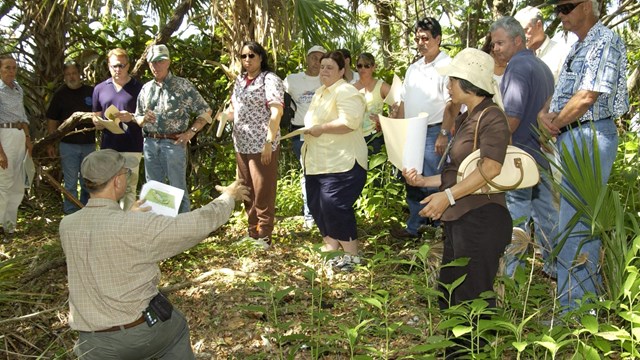
Currently there are three levels of training opportunities available. The most intensive level is training which applies to field operations. Several agencies offer these in varying formats, often in cooperation with another agency whose primary responsibility is law enforcement. The most intensive course at this level has been offered through the Federal Law Enforcement Training Center (FLETC) in Glynco, GA, since 1983. As part of the Department of the Treasury, FLETC principally serves 63 federal organizations to teach common areas of law enforcement skills to police and investigative personnel. They also provide support services for participating organizations to conduct advanced training for their own law enforcement personnel. The National Park Service, U.S. Park Police, Fish and Wildlife Service, and Forest Service each have offices at FLETC which provide onsite representation. FLETC's "Archeological Resources Protection Training Program" is conducted by the Enforcement Techniques Division. A senior instructor manages the program and maintains the highly regarded curriculum content. It is scheduled in two or more regional locations each year as a 40-hour course, with an archaeologist, a judicial expert, and a law enforcement officer as instructors. It has consistently provided the most up-to-date skills required to identify, investigate, and prosecute archaeological resource crime. There is particular emphasis in the course on the different roles of law enforcement officers and cultural resource specialists, and the course is noted for its powerful demonstration of the need for these people to interact while still preserving their separate duties and professional functions. The course concludes with a vivid practical exercise in casework. Since 1988, the frequency with which the course is offered has increased dramatically as several federal agencies have requested special "export" versions to be held in specific regions. Since its inception, this training has been offered nearly 25 times to more than 750 participants. Federal agencies with law enforcement staff conduct periodic "refresher" courses, typically on a regional basis and as a way to address regional needs. Agents not only upgrade their personal law enforcement qualifications through such courses, but also gain new skills. Archaeological protection is frequently a topic during refresher courses, and it is essential that course coordinators have access to current teaching materials and skilled archaeology instructors. Organizations other than federal agencies also are concerned with effective training in field operations and federal archaeological resources protection. Often, state agencies or local law enforcement jurisdictions conduct casework involving federal lands, on behalf of federal agencies, or in cooperation with federal agents. Indian tribal police are concerned to protect archaeological resources on Indian lands. These organizations develop their own coursework, participate in federal agency courses, or seek technical assistance for training materials from federal agencies.
Program-oriented Training
The second level is program-oriented. That is, the educational objectives of these courses are designed to provide introductory guidance or strategic overviews of archaeological resource protection so that managers gain an understanding of what their programs should contain, who should operate them, and how results can be measured. Agency cultural resources management courses usually contain a component on site protection to familiarize managers with agency policy and procedures in this regard. However, in 1988 for the first time, training at this level was offered on a nationwide basis. This was a 12-hour course, which is now titled, "Overview of Archeological Resource Protection Programs," and sponsored by the National Park Service Archeological Assistance and Employee Development Divisions. It was made possible as part of a special appropriation by a concerned Congress, which moved later in that year to amend ARPA. The course was held nine times, tuition-free, for classes of up to 50 people. In 1989, it was held 13 times, and one of those courses coincided with the Society for American Archaeology annual meeting in Atlanta, GA. By the end of 1990, the course had been offered 33 times and reached nearly 1,000 participants.
Self-teaching and Generalized Materials
The third level is geared for individual instruction, particularly through self-teaching or self-paced materials. This kind of training emphasizes brief, concise topics and skills for wide-ranging audiences that include seasonal agency employees as well as the general public. The materials tend to be widely available upon request. Videotapes and films, such as the well-known "Thieves of Time," produced by the US Forest Service, are designed to provide introductory instruction. A new videotape titled, "Assault on Time", has been produced by the Media Services Division of FLETC in cooperation with the Fish and Wildlife Service, National Park Service, Bureau of Land Management, Forest Service, and Department of Defense. It provides the most current introductory information in videotape format, skillfully illustrating the wide variety of archaeological resources and poignantly portraying how important they are to people. The Soil Conservation Service has produced a set of self-paced training materials to train its employees in the agency's cultural resources program. There are eight modules, which are an excellent combination of slides, cassette tapes, and instructional manuals.
Coordinated Objectives for Education
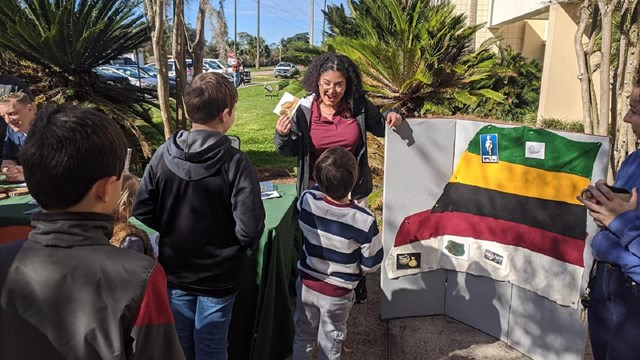
The second component of archaeological resources protection training concerns appropriate, coordinated objectives, especially when the efforts are directed at improving public awareness. Development of training objectives for public awareness have not kept pace with those for field enforcement. Too often, failure to define objectives, especially the audiences to be reached and purposes for educating them, results in minimal impact and confusion among the participants. Nevertheless, there are several successful programs which are geared to educating the general public about archaeological resources and fostering the awareness that site protection is socially important. These are discussed in detail elsewhere in this volume. It is important to discuss public awareness from a training objectives standpoint because to be effective, the public must be able to perceive a consistent policy, conducted within a coordinated program and based upon complementary materials.
Policy and Coordination
Training courses must be marketed, and staff must understand that training will help them carry out their responsibilities and agency missions. As federal agency archaeology programs have improved, there has been clearer policy guidance about the importance of archaeological resources protection. On March 20, 1990, Secretary of the Interior Manuel Lujan announced a national strategy for archaeology which included improved interagency efforts to fight looting (Lujan 1990). One of the ways for this policy to be disseminated is through interagency coordination activities such as the Law Enforcement Group, facilitated by the National Park Service, Archeological Assistance Division. Its members consist of federal agency chief law enforcement officers or their representatives and meets regularly to address archaeological protection issues, exchange information on agency activities and training, and gain insight on professional approaches. Results of these meetings then are distributed throughout the respective agencies, particularly regarding training available to agency personnel. Coordination of training is accomplished also between the National Park Service and Federal Law Enforcement Training Center. As the agencies which conduct the two most widely offered courses, field enforcement skills training (FLETC) and program management training (NPS), it is critical that these education programs not conflict, in dates or locations as well as content. As a result of improved coordination in marketing and organization, the respective courses began to reach about four times more participants by late 1989. These kinds of accomplishments contribute to policy dissemination throughout agencies because initiatives and prioritization of funding and staffing commitments can be tied to specific activities with foreseeable results. For example, the National Park Service determined that field training of its law enforcement officers for archaeological protection could be a major priority in FY 1991 given that the FLETC's program would be widely available. Complementary Materials
Policy and coordinated programs provide agency staff with a useful organizational structure upon which to base education activities such as public awareness. Instructional materials provide the means to conduct those activities, particularly when seasonal or collateral duty personnel must be trained and the basic message of archaeological protection must be conveyed. To be effective, these materials must be complementary and demonstrate the role of protection within the national archaeological preservation program. Production of complementary materials requires the kind of coordination that takes place on a national level, as described above, as well as regional coordination. Examples at the national level include the archaeological protection bookmarks, designed by the Fish and Wildlife Service in 1987 and printed as part of the "Take Pride in America" campaign, an instructors' handbook sponsored by seven federal agencies, the FLETC videotape, "Assault on Time", and the "Protecting the Past" book. Regional coordination occurs in many ways, and one such example is the Forest Service Region 6 task force on archaeological protection (Davis 1989:10). National Forests partook in the task force and cooperated to produce a training videotape suitable for use throughout Region 6. Another example is the laminated field guide distributed to officers trained by the U.S. Army Corps of Engineers, Portland District (Freed 1988:3). This handy pocket guide complements their brochure and poster, "Preserving Our Cultural Heritage," distributed to the public and asking visitors to help protect cultural resources within Corps of Engineers lands.
Conclusion
Training in archaeological resources protection must ensure that programs achieve goals meaningful within the general concern for archaeological preservation. While law enforcement activities themselves require that effective instruction in archaeological resources crime, laws and regulations, field operations, and casework is provided to law enforcement and cultural resources personnel, there also must be continued public awareness that destruction of archaeological resources diminishes the nation's cultural heritage. When these two objectives are achieved, the laws are an effective deterrent, and the public benefit of archaeological preservation is realized.
References Cited
Davis, C. (1989) "Archeological Protection Efforts: Forest Service." Federal Archeology REPORT 2(2):10.
Freed, R. (1988) "Corps of Engineers Archeological Protection Program, Portland District." Federal Archeology REPORT 1(3):3.
Lujan, M. (1990) Memorandum; Secretary of the Interior to Under Secretary, Solicitor, Assistant Secretaries, all Bureau Heads. Department of the Interior, Office of the Secretary, March 20, 1990.
Return to the Table of Contents Open the Microsoft Word Version of this Article
|