PROTECTING THE PAST FROM A MUSEUM

David S. Brose


Introduction

Today, human action is global in scale, leaving relatively little of the earth unaffected (see Messenger and Enloe this volume for a discussion of global education). The dimension of change accelerates, and by the end of the century more than five billion people will be alive. Along with many natural habitats, the places of the past disappear at a rapid rate. In a free society the public must be clearly informed of the value of understanding and preserving the past if it is to choose wisely among future options. Making such information available must be one goal of any successful strategy to protect the past.

It should be pointed out that while archaeology is not the only profession whose goal is to interpret and preserve the past, I shall confine my remarks to what it is that archaeologists have done and should be doing to further those goals. And, while not even a large proportion of archaeologists operate from a museum, it is to museum archaeology that my remarks are directed. My title is equivocal because museums have not had an unequivocal role in protecting much beyond scattered pieces of the past. In this brief review I hope to indicate not only how and why this has been the case, but why and how it is changing.


Public Exposure

Public awareness of archaeology occurs in various ways. Reasonably accurate and understandable information can be found by attending lectures at universities or libraries, by watching educational or Public television, by visiting museums or archaeological and historic sites, or by reading scholarly or semi-popular books and journals that deal with the discoveries of prehistoric or early historic societies. These presentations usually explain to their audience that from the materials they recover from the ground, archaeologists not only study ancient and exotic cultures, but that such investigations can shed new light upon America's own past. Many of these presentations cautiously stress the fact that excavation must be done carefully: that good archaeology takes training, and that proper analysis and restoration of artifacts and environmental samples also takes time and money. Sometimes it is even made clear that the records and documents, as well as the artifacts from archaeological excavation, must be given equal long-term care. At those few reconstructed archaeological sites open to the visitor, they may see earthworks and mounds of various shapes, or buildings and artifacts of various eras, and they are occasionally reminded that these carefully protected ancient monuments are fragile.

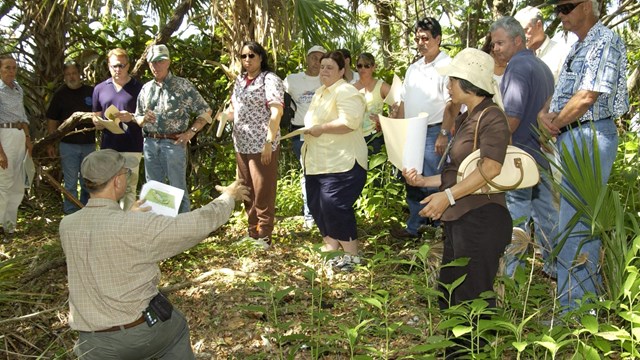
Nonetheless to most of the public, doing archaeology is as arcane as doing astrophysics. Although fascinated, few of even that small segment of the public that knows what archaeology is, believe there could be any personal role for them in the interpretation and preservation of prehistoric or historic archaeological sites. At almost no university, library or historic site, is such a role offered to the public. A museum is the archaeological purveyor most likely to offer the public an involvement with its archaeology program. This leaves the museum archaeologist as the individual best able to convince the public that the sites of the past are endangered, and that the public can and should protect them.


The Varieties of Museum Experience

It is true that the focus on differing aspects of the past is not the same in the archaeological presentations of differing types of museums. No doubt this is because there have been differing types of archaeology. Unlike many disciplines, archaeology did not begin with clearly defined objectives, and only recently have there been many generally accepted field or laboratory procedures. There is still nothing like an accepted theoretical framework within which these goals and methods articulate. The history of what kinds of archaeology have actually been done in the past demonstrates the rather haphazard interactions of techniques, problems, overall strategy, and results, thus indicating the eclectic development of modern archaeology. Archaeology has been practiced as art, as technique, as narrative, and as science. Little wonder, then, that archaeological objects and information are presented in Art Museums, Historical Societies and Museums of History, and in Science Museums, both Natural and not. And less wonder that the focus of such presentations often ignores the potential for preserving the places of the past from which archaeological objects and information come.

There has always been archaeology presented in the guise of historical particularism. Whether as Classic Art or as an extension of Ancient History, this is the study of the recovered object, whether sherd or site, which is seen to be of unique antiquarian interest. Frequently, museum exhibits of such art objects from non-industrialized societies touch only briefly, if at all, upon the material conditions affecting the artists or the society, or upon their contact with other cultures. But this idealist approach misses much which is significant to understand human experience, and much which is significant to understand the art object itself.

The original meaning of a "Masterpiece" was the journeyman's proof of having mastered his craft. The acceptance of its arrangements of matter and form marked the transition of an individual from one status to a new and higher status. Though usually functional, the masterpiece was frequently dedicated to the most powerful secular or sacred individuals accessible to its maker. Thus, far more than mere aesthetic content, a masterpiece carried a strong social message, one which often reflected it's maker's perceptions of political or ceremonial realms beyond his own experience. As the physical expression of a rite de passage the masterpiece combined, at differing levels, nearly all components of social information.

Now, however difficult it may be to disentangle these levels of past social information, it is incumbent on every museum to stress that cultural objects can only be artistic masterpieces when the integrity of their past is knowable. A focus upon aesthetically pleasing objects from the past is no excuse for a museum to avoid informing its visitors that even an artistic masterpiece once existed in some past context. Recognition of the embedded social contexts of ancient art reveals the hypocrisy of those museums who have attempted justifications for purchasing archaeological loot.

Archaeology is not only presented to the public in museums of art. With the introduction to archaeology of a geological perspective, and with the growing understanding of stratigraphy and seriation, there came greater appreciation for the temporal dimensions of the past. The stress on anthropological and general systems frameworks led many museum archaeologists to justify their work as a study of the processes of cultural change through time. The range of objects studied varied from the most particular to the most general, and the spatial and temporal dimensions also varied. Recent literature on cultural resource management is filled with examples of how and why scientific museum collections from archaeological excavations are valuable scientific and historical data. This is not surprising, as most archaeologists in such museums received their training as social scientists or as historians of science and technology.

Such scientific museum archaeologists promoted research, and created exhibits reconstructing the dynamic interactions of cultural, environmental and technological change. Typical museum exhibits revealed how the study of pottery and flint artifacts, or human and non-human bone from carefully excavated archaeological sites, could reveal cultural migrations, prehistoric health, or ancient manufacturing techniques and trade networks. As in so many other aspects of the archaeological record, the variability within societies was a focus of many carefully planned museum displays which juxtaposed diverse eras, habitats and cultures to illustrate the relationships among environment, social ecology, and material culture.

Too often, however, scientific archaeology museum exhibits which illustrated the importance of environment and economy in past societies ignored the role of willful individual or social actions. Such museum exhibits suggested to the visitor that not only were geographic settlement and political systems a response to economy, but that material conditions constrained all social choices both in the past and in the present. The public message promoted by too many archaeologists in science museums, was that the prehistoric and historic sites themselves were merely valuable to the extent that they were supply houses, from which the archaeologist alone might systematically acquire the specimens and raw data upon which science operated. Their continued preservation beyond that end was ignored.

In the cultural historical exhibits of some museums, archaeology offered yet a different message to the public. Not only the basic economic and social systems, but the shapes and decorative treatment of tools or objects of industrial design, the styles or art and architecture, and even mythological cycles, were presented as the complex result and the subtle agents of change through time and across space. In the best of such exhibits, the visitor was informed that technology provides the means by which societies articulate with and understand environmental and cultural interactions. For, if all human societies are aware of interaction with the environment, both history and technology reflect a society's view of its role within their "ecological niche". Perhaps this is easiest to see in those cultural historical programs and exhibits which bring museum visitors some appreciation for the archaeology of American industrial society. Within a mile of almost every museum, one can find the stores and factories, the hospitals, colleges and theaters that represent the physical manifestations of our own historical cultural values. These are artifacts of the population and technology acting on the environment. They are also present nearby, thus presenting new opportunities for the museum archaeologist.

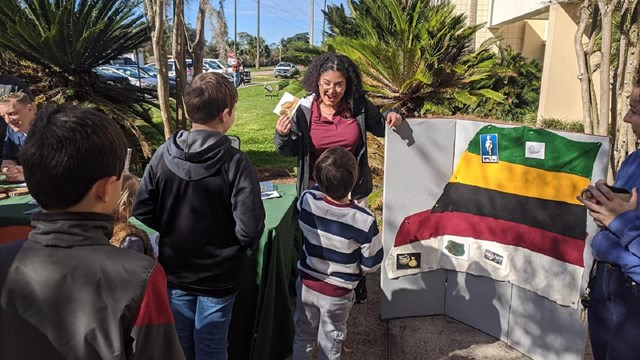
For example, at the Cleveland Museum of Natural History a Martha Holding Jennings Foundation scholarship program has permitted over 2000 elementary, junior high and high school students, and their teachers a unique opportunity to participate in the excitement of professional archaeological excavation and discovery. Since its beginning, this program reflected the Museum's belief that involving students and public in the archaeological exploration of their own history is critical to preserving significant archaeological sites of all periods (see Smartz this volume for a discussion of involving the public in archaeology in Toronto, Canada).

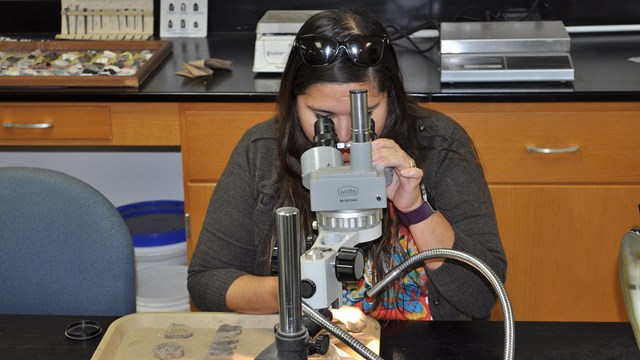
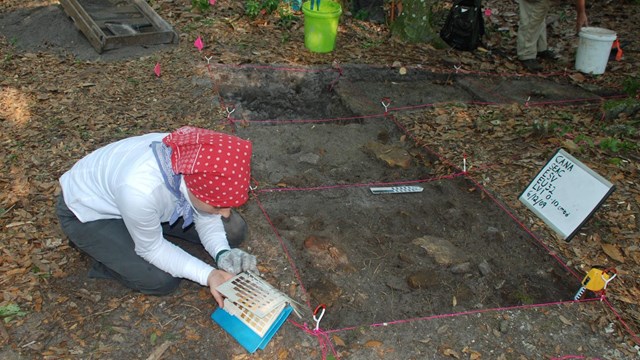
The field archaeology does not occur in a vacuum. All participants are shown why and where we dig and how what we have previously learned influences the strategy of the next field season. And then, with careful and close supervision, the students spend from half a day to four days actually digging on a real archaeological site. An integral part of the archaeological experience is the students' training in laboratory analysis and research report preparation, and in the design and evaluation of archaeological exhibits. The results of their work is presented to other school groups when they visit the Archaeology Laboratory in conjunction with their field experience. During these tours students are taught the types of artifacts found in the site contexts, and how they were used and modified by the people who once used them. Students are made aware of the full range of archaeological research activities as they watch and listen to museum technicians explain their work.

All of the participating schools are fully aware that they have been engaged in real archaeological investigations, rather than in some prearranged educational game. They have not only performed all aspects of archaeological excavation, they have contributed significantly to acquiring the information which allows us to understand much of the past, and have found the experience exciting and rewarding. They are all anxious to protect not only the archaeological site at which they worked, but other sites at which we may yet learn more. As the citizens of the future, they are advocates of protecting the past.

Such historical archaeological excavation can result in exciting exhibits, revealing new social, ethnic and economic information about a community. Excavated artifacts can reveal the variety of activities carried out and the daily life of the occupants of specific households. They can illustrate the history of an ethnic group or a company and its place in the economic life of a community in ways that can easily be communicated to the museum visitor. Texts and graphics can use photographs and drawings of the archaeological excavations; early artists' or photographers views; maps, atlases, copies of contemporary advertisements, and city directories and census data, to tie the artifacts and structural remains found to real and specific people. Because such archaeological museum exhibits can reveal new facts about the historical actions of individuals and groups, they can show museum visitors that conscious behavior is both consequence and modifier of human experience and the environment through time.

Such presentations can inform the public that, like all human societies, the growth of our population and our technology had results which seldom were planned or directed. The consequences to archaeological sites of undirected population and technological pressure can be shown, as can the fact that our ability to understand the magnitude of archaeological site destruction has come long after the destructive changes were initiated. In many cases modern technology has the potential to identify future consequences, or to mitigate problems of the past. While for some sites this understanding comes too late, for many threatened historical properties public awareness can still be critical.


The Museum Archaeologists' Responsibility

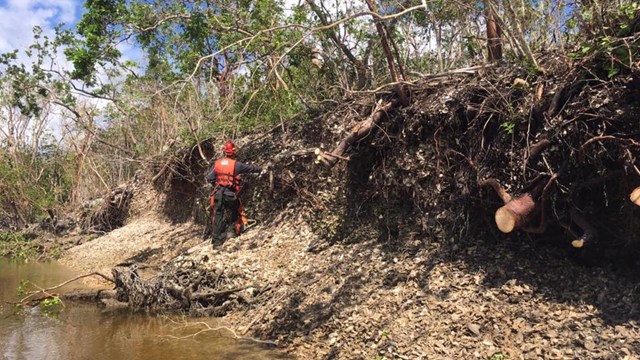
Every rural or urban neighborhood, in every state in the country, has its own history. Beneath forests and fields, below buildings, streets, and parks, lies the material evidence of America's growth. In the 19th century over 100,000 archaeological sites were reported across America. Each site was a unique record of the past. Many sites were destroyed by erosion or by farming, some by highway, canal and railroad construction. More were lost to industrial or urban development. Many were looted, and some were vandalized. Although thousands of previously unknown archaeological sites have been discovered, many of these, and tens of thousands more, have disappeared. The loss of this heritage accelerates.

Museums have been in the forefront of the movement to show the public that archaeology has become an important way to study this fragile record of centuries of cultural and environmental change in our country. Museums have long tried to reveal the significance of the structures, the artifacts, and the information from the past. Museum exhibits and educational programs may properly inform visitors that they cannot successfully excavate archaeological sites on their own, although they may be able to teach visitors to recognize and report archaeological sites, and entice visitors to participate in their excavation and interpretation. If museum archaeologists have shown the public how they use a vast range of modern techniques, not many have emphasized that even modern technology cannot create an historic site that has been destroyed.

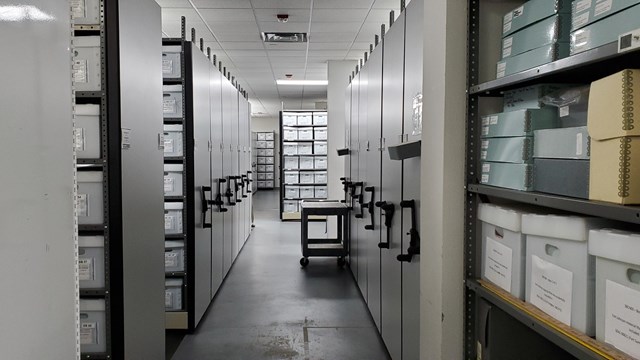
Most museums of any type have internal divisions which loosely correspond to activities such as Save; Store; Study; Show; and Speak. No other institution combines this diversity of activities with a constant stream of visitors and volunteers of all ages. Not only in different types of museums, even within a single institution archaeologists in various departments have sometimes been divisive in their approach to preserving the integrity of the past as something more than a collection of objects or information. To date, few museum archaeologists have overcome this insularity. But time is short.


Conclusion

As museum archaeologists, we must take time out from our research and our curation to inform visitors that the past is under siege by the present. We alone have the opportunity to show what has been lost and what can be done to preserve or salvage what remains. Beyond our technical skills in field research or laboratory analysis, in conservation or education, museum archaeologists must call on architects, designers, educators and publicists to convince visitors that their interest and their energy are needed to preserve historical and archaeological sites from destruction. If we will not find ways to convince the public to save what archaeological sites remain, we will find eventually little of the past outside of museum cabinets for the education and the appreciation of the future.


Return to the Table of Contents

Open the Microsoft Word Version of this Article