PRESENTING THE PAST: A CONFERENCE SERIES AIMED AT PUBLIC EDUCATION

Peter S. Wells


Introduction

The most important way to protect archaeological resources is to raise the consciousness of the public about the existence and significance of the remains of the past. We need widespread public awareness and support to develop comprehensive programs for the protection of monuments on a nation-wide scale. We must also develop ways by which we can utilize archaeological resources to educate the public about the human past.

The Center for Ancient Studies at the University of Minnesota, with the cooperation of several other institutions (including federal agencies), has organized a series of conferences on the subject of presenting the past to the public. Our direct goal has been broader than protection in the immediate sense. I wish here to discuss these conferences - why we began them, what we accomplished at them, and how they contribute to this theme. The views I present here are my own; other participants might represent the conferences in other ways.


Background

Archaeology is a subject of vast potential popular appeal. Newspapers, magazines, and television regularly carry reports of new discoveries and new interpretations. All archaeological excavations in populated areas have streams of interested visitors. Many people are intrigued by the idea of discovering physical remains of past human activity, whether they consist of dishes used by people living a few generations ago or projectile points left by hunters millennia in the past.

As professional archaeologists, most of us could be doing more than we do to make the results of our work available to public audiences, as well as to scholarly ones. Many individuals have been engaged in this enterprise for a long time - presenting public lectures, on both local and national levels; working with television production companies to make documentaries that deal with archaeology; writing for popular journals; conducting site tours for the public; and involving volunteers in archaeological fieldwork. But most members of the profession could do much more along these lines, for the benefit of the public and of the field of archaeology.

During my first year as Director of the Center for Ancient Studies at the University of Minnesota in 1986, I discussed with Tom Trow, Cultural Liaison Officer for the College of Liberal Arts at the University and an alumnus of the Center, the idea of organizing a conference that would focus on what professional archaeologists and historians do to present their work to public audiences. We formed a planning committee comprising individuals from different institutions in the Twin Cities who were involved in such efforts. The committee included Christy Caine of the U.S. Forest Service, State Archaeologist for Minnesota; Leslie Denny of the Department of Professional Development and Conferences Services of the University of Minnesota; Clark Dobbs of the Institute for Minnesota Archaeology; Louise Lincoln of the Minneapolis Institute of Arts; Phyllis Messenger of the Institute of International Studies at the University of Minnesota; Orrin Shane of the Science Museum of Minnesota; and Nicholas Westbrook of the Minnesota Historical Society. After several initial discussions, we found that we all shared a common perception that this subject was of immediate concern to a great many people, locally and nationally, but that little was being done to confront the issue systematically and broadly.

The aim of the conference we decided to plan was threefold. First, we wanted to learn as much as possible about what was currently being done in the United States to inform the public about archaeology and to involve the public in the process of doing archaeology. Second, we wanted to use that information to formulate working plans for future action. Third, we wanted to discuss what could be done in the short term to improve communication between the profession and the public.


The Conference

The planning process for the first conference was long and complex. The subject is immense, as we quickly learned, and we wanted to touch upon it on local, national, and international levels. This first conference was conceived as an informational meeting - to provide a means for the sharing of information about what was being done in different places and to begin discussion of what could be done on a broader scale. To this end, we defined several categories of professionals that we wanted to invite. We needed individuals who had developed well known and highly successful programs in public archaeology. We also wanted to invite representatives from abroad, since perspectives from other countries are always valuable in suggesting different questions and solutions. We felt that good representation of local Minnesota efforts were important, both because archaeologists in Minnesota have been active in this field and because we wanted our local audience to be made aware of the efforts being made here in the state. Finally, we wanted to involve members of the local Indian community as representatives of some of the peoples studied by archaeologists. We designed the first conference (1987) in two parts directed toward two different, but overlapping, audiences. The first we called the professional program, and it was intended principally for people whose professional positions entailed presenting archaeology to the public. The title of this part of the conference was "Perception and Presentation of the Past." It ran for three days. This part included a series of case studies in the presentation of archaeology and its results to the public. Sets of papers were followed by formal discussion initiated by scheduled discussants and carried further by audience participation. The second part of the conference, entitled "Presenting Our Past," was designed for a public audience. It was meant to accomplish two aims, to provide a local public audience with an overview of the issues with which we were concerned, and at the same time to present to this audience some results of archaeological research. This public program took place on a Friday evening, and all day on Saturday.

The presentations and formal discussion in both the professional and public programs were of high quality and raised many topics of concern to the participants. Most satisfying for the planners of the program, however, was the level and quality of audience participation. The lively discussion and debate that followed the papers indicated the high level of interest in the subject on the part of a wide range of professionals. Two field trips to local archaeological and historical sites provided case studies for on-site consideration, as well as informal settings in which people could continue discussions initiated during the sessions.

It was clear from the enthusiasm shown by participants in the conference that the issue was important to people involved with public archaeology on many different levels in the late 1980's. Conference participants included personnel from federal agencies; from state, county, local, and university museums; from state and local historical and archaeological organizations; and from academic departments at universities. Most were directly involved in the planning and implementing of public programs in archaeology. It became clear that many people were grappling with the same issues, and that all could benefit by sharing experiences and ideas. We often observed that different individuals and groups were working on the same problem, without being aware that others were involved in very similar efforts.

As a result of the strong demonstration of interest in this issue and the enthusiasm of the participants at the first conference, we decided to plan a second one for the next year, 1988. Several federal agencies agreed to help sponsor the second conference, including the National Park Service, the Soil Conservation Service, the Bureau of Land Management, and the Tennessee Valley Authority. The National Park Service also played a major role in the planning of the second conference.

Whereas the first conference had been a very general one aimed at presenting cases for discussion and opening dialogue about presenting archaeology to public audiences, the second conference (1988), was more tightly focused. The title was "Presenting the Past: Media, Marketing, and the Public," and the theme was the use of media and marketing in the presentation of archaeological sites, materials, and information. Speakers addressed the role of newspapers, television, and other media in disseminating information about archaeology. Others spoke on the use of volunteers from the public in excavating and protecting archaeological sites, and about lecturing to public audiences. In addition to the lecture presentations, we organized workshops in which small groups could discuss particular themes with individuals knowledgeable in the subject.

The third conference (1989) focused on public education, specifically the presentation of the past in schools and museums. The title of this program was "Presenting the Past to the Public: History and Archaeology in Schools and Museums." We invited speakers to discuss specific projects they had initiated in presenting archaeology and history in museum and school contexts. Others addressed broader issues of curriculum development and the politics of education and public awareness. A public program associated with this conference was entitled "Confronting Columbus: Contact and Cultural Diversity in America." In this program, speakers addressed the question of presenting subjects bearing on cultural diversity in the past, with particular reference to the upcoming commemoration of Columbus' voyages. We were fortunate to have The Honorable Bruce Vento of the United States House of Representatives, Chairman of the Subcommittee on National Parks and Public Lands, as the first speaker in this public program.


Discussion

The principal result of the three conferences in 1987, 1988, and 1989 was the demonstration that a large number of individuals throughout the United States and Canada, working in many different federal, state, local, and private agencies, are deeply concerned with how we present the past. Many people made substantial commitments of time and effort to participate in the conferences. There have always been archaeological and historical sites and museums whose staffs have made major efforts to communicate with the public - Plimoth Plantation, Colonial Williamsburg, and Sturbridge Village come to mind as outstanding examples in North America, but hundreds more could be mentioned. What is new, I think, is the groundswell of concern that we have seen through these conferences for improving communication with the public and for involving the public more fully in the future of the past. This concern has been shown by the participation of numerous individuals, and by many letters and telephone calls we have received requesting information about the programs.

In order to assure the protection of our archaeological and historical sites, so that they survive for the enlightment of future generations, we need to continue our efforts at bringing the public into the discussion about presentation, in all contexts. Major questions that have emerged from the conference are discussed below.

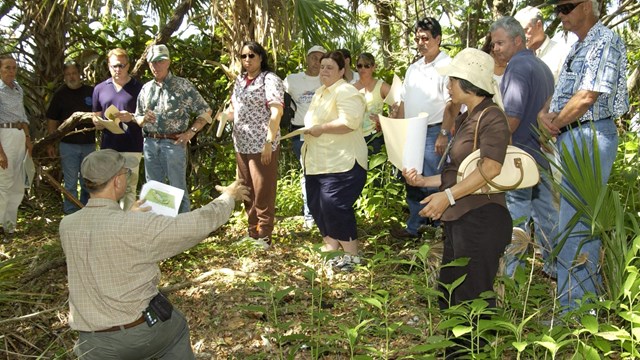
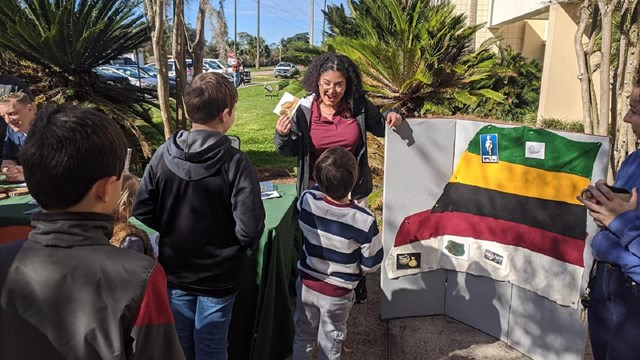
How can we involve members of the public in the early stages of archaeological discovery? We can develop programs through which volunteers can assist archaeologists map, survey, and excavate sites. One of the best ways to instill an appreciation for the informational value of archaeological sites is to involve people in archaeological excavations. Only a small minority will have the time and sufficient interest to actually work at archaeology, however. For others, the organization of site tours during excavations is an important means of showing people why archaeological sites are important and why they must be treated properly. The public needs to be informed about significant new discoveries, and thereby encouraged to learn more about the archaeological record. We need to develop systematic ways of cooperating with the media in order to disseminate such information. Yet as several conference speakers noted, information must be made public carefully and with appropriate education; we do not want inadvertently to stimulate the looting of archaeological sites.

How can the public be involved in later stages of archaeology? Sites can sometimes be preserved as they are revealed by excavation, with appropriate signs, maps, explanations and, in some cases, parks constructed to enclose the remains. Museum displays can be developed to show what materials have come from a site and what we can learn through proper excavation and analysis.

Most important is the need to educate early. Many professionals that attended our conferences agreed that the key to developing a broad-based appreciation of archaeology and history is education at the primary school level. If we can develop means to teach school children why the archaeological and historical remains are important - what kinds of information we can learn from them through proper research techniques - then we shall succeed in raising the awareness level of the general public on an unprecedented scale. Only then will it be possible to generate widespread support for protection of archaeological resources (see Rogge, Smartz, McNutt, and Hawkins this volume for discussions of archaeological education and children).

The next conference, planned for 1991, will focus on the development of curricula for schools. This theme emerged in the concluding discussion at the 1989 conference as the critical issue for the immediate future.


Conclusion

In closing, I should like to make a few general observations about the process and outcome of the three conferences. We found that it was valuable to have speakers from a wide range of different backgrounds and institutions. It was instructive to hear about large scale and well known programs, but equally important to hear from people involved in smaller, local community efforts. The latter often provided a perspective unfamiliar to many of the participants. Many common themes emerged from varied experiences where we did not necessary anticipate them. Many participants remarked that they were interested to learn that numerous others around the country were facing the same issues and dilemmas.

Perspectives provided by people working in other countries were valuable. European archaeologists have been facing these issues for a much longer time than we in the New World have. In Britain and Germany, for example, countries from which several of our speakers came, issues of public access to archaeological and historical sites, and protection of those sites, have histories of many centuries, in some cases. Stonehenge is the most familiar example - a site of great cultural importance of our understanding of Neolithic northwest Europe, and also one severely threatened by public over-use. Christopher Chippindale, a participant in the 1988 conference, has documented (1983) the long and complex history of the public presentation and official protection of this most famous of monuments.

The three conferences have been successful in bringing together many people concerned with the presentation and protection of archaeological sites and materials. The discussions have been productive, and we now need to develop our ideas into specific plans for public education.

Acknowledgements: I thank especially the planning committees and the participants in the three conferences for their dedicated work and their excellent presentations. Both groups have now grown much too large to name all of the individuals here. The Department of Professional Development and Conference Services, Continuing Education and Extension, University of Minnesota, has supported all three conferences; Leslie Denny and Steven Weiland have been particularly helpful. The Minnesota Humanities Commission supported the public portions of the 1987 and 1989 conferences. The National Park Service and the Soil Conservation Service helped sponsor the 1988 and 1989 conferences; Frank McManamon, George Smith, and Diane Gelburd have been especially supportive. The Bureau of Land Management and the Tennessee Valley Authority helped sponsor the 1988 program. I thank all of these institutions for making this conference series possible.


Reference Cited

Chippindale, C. (1983) Stonehenge Complete. Ithaca, NY: Cornell University Press.


Return to the Table of Contents

Open the Microsoft Word Version of this Article